






Plentum guide
Dog skin & coat supplements: what the ingredients are for (2026)
What to look for in a dog allergy supplement, and where daily skin and coat support fits.
Summary Dog skin and coat supplements can support healthy skin, a healthy coat and a normal immune response to seasonal triggers. Look for postbiotics, omega-3, colostrum and quercetin, and read the amount of each on the label.

Dog allergy supplements can support healthy skin and coat and a normal immune response to seasonal triggers, though they do not replace your veterinarian's plan. Whether a supplement is worth trying depends on the specific ingredients and milligram amounts in each daily serving.
Do dog allergy supplements work?
Owners researching itchy dogs often see two extremes: chew ads that promise everything and skeptical veterinary articles that question most of the aisle. Looking at what canine studies measure separates realistic daily support from hype.
Scratching that looks seasonal can come from insect bites such as fleas, environmental triggers (pollen, dust mites, and mold), food reactions, or secondary skin and ear infections (Merck Veterinary Manual). A supplement cannot diagnose or clear those conditions.
- Single-ingredient testing: Published canine trials almost always test one isolated ingredient, such as omega-3 fatty acids or a postbiotic, rather than a finished product.
- Different endpoints: Omega-3 and postbiotic trials in dogs measured coat quality or itch ratings, while colostrum and spirulina trials measured gut and immune markers.
- Small trials: Most canine studies enroll 24 to 60 dogs, and several are funded by ingredient makers and not yet independently replicated.
For the research behind each ingredient, see our dog skin, coat, and itch research hub and our guide to the gut-skin axis in itchy dogs.
Which supplement ingredients have dog data
Dog allergy supplements usually draw from five ingredient categories: omega-3 fatty acids, postbiotics, bovine colostrum, plant compounds such as quercetin and spirulina, and probiotics. Each supports a different part of skin, coat, or gut-immune maintenance.
Omega-3 fatty acids (DHA from microalgae and EPA/DHA from fish oil)
In a 90-day placebo-controlled trial of 24 dogs with poor coats, clinical coat scores were better with daily omega-3 supplementation from day 60, and the benefit faded after supplementation stopped (Combarros et al., 2020).
Oral omega-3 supplementation also raises the canine blood omega-3 index (Carlisle et al., 2024). In diet trials, dogs readily ate food with Schizochytrium microalgae as a DHA source, and the diet resisted oxidation (Souza et al., 2019).
Postbiotics (heat-treated fermentation compounds)
A 28-day placebo-controlled trial in 30 dogs with mildly elevated scratching and no diagnosed skin disease gave 150 mg daily of a heat-treated Pediococcus acidilactici postbiotic and measured itch ratings and skin and coat scores (Sordillo et al., 2025).
Bovine colostrum
Bovine colostrum supplies immunoglobulins such as IgG. In a 40-week randomized study of 24 adult dogs, a diet with added colostrum was associated with higher fecal IgA and a stronger vaccine antibody response (Satyaraj et al., 2013).
Plant compounds (quercetin and spirulina)
Quercetin is a plant flavonoid with antioxidant activity. In 30 kennel dogs over 28 days, a blend of quercetin, bromelain, and Lentinula edodes was associated with changes in fecal gut markers compared with control dogs (Atuahene et al., 2023).
Effects from that blend cannot be credited to quercetin alone. Spirulina was associated with higher gut IgA and vaccine responses over 42 weeks in 30 healthy dogs (Satyaraj et al., 2021) and was palatable and well tolerated in a 6-week study (Stefanutti et al., 2023).
Probiotics and brewer's yeast
Probiotic Lactobacillus strains help maintain gut microbial balance; see our omega-3 versus probiotics guide. Brewer's yeast is a natural source of B vitamins.
| Ingredient category | Role in daily nutrition | What canine studies measured | Evidence notes |
|---|---|---|---|
| Omega-3 (microalgae DHA or fish oil) | Supports healthy skin, coat, and cell membranes | Coat scores, blood omega-3 index, and diet palatability | Benefit faded after stopping; check daily dose |
| Postbiotics (heat-treated actives) | Supports gut-immune signaling and skin comfort | Itch ratings and skin and coat scores (28 days) | One small placebo-controlled trial so far |
| Bovine colostrum | Supplies immunoglobulins for gut mucosal support | Fecal IgA levels and vaccine antibody response | Measured immune markers in healthy dogs |
| Quercetin (plant flavonoid) | Plant compound with antioxidant activity | Fecal markers in a three-ingredient dog blend | Dog data so far come from a blend |
| Spirulina (blue-green microalga) | Supports gut mucosal and immune function | Fecal IgA, vaccine response, and palatability | Immune trial in healthy dogs |
| Probiotics and brewer's yeast | Supports gut microbiome balance and B vitamins | Gut measures; results are strain-specific | Check strain names and CFU count |
What to look for in an allergy supplement
Two tubs with similar front claims can deliver very different active amounts in the bowl. Before buying any seasonal skin and immune supplement, run through four label checks or compare our supplements.
- Amount per serving: Check the Supplement Facts panel for the milligram amount of each active and the CFU count for probiotics.
- Named ingredients: Look for the source of each active, such as DHA from microalgae or fish oil, and the probiotic species named on the label.
- A certificate of analysis per lot: Pick a brand that lab-tests every lot and can share the certificate of analysis.
- A daily format your dog accepts: Pick a serving you can give every day with a meal, such as a pre-measured powder sachet.
During a vet elimination diet trial, check the full ingredient list first. Beef, dairy products, chicken, and wheat are the most commonly reported food allergens in dogs (Mueller et al., 2016); see our seasonal versus food sensitivities guide.
Supplements and vet medicines: how they differ
Veterinary management of allergic skin disease combines several steps: controlling fleas and secondary skin or ear infections, prescribed anti-itch medication where needed, and bathing (Miller et al., 2023; Merck Veterinary Manual).
- Human allergy pills need vet dosing: Give a human allergy pill only if your vet names the drug and sets the dose.
- Keep up surface care at home: Wiping paws after walks and following your vet's bathing routine help remove pollen from the coat (see our seasonal itch care routine and fall allergies guide).
| Comparison point | Daily nutritional supplements | Veterinary allergy medicines |
|---|---|---|
| Primary purpose | Supports healthy skin, coat, and normal immune response | Diagnosed medical management of allergic skin flares |
| What it targets | Daily gut barrier, microbiome, and skin lipid nutrition | Specific immune pathways or secondary skin infections |
| How it is used | Steady daily serving mixed into regular meals | Prescribed by your veterinarian for flares or maintenance |
| How they fit together | Can accompany a vet plan with veterinary approval | Forms the core medical plan for moderate or severe itch |
Where Advanced K9 Itch & Immune Care fits
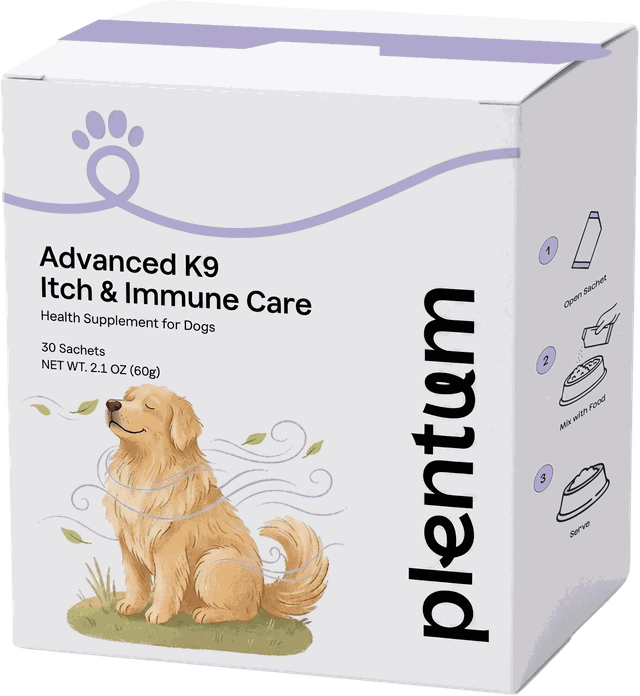
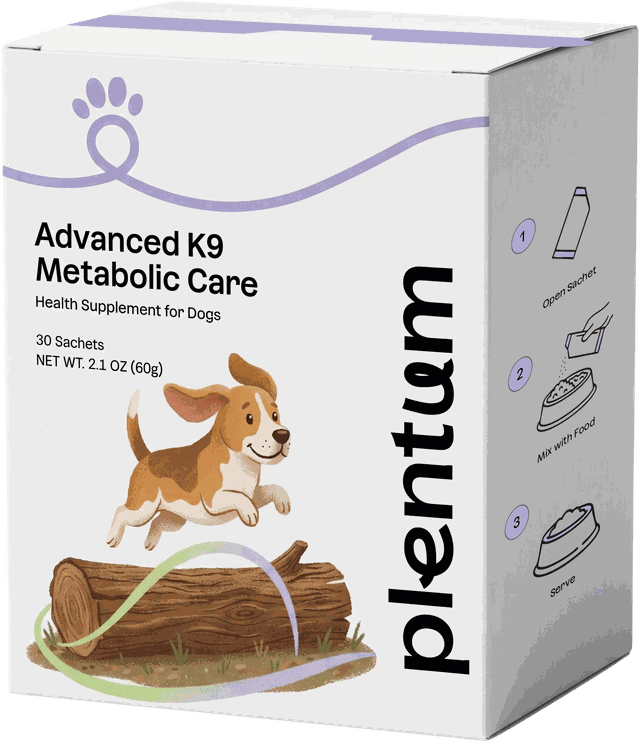
We built Plentum Advanced K9 Itch & Immune Care, part of our skin and itch collection, to support a normal immune response to seasonal triggers and healthy skin and coat.
Each unflavored 2 g sachet combines a canine immune health postbiotic (250 mg), DHA from microalgae (250 mg), bovine colostrum (150 mg), a proprietary probiotic blend (150 mg, 2 billion CFU), quercetin (100 mg), and spirulina (75 mg); see our ingredient guide.
| Dog's weight | Sachets a day |
|---|---|
| Up to 25 lb | 1 |
| 26 to 50 lb | 2 |
| 51 to 75 lb | 3 |
| Over 75 lb | 4 |
Start with a half dose for the first 3 days. To see which of our five supplements fits your dog, take the quiz.
What should I record between appointments?
Take clear photos of the affected areas and keep the original dates. Record the places your dog scratches or licks, including any changes in the ears or paws.
Note what was started, stopped, or changed in the routine. Bring previous findings and the clinic’s instructions so the follow-up can build on the earlier examination.
When to see your vet
Book a vet visit before trying a supplement if your dog has any of the signs below. If nothing helps, ask your vet about a workup or a dermatologist referral (Miller et al., 2023).
- Raw, broken, crusted, or bleeding skin, hot spots, or patchy hair loss
- Hives, raised bumps, or facial swelling around the muzzle, eyes, or ears
- Trouble breathing, wheezing, pale gums, or collapse (go to an emergency clinic now)
- Constant scratching with a red rash, sleepless nights, or paws chewed raw
- Ear redness, head shaking, dark discharge, or a strong ear or skin odor (Merck Veterinary Manual)
- A puppy with severe itching, or any puppy under 12 weeks of age
Questions owners ask
Can a supplement label identify the cause of itchy skin?
No.
Similar itching can come from fleas, environmental allergies, food reactions, or infection.
A label can tell you what a supplement contains, but deciding what is causing the itch requires your dog’s history and examination.
Keep daily nutritional support within the care plan for the identified problem.
AAHA explains how allergy history and testing guide care.
What is the best dog allergy supplement?
There is no single choice for every itchy dog. Ask your vet which goal fits the diagnosis and diet, because VCA explains that allergy assessment guides care.
Can supplements show whether my dog has a food allergy?
No, a controlled elimination diet followed by a dietary challenge is the reliable diagnostic approach. Keep any proposed supplement within that plan, and check it with the team running the trial, since VCA's elimination-diet instructions include supplements in the intake review.
Can I give a joint supplement or collagen for my dog's allergies?
Joint and collagen products are made for other needs and use different ingredients than a skin, coat, and seasonal immune supplement. If you give more than one supplement, start them one at a time so you can see how your dog does with each.
Can puppies take a dog allergy supplement?
All five Plentum supplements are made for dogs from 12 weeks of age, given at the label serving for their weight. For a younger puppy, or one with severe itching, start with the vet visit described above.
Can I combine an allergy supplement with a separate omega-3 oil?
Check both Supplement Facts panels and add up the DHA and EPA so you know the combined daily total before you give both.
How long should I give a dog allergy supplement?
Itch & Immune Care is made for daily use with a meal, as an ongoing part of your dog's routine rather than a short course. Every dog is different, so we don't give a timeline for results.
Is a daily dog allergy supplement safe for long-term use?
Itch & Immune Care is made for ongoing use at the label serving for your dog's weight, and every lot is lab-tested. Because the colostrum is bovine, ask your vet first if your dog reacts to dairy or beef, takes medication, or has a health condition.
Related guides
- Fall allergies in dogs
- Dog seasonal itch care routine
- Itch & Immune Care ingredients explained
- The gut-skin axis in itchy dogs
- Omega-3 versus probiotics for dog skin
- Dog skin, coat, and itch research hub
- What to put on dry dog paws
- Itchy skin home remedies for dogs
- Itching and scratching: could it be the gut?
- Omega-3 for dogs: what to look for
- Probiotics and canine skin: what research says
Sources
- Miller J et al. 2023 AAHA Management of Allergic Skin Diseases in Dogs and Cats Guidelines. JAAHA (2023)
- Merck Veterinary Manual: Allergies in Dogs
- Merck Veterinary Manual: Itching (Pruritus) in Dogs
- Combarros D et al. Prostaglandins Leukot Essent Fatty Acids (2020)
- Carlisle C et al. Animals (2024)
- Souza CMM et al. Anim Sci J (2019)
- Sordillo A et al. Animals (2025)
- Satyaraj E et al. Br J Nutr (2013)
- Atuahene D et al. Vet Sci (2023)
- Satyaraj E et al. Front Nutr (2021)
- Stefanutti D et al. Animals (2023)
- Mueller RS et al. BMC Vet Res (2016)
- Cornell Riney Canine Health Center: Diets to boost immunity