




Can Dogs Eat Eggs? The Complete Guide for Pet Parents
Here's something that surprises a lot of dog owners: the humble egg is one of the most nutritionally complete foods on the planet — for humans and dogs. One large egg contains all nine essential amino acids, a suite of vitamins, healthy fats, and about 6 grams of high-quality protein. That's more complete protein per calorie than chicken breast.
So yes, your dog can absolutely eat eggs. But as with most things in pet nutrition, the how matters just as much as the what. Raw or cooked? Whites or yolks? Every day or once a week? This guide covers everything you need to know to serve eggs safely, confidently, and in the right amount for your dog's size.
---
Table of Contents
1. The Short Answer: Can Dogs Eat Eggs? 2. What's Actually in an Egg? The Nutritional Breakdown 3. How to Prepare Eggs for Your Dog 4. How Many Eggs Per Day — Serving Sizes by Dog Size 5. Eggs vs. Other Protein Treats: A Quick Comparison 6. Risks and Precautions Every Owner Should Know 7. Special Considerations for Senior Dogs 8. Frequently Asked Questions
---
The Short Answer: Can Dogs Eat Eggs?
Yes, dogs can eat eggs — and most dogs genuinely love them. Eggs are a safe, nutritious, whole-food protein source when prepared properly and fed in appropriate amounts.
The caveats: cooked is always safer than raw, the yolk and white each carry different benefits and risks worth knowing, and portion size scales with your dog's body weight. A Great Dane and a Chihuahua are not on the same egg plan.
The good news? Once you understand those three variables, eggs become one of the most convenient and affordable nutritional boosts you can give your dog.
---
What's Actually in an Egg? The Nutritional Breakdown
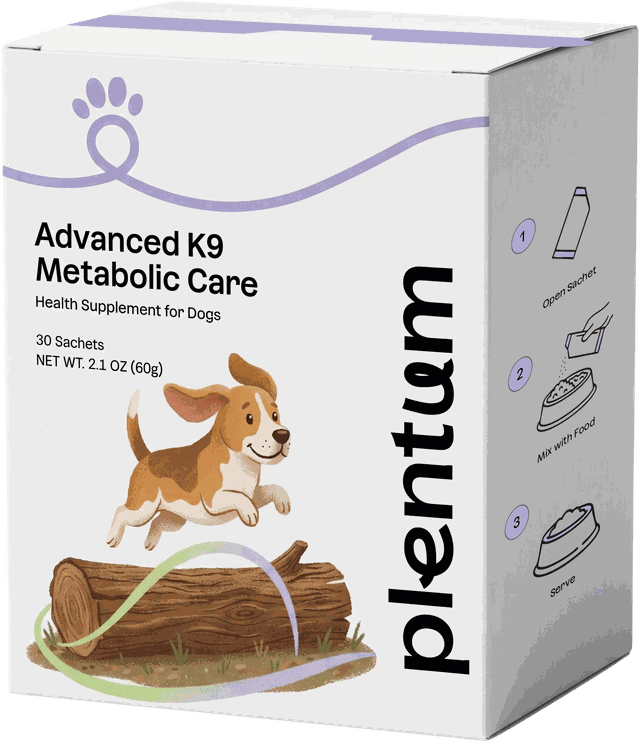
Supporting your dog's senior wellness and vitality? Plentum Synbiotic is a veterinarian-formulated daily sachet combining prebiotics, probiotics, and postbiotics — simply add one sachet to your dog's food.
Before we talk about serving size and cooking method, it helps to know why eggs are worth the conversation. One large (50g) whole egg contains:
That's a lot of nutritional firepower for something that costs about 25 cents.
The Yolk vs. The White: What Each Part Does
Most of the nutrition lives in the yolk. The yellow center contains virtually all the fat, fat-soluble vitamins (A, D, E, K), and about half the protein. The white is mostly protein (about 3.5 grams) with very little fat or micronutrients.
Here's the nuance: the egg white also contains avidin, a protein that binds to biotin (Vitamin B7) and blocks its absorption. Biotin is essential for healthy skin, coat, and metabolism in dogs. When eaten raw, egg whites can deplete biotin over time. Cooking deactivates avidin entirely, which is one of the strongest arguments for always cooking eggs before feeding them to your dog.
Why Protein Quality Matters for Dogs
Not all protein is created equal. Nutritional scientists use a measure called biological value (BV) to rank how efficiently a food's protein is used by the body. Eggs score a BV of 100 — the highest of any whole food. For comparison, chicken scores around 79, beef around 74, and soy around 67. When your dog eats an egg, their body uses nearly every gram of protein in it.
---
How to Prepare Eggs for Your Dog
Scrambled Eggs — The Crowd Favorite
Scrambled eggs are probably the most popular egg preparation for dogs, and for good reason: they're soft, easy to digest, and most dogs will do backflips for them. The key is keeping it simple. Scramble in a non-stick pan with no butter, no oil, no salt, no pepper, no onion, no garlic.
Plain scrambled eggs are gentle on the stomach and a great option if your dog is recovering from a bout of digestive upset.
Hard-Boiled Eggs — Easiest to Control
Hard-boiled eggs are the most convenient option for a busy week: batch-cook a few, store them in the fridge for up to five days, and slice off a piece as a treat or food topper. The firm texture also makes them easy to cut into appropriate portion sizes.
Let them cool completely before serving. Most dogs will inhale hot food and regret it immediately.

Poached Eggs — A Good Middle Ground
Poached eggs (cooked in water, no added fat) are another great option. They retain more of the fat-soluble nutrients than scrambled eggs cooked at high heat. If your dog tolerates eggs well, poached is a nutritionally sound choice.
What About Raw Eggs?
The raw egg debate is a real one in the dog nutrition community. Proponents of raw feeding argue that cooking destroys some enzymes and heat-sensitive nutrients. That's partially true — some B vitamins are mildly reduced by heat.
However, the risks with raw eggs are meaningful:
1. Salmonella: Raw eggs can carry Salmonella bacteria. Dogs can get sick from it, and so can the humans handling their food. 2. Avidin issue: As covered above, raw egg whites block biotin absorption. One egg occasionally probably won't cause deficiency, but regular raw egg feeding over months can. 3. E. coli risk: Another bacterial pathogen present in raw eggs that can cause gastrointestinal illness.
The nutritional loss from cooking is small. The risk reduction from cooking is meaningful. Our recommendation: cook the eggs.
Can Dogs Eat Eggshells?
Eggshells are primarily calcium carbonate — about 2 grams of calcium per shell. Some owners grind dried eggshells into a powder and use it as a calcium supplement, particularly for dogs on home-cooked diets that may be calcium-deficient.
If you go this route, grind the shells finely to avoid sharp shards. Do not feed whole or cracked shells — the edges can be a choking hazard or cause mouth/throat irritation.
For dogs eating commercial food, additional calcium supplementation is rarely needed and can actually cause problems at high levels, so skip the shells unless you have a specific reason (and ideally, a conversation with your vet).
---
How Many Eggs Per Day — Serving Sizes by Dog Size
Eggs are nutritionally dense. One large egg is about 72 calories and 5 grams of fat. For a small dog, that's a significant caloric addition. Treats and food toppers should make up no more than 10% of your dog's daily caloric intake — a commonly cited guideline in companion animal nutrition.
Here's a practical breakdown by size:
| Dog Size | Weight Range | Max Egg Serving | Frequency |
|---|---|---|---|
| Extra Small | Under 10 lbs | 1/4 egg | 2–3x per week |
| Small | 10–25 lbs | 1/2 egg | 3–4x per week |
| Medium | 25–50 lbs | 1 egg | 4–5x per week |
| Large | 50–90 lbs | 1–2 eggs | Daily |
| Extra Large | 90+ lbs | 2 eggs | Daily |
These are upper limits, not targets. If your dog is overweight, on a weight-management diet, or has a history of pancreatitis, scale back and check with your vet before adding eggs regularly.
A practical starting point for most dogs: one egg, 2–3 times per week, regardless of size, until you see how their digestion responds. Then adjust from there.
---
Eggs vs. Other Protein Treats: A Quick Comparison
How does a cooked egg stack up against other popular protein treat options? Here's a side-by-side:
| Protein Treat | Calories (per typical serving) | Protein (g) | Fat (g) | Notes |
|---|---|---|---|---|
| 1 large egg (cooked) | 72 kcal | 6.3 | 5.0 | Complete amino acid profile, BV = 100 |
| 1 oz cooked chicken breast | 46 kcal | 8.7 | 1.0 | Lower fat, high protein, BV = 79 |
| 1 oz cooked salmon | 58 kcal | 8.0 | 2.6 | Rich in omega-3s, great for coat |
| 1 oz plain Greek yogurt | 17 kcal | 1.7 | 0.3 | Contains probiotics, watch lactose |
| 1 oz beef (cooked, lean) | 63 kcal | 8.3 | 3.1 | Good source of zinc and iron |
| 1 commercial dog treat (avg) | 15–40 kcal | 0.5–2.0 | 0.5–2.0 | Highly variable, often high in fillers |
Eggs hold their own particularly well on completeness — that biological value of 100 is hard to beat. Chicken breast wins on protein-to-calorie ratio if fat intake is a concern. Salmon has the omega-3 edge for skin and coat. Eggs are a strong all-rounder.
---
---
Risks and Precautions Every Owner Should Know
Egg Allergies in Dogs
Egg allergies in dogs are real but relatively uncommon. Eggs are not in the top tier of canine allergens (beef, dairy, and chicken hold those spots), but a small percentage of dogs do react.
Signs of a food allergy or sensitivity in dogs include:
If you're introducing eggs for the first time, give a small amount (a quarter of a scrambled egg), wait 48 hours, and watch for any of the above. If your dog shows no reaction, you're in good shape. If they do, pull eggs from the diet and note the reaction.

Biotin Depletion from Raw Egg Whites
Already covered in the preparation section, but worth repeating here: raw egg whites contain avidin, which blocks biotin absorption. Biotin (Vitamin B7) supports healthy skin, coat condition, and fat metabolism. Regular feeding of raw egg whites over weeks to months can deplete biotin levels.
Biotin deficiency signs include dull coat, dry flaky skin, hair loss, and lethargy. Cooking the egg — even a light scramble — fully deactivates avidin. This risk disappears entirely with cooked eggs.
Fat and Cholesterol — Should You Worry?
Dogs metabolize dietary cholesterol very differently from humans. Canine cardiovascular disease is not linked to dietary cholesterol the way human cardiovascular disease is. So the cholesterol in egg yolks is generally not a concern for healthy dogs.
The fat content is more relevant. One egg is 5 grams of fat. For most healthy dogs, that's not an issue in appropriate amounts. For dogs with pancreatitis (a condition where the pancreas becomes inflamed, often triggered by high-fat meals), fatty foods — including eggs — can trigger or worsen flares. If your dog has a history of pancreatitis, consult your vet before adding eggs to their diet.
Portion Creep
The most common mistake with eggs: feeding too many, too often, without adjusting the rest of the diet. If you're adding an egg (72 kcal) to your medium dog's bowl every morning and not reducing their kibble accordingly, you're adding meaningful extra calories over time. For a 30 lb dog eating ~700 calories per day, one egg represents about 10% of their daily intake — it's worth accounting for.
---
---
Special Considerations for Senior Dogs
Senior dogs — generally considered 7+ years for large breeds, 9+ for small breeds — have nutritional needs that shift in meaningful ways. Eggs can be a genuinely valuable addition to a senior dog's diet, but with some age-specific thinking.
Protein Needs Actually Increase With Age
There's a persistent myth that older dogs need less protein to "protect their kidneys." Current research tells a different story: healthy senior dogs benefit from higher protein intake, not lower. Studies in companion animal gerontology suggest protein requirements may increase by 25–50% in aging dogs to support muscle mass preservation and immune function.
Eggs, with their biological value of 100 and complete amino acid profile, are an excellent protein source for seniors who need more protein without more calories or carbohydrates.
Digestive Efficiency Declines
Older dogs absorb nutrients less efficiently than young adult dogs. The gut lining changes with age, the microbiome shifts, and enzyme production can slow. This means a senior dog may eat the same diet they've eaten for years and still become deficient in certain nutrients — not because their diet changed, but because their ability to extract nutrition from food declined.
This is where digestive support becomes particularly important. Supporting your senior dog's gut health with a daily synbiotic can help maintain the intestinal environment needed to properly absorb nutrients — including all the good things in that egg you just served.
Learn more about senior dog nutrition and gut health on our guidance blog.
Eggs and Joint Health in Seniors
Egg yolks contain small amounts of lutein and zeaxanthin, antioxidants with anti-inflammatory properties. While eggs are not a joint supplement, the overall anti-inflammatory nutritional profile of a diet that includes eggs, fatty fish, and quality protein may support mobility and comfort in aging dogs. It's one piece of a larger puzzle.
Choline for Cognitive Health
Eggs are one of the best dietary sources of choline — about 147 mg per large egg. Choline is a precursor to acetylcholine, a neurotransmitter involved in memory and cognition. Canine cognitive dysfunction (the dog equivalent of dementia) affects an estimated 14–35% of dogs over age 8. While eggs alone won't prevent cognitive decline, adequate choline intake is part of a brain-supportive diet.
---
---
How Gut Health Affects Nutrient Absorption From Eggs
This is worth its own moment before we close: even the most nutritious food is only as useful as your dog's gut is capable of absorbing it.
A healthy gut microbiome — that community of trillions of bacteria living in your dog's intestines — plays a direct role in nutrient absorption, immune function, and even mood. When the microbiome is out of balance (from antibiotics, stress, poor diet, or age), absorption efficiency drops. Your dog could be eating eggs every week and not getting the full benefit because the gut environment isn't optimal.
Supporting the gut with a daily synbiotic — a combination of live beneficial bacteria (probiotics) and the prebiotic fibers that feed them — helps maintain the intestinal environment needed to extract full nutritional value from whole foods like eggs.
Plentum's daily synbiotic sachet is formulated to support this balance. Each sachet contains a combination of targeted probiotic strains and prebiotic fiber, designed to work together for maximum efficacy — unlike single-strain supplements that only address part of the equation.

It's the difference between feeding your dog well and your dog actually benefiting from what you feed them.
Support your dog's gut health with Plentum's daily synbiotic sachet →
---
Frequently Asked Questions
Can dogs eat eggs every day?
For medium to large dogs, eggs can be fed daily in appropriate portions — generally one egg for a 25–50 lb dog. For small and extra-small dogs, daily feeding may add too many calories; 2–3 times per week is more appropriate. The key is accounting for the egg's caloric contribution (about 72 kcal each) within your dog's total daily intake and reducing kibble accordingly.
Can dogs eat egg yolks?
Yes, the yolk is actually the most nutrient-dense part of the egg. It contains most of the fat-soluble vitamins (A, D, E, K), healthy fats, choline, and about 2.7 grams of the egg's total protein. The fat content means you should be mindful of portion size, especially for dogs prone to weight gain or with a history of pancreatitis. But for healthy dogs, the yolk is a feature, not a bug.
Can dogs eat egg whites only?
Cooked egg whites are safe and a lean protein source. If you're trying to lower fat intake (for a dog with pancreatitis, for example), separating the white from the yolk is a reasonable approach. The important caveat: raw egg whites should not be fed regularly because avidin in raw whites blocks biotin absorption. Cook the whites first, and you eliminate that concern entirely.
Can puppies eat eggs?
Yes, puppies can eat eggs. Given that puppies have high protein requirements for growth — roughly 22% of their diet by DM compared to 18% for adults — the high biological value protein in eggs is a good fit. Keep portions small (a quarter of an egg for small breeds, half for larger breed puppies) and introduce gradually, as puppies can have sensitive stomachs during the first months.
Can dogs eat scrambled eggs with cheese or butter?
Plain scrambled eggs: yes. Scrambled eggs with added butter, cheese, salt, or seasonings: skip it. Butter and cheese add significant fat and calories that can contribute to weight gain and digestive upset. Salt and seasonings like onion and garlic (even garlic powder) are genuinely toxic to dogs at sufficient quantities. Keep it plain — your dog won't miss the extras, we promise.
My dog ate a raw egg. What should I do?
One raw egg is unlikely to cause serious harm in a healthy adult dog. Salmonella risk is real but not a guarantee, and a dog's digestive system is generally more resistant to bacterial pathogens than a human's. Monitor for vomiting, diarrhea, or lethargy over the next 24–48 hours. If symptoms appear or if your dog has an immune-compromised condition, contact your vet. For regular feeding, stick to cooked.
Are eggs good for dogs with upset stomachs?
Scrambled eggs are actually a commonly recommended bland food for dogs with mild gastrointestinal upset — think the bland diet protocol of plain rice and boiled chicken, with scrambled eggs as a gentle protein option. They're easy to digest, non-irritating, and palatable. Serve them plain (no butter, no salt) and in small amounts. If your dog's upset stomach persists beyond 24–48 hours, see a vet.
---
The Bottom Line
Eggs are one of the most nutritionally complete, affordable, and dog-accessible whole foods you can add to your pet's diet. They're a complete protein source with a biological value of 100, packed with vitamins, choline, and healthy fats — and most dogs are enthusiastic consumers.
The rules are simple: cook them (scrambled, boiled, or poached), keep them plain, size the portion to your dog's weight, and factor the calories into their daily intake. Do those four things and eggs become an easy, evidence-backed addition to your dog's nutrition routine.
For senior dogs especially, pairing nutritious whole foods with proper gut support helps ensure those nutrients are actually absorbed and put to use. A daily synbiotic sachet works quietly in the background to maintain the gut environment that makes nutrient absorption efficient — so every bite, egg or otherwise, works harder.
Try Plentum's daily synbiotic sachet and support your dog's gut health from the inside out →
Have questions about your dog's diet or digestion? Explore more on the Plentum Guidance Blog — including our deep dives on dog nutrition fundamentals and understanding your dog's gut health.
---
Ready to support your dog's senior wellness and vitality?
Plentum Synbiotic delivers prebiotics, probiotics, and postbiotics in one veterinarian-formulated daily sachet — no measuring, no mixing.
Try Plentum Synbiotic →