










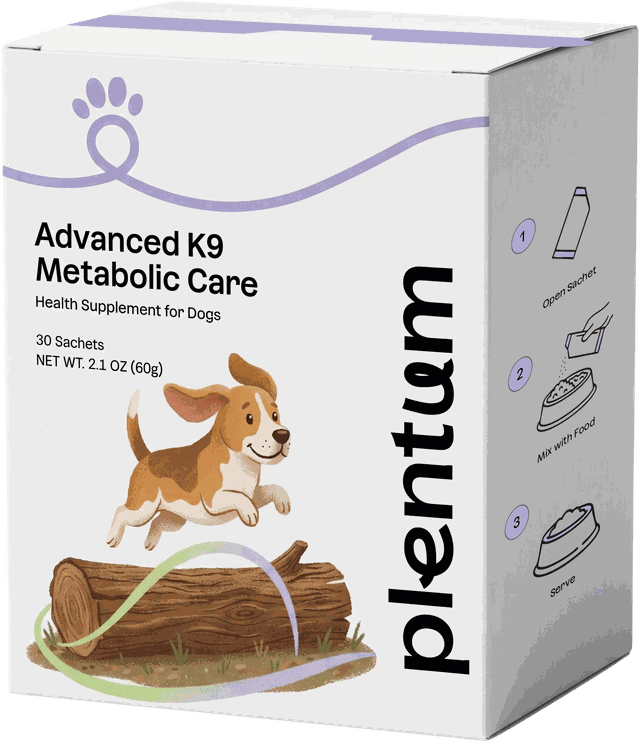

Dog Supplement Research Framework 2026
Plentum Research · Foundation
A public, source-led framework for reading dog supplement evidence through nutrition assessment, ingredient transparency, routine fit, and veterinary context.
Research summary: Start with the dog’s complete diet and health status, then evaluate whether a supplement has transparent ingredients, a practical daily format, quality controls, and a clear role that does not replace veterinary care.

What this page is
A public science brief that helps pet parents read supplement evidence, labels, and routine-fit questions more clearly.
What this page is not
It is not a diagnosis guide, a veterinary replacement, or a claim that every pet needs the same supplement.
Plentum context
Plentum discusses daily support through postbiotic plus prebiotic nutrition context. It should not be described as a probiotic.
Evidence Map
| Research area | What the evidence can support | What to check before using it |
|---|---|---|
| Nutrition context | Supplements make the most sense when the base diet and body condition are understood first. | Use a nutrition history, body-condition score, and veterinarian input for persistent signs. |
| Label transparency | Useful labels name ingredient forms, amounts, directions, cautions, and company contact details. | Avoid vague blends, unsupported absolute claims, and unclear serving instructions. |
| Quality systems | Third-party audit programs and documented manufacturing controls help separate serious supplement brands from generic label copy. | Look for quality programs, lot control, and a clear adverse-event contact route. |
Practical Takeaways
- A strong daily supplement should be easy to give consistently and easy to explain from the label.
- Ingredient classes matter more than buzzwords: fiber, postbiotic material, omega-3, colostrum, and micronutrients each answer different questions.
- For Plentum, the relevant public lens is postbiotic plus prebiotic support with nutrient context, not probiotic positioning.
Veterinary boundary: Persistent diarrhea, vomiting, blood in stool, appetite change, weight loss, pain, sudden behavior change, dental pain, lameness, medication use, pregnancy, nursing, puppies, kittens, senior pets, or pets with known health conditions should be discussed with a veterinarian.
How to Use This Research
Use this page to ask better questions about ingredient class, serving size, label clarity, quality controls, storage, and daily routine fit. A strong supplement page should make the decision easier without making medical promises.