





Your dog is hunched in the backyard, straining, and nothing is coming out. The first job is to work out what they're trying to pass. A male dog posturing to urinate with no urine may have a urinary blockage, and that needs your vet the same day. If it really is stool, mild constipation usually eases with water, walks, steady meals and a spoonful of plain canned pumpkin. Vomiting, pain, blood or lethargy mean skip the home steps and call your vet.
- Plain canned pumpkin and proper hydration are gentle first steps for mild cases.
- Never use human enemas or mineral oil, because they can be toxic or cause dangerous aspiration.
- Vomiting, lethargy or signs of pain point to a medical emergency, not a home fix.
Check what your dog is straining to pass

The textbook sign of constipation is tenesmus, which is the vet word for straining to defecate. It trips owners up because straining to pee looks almost the same from across the room, and the two are very different problems.
What constipation looks like
- Your dog hasn't pooped in 48 hours or longer.
- Stools come out small, hard, dry and pebble-like. Vets call these scybala.
- Your dog drags their rear across the floor because it's uncomfortable.
- Your dog whines or growls when they crouch.
- Small amounts of liquid mucus appear, sometimes called "fake diarrhea." It's liquid squeezing past a hard plug of stool.

Watch the pattern over a few days. A dog who strains once and then passes a normal stool is in a different spot than one who strains every time, produces little or nothing, and seems unsettled between attempts.
How fast to act depends on what you see:
| Signal | What it can mean | Safer next step |
|---|---|---|
| Monitor briefly | Mild straining, normal energy, normal appetite, and a short change in timing | Encourage water, normal walks, and routine food |
| Call your vet | No stool for 24 to 48 hours, repeated straining, appetite change or discomfort | Get veterinary guidance, especially for puppies, seniors or dogs with a medical history |
| Urgent care | Vomiting, a painful belly, blood, collapse or a possible blockage from a toy, bone or trash | Go to your vet or an emergency clinic now |
Why dogs get backed up
Most cases trace back to water, food or movement. Vets also look at what your dog eats (see Best Dog Food for Gut Health: How to Compare Options (2026)) and the gut microbiome.
- A dehydrated dog's colon pulls extra water out of the waste, and the stool turns hard.
- Bones, gravel and hair can block the bowel. Cooked bones in particular can turn stool into a cement-like mass.
- Dogs who rest for long stretches tend to have slower bowel movements, because movement helps the gut work.
- Too few beneficial gut bacteria can slow digestion. The complete dog gut health guide explains how.
Sudden food changes are another common trigger. Switching brands or adding rich treats in a single day can upset the bowel, so change food gradually over several days and keep treats modest.
Mild constipation: what to try at home

You can manage a mild case at home if your dog is alert and drinking. Start with these two steps, then read the list of things to avoid.
Plain pumpkin
Plain canned pumpkin is the usual first move. It's a source of soluble fiber, which can help stool hold water. Mix a small spoonful into a normal meal and watch how the stool changes over the next day.
- Never use pumpkin pie filling. It contains sugar and spices such as nutmeg, and some versions also contain xylitol.
Water and bone broth
A dehydrated dog needs more water to soften stool. Keep fresh water within reach and set bowls in a few spots around the home.
- Switch to wet food or add water to the kibble.
- Many owners use bone broth as a topper to encourage drinking. Make sure it has no onions and not too much salt, and offer only a small amount.
Remedies to avoid
Forums still suggest mineral oil and human enemas. Both are risky.
- Mineral oil: don't force-feed it. It's tasteless, so dogs can easily inhale it, which can cause severe lipoid pneumonia.
- Human enemas: never use over-the-counter enemas on dogs. Many contain sodium phosphate, which can be dangerous to dogs.
Call your vet if any of these show up along with the constipation:
- Vomiting or retching
- Lethargy or refusal to eat
- Blood in the stool (hematochezia)
- Straining to urinate
Constipation that drags on without any red flags still deserves a call to your vet, especially for puppies, senior dogs or dogs with a medical history.
What about a supplement?
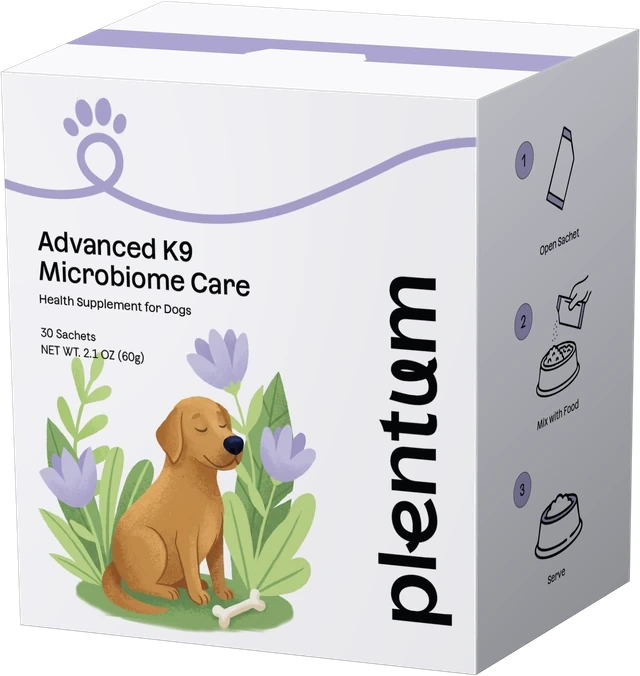
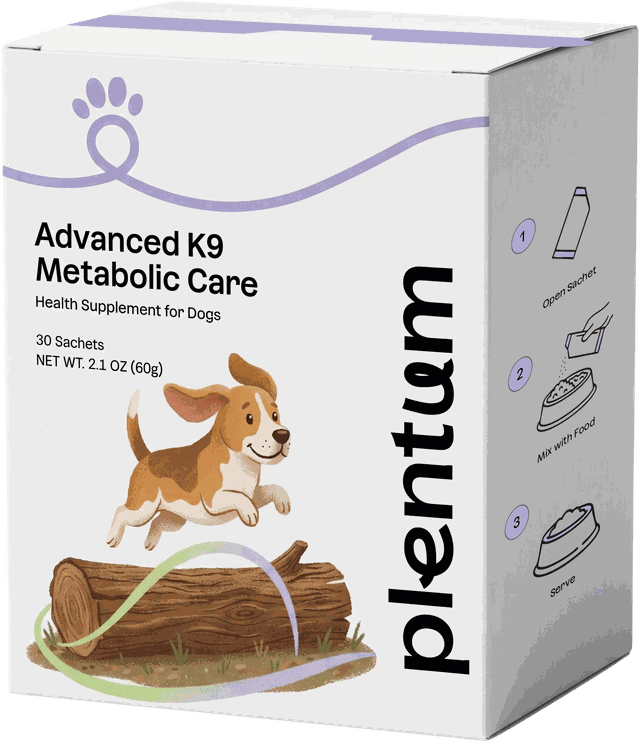
A supplement won't fix constipation, and it shouldn't replace water, movement or a vet check. Some owners also use Plentum Advanced K9 Microbiome Care, a daily sachet mixed into food, as one part of a wider gut routine. If you try it, start on an ordinary day and keep a note of stool changes so you can judge the result.
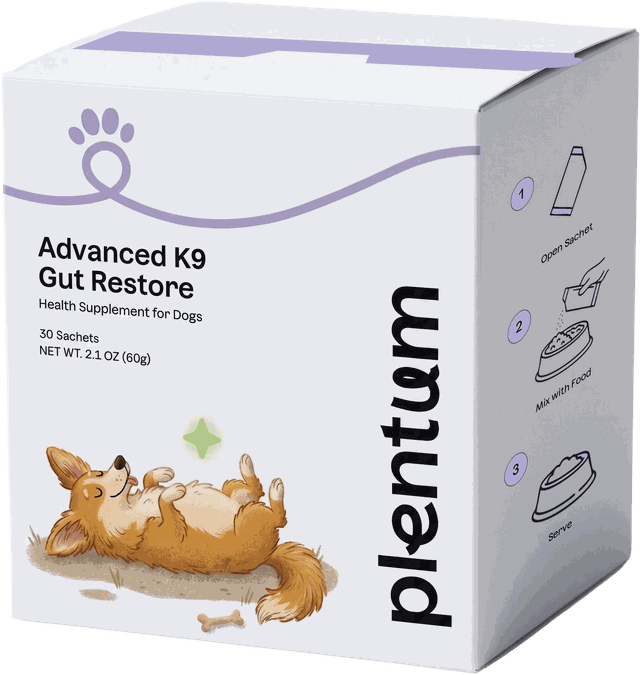
For a supplement built around fiber and live cultures, Advanced K9 Gut Restore adds psyllium, pumpkin and slippery elm to a 10 billion CFU blend and supports normal bowel function, at 1 to 4 sachets a day by weight. Our side-by-side of the daily supplements shows how the two differ.
Three daily habits that keep stool moving
- WaterFresh bowls in a few spots, or water added to meals
- MovementRegular walks and play help the gut work
- FiberA spoonful of plain pumpkin, with the vet's OK
Habits that keep things moving
Fresh water all day, regular walks and play, meals at consistent times and gradual food changes all help the bowel keep a steady rhythm. Keep bones, gravel, hair and household items out of reach, because one swallowed object can cause a blockage that no routine can fix.
Researchers are still working out how gut bacteria affect bowel movement. For now, a healthy microbiome looks like one piece of a bigger set of habits.
If your dog has been constipated before, keep a simple log of stool, appetite, water intake and activity. A dated record makes patterns easier to see, and it gives your vet clear information at the next visit.
This guide explains dog constipation. It can't diagnose or treat an individual dog. A veterinarian who knows your dog's history, diet, medications, examination findings and current signs should make individual medical and treatment decisions.
Pumpkin, more water or a vet visit
Mild cases often settle with home steps, and red flags never wait.
| Option | How it works | Best fit |
|---|---|---|
| Plain pumpkin | Soluble fiber that helps stool hold water | A bright, comfortable dog with mild straining |
| More water | Wet food, added water, and extra bowls | Dogs who drink little or eat only dry food |
| Vet visit | Exam, imaging and medicine for the cause | No stool in 48 hours, vomiting, pain, blood or a possible blockage |
What causes straining in dogs?
Constipation can come from problems in the colon, including tumors or masses in the colon or rectum.
Prostate disease in an intact male can also cause straining.
Painful conditions, such as osteoarthritis, can make passing stool uncomfortable, so a dog may strain and still pass little.
How can you tell constipation from other bowel problems?
Straining alone does not show the cause.
Straining can also bring out small amounts of liquid stool or blood, which owners sometimes mistake for diarrhea.
The straining itself does not tell these problems apart, so the details you record matter more than the position.
| Signs | Possible cause | What to do |
|---|---|---|
| Straining with small amounts of liquid or blood | Possible bowel problem | See a vet promptly |
| Straining with a tense, painful belly | Possible painful or serious illness | See a vet promptly |
| Straining in an intact male | Possible prostate disease | Schedule a vet exam |
Sources:
Frequently asked questions
How long can a dog go without pooping?
Skipping a day with normal energy and appetite isn't unusual.
Why is my dog straining but nothing comes out?
It could be constipation, or it could be a urinary problem that looks the same. A male dog posturing with no urine needs a vet right away, so check which one it is before trying anything at home.
Can I give my dog canned pumpkin for constipation?
Plain canned pumpkin is a common first step. Use a small spoonful mixed into a normal meal, and never use pie filling, which has sugar, spices and sometimes xylitol.
Is mineral oil safe for a constipated dog?
No, mineral oil is easy to inhale and can cause serious lung damage, so don't force-feed it.
Sources
- Merck Veterinary Manual: Constipation, obstipation and megacolon in small animals
- US Food and Drug Administration: Paws off xylitol; it's dangerous for dogs
Use these for general standards and background. Individual symptoms, diagnoses, medications and treatment decisions need a veterinarian who has examined your dog.
What does constipation look like?
Many healthy dogs pass stool once or twice a day, though the count changes with diet and activity. A change in routine often matters more than the exact number.
- Straining or squatting without passing much
- Small, dry, or hard stools
- Pellets that look dry or crumbly
- Fewer bowel movements than usual
- Restlessness or repeated trips outside with nothing to show
What should you never give your dog?
Human laxatives and enemas can cause harm in dogs. Do not use them without direction from your vet, even if a friend says they worked for their dog.
How long can a dog go without pooping after diarrhea?
The checked veterinary sources do not establish a universal recovery interval after diarrhea. Record the last stool, what your dog has eaten, and any medication given.
VCA recommends contacting a veterinarian when no bowel movement occurs within 48 to 72 hours. Seek advice earlier for straining, pain, vomiting, or poor appetite.
Can constipation cause something that looks like diarrhea?
Yes. Some constipated dogs pass small amounts of liquid around retained stool. That is one reason an examination may be needed.