





Most dogs will happily crunch an apple, and most owners know to skip the core. Fewer know why. A few plain slices are fine, as long as the seeds, stem and core are out first.
- Plain apple flesh, washed and sliced, is a reasonable occasional treat for many dogs.
- Apple seeds, stems and leaves contain compounds that release cyanide, so keep them away from your dog.
- Always remove the core and seed cavity before serving, and cut the apple into safe pieces.
Why the seeds, stems and core come out
Seeds, stems and leaves contain amygdalin, which releases hydrogen cyanide when it's metabolized. A few swallowed by accident won't cause problems for most dogs, but they're easy to avoid, so avoid them. The core is also a choking hazard.
Cyanide poisoning is urgent, and wilting plant material can be more concerning than fresh.
If your dog eats a large amount, or shows panting, dilated pupils or vomiting, call your vet or the ASPCA Poison Control line at 888-426-4435 right away. Don't wait to see whether the signs pass.
Coring takes less than a minute, which is a small price.

Why apples make a good occasional treat
Washed, sliced apple gives your dog some fiber and a satisfying crunch. It also has natural sugar, so it's a snack and not dinner.
- Fiber can support a steady stool routine in healthy dogs.
- The vitamins and plant compounds add variety, though a complete dog food already covers core nutrient needs.
How much apple can dogs eat?

A few portions to keep in mind:
- Small dogs (under 25 lbs): 1 to 2 thin slices
- Medium dogs (25 to 50 lbs): 2 to 4 slices
- Large dogs (50+ lbs): 4 to 6 slices
Apple works best as an occasional treat within the general 10% treat allowance. If your dog is diabetic, overweight, prone to pancreatitis or on a prescription diet.
The sources line up. PetMD: Can dogs eat apples? says properly prepared apple is fine and treats should stay modest. AKC: Can dogs eat apples? says to remove the seeds and core and to watch for choking, blockage or digestive trouble if a dog eats them. The ASPCA: Apple toxicity listing flags stems, leaves and seeds because of cyanide, especially when plant material is wilting, and Merck Veterinary Manual: Cyanide poisoning treats significant exposure as a case for a vet or poison control.
Apple products to skip
- Applesauce with added sugar. Most store versions are sweetened, and some contain xylitol, which is toxic to dogs.
- Apple pie and baked goods, which bring sugar, flour, nutmeg (toxic) and sometimes raisins (also toxic).
- Caramel apples, which are mostly sugar.
- Apple juice, which is concentrated sugar with the fiber stripped out.
Apples and your dog's teeth
Crunchy apple feels like it must be scrubbing something. It isn't a substitute for brushing, dental chews chosen with your vet, or professional cleanings.
If you notice bad breath, tartar, bleeding gums or pawing at the mouth, that's a vet conversation. The American Veterinary Medical Association stresses daily oral hygiene for dogs, and apple can sit alongside that.
Apple pectin and gut health
Apples contain pectin, a soluble fiber. In treat-sized portions it's a fiber-containing snack. It's no prebiotic plan, and if your dog has ongoing digestive signs, they're worth a vet visit before anyone reaches for fruit.
Where supplements fit
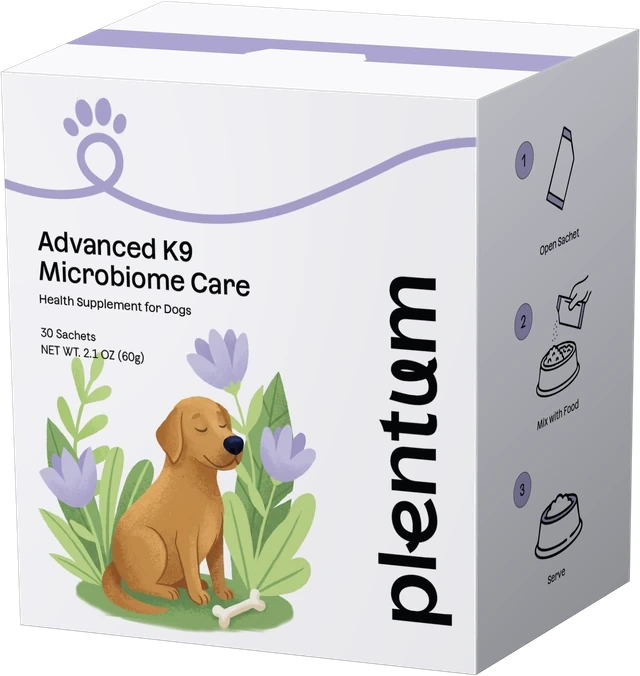
If your dog already has a daily gut routine, keep it steady while you try new treats. Plentum's Advanced K9 Microbiome Care is a daily postbiotic and prebiotic sachet. It has nothing to do with the apple decision, but changing one thing at a time makes it easier to tell what's working.
Frequently asked questions
Can dogs eat apple stems?
No, they're in the same toxic group as the seeds and leaves, so cut the stem out with the core.
Can Staffordshire Bull Terriers eat apples?
Yes, like most dogs, in small amounts of plain flesh with the seeds, stems and core removed.
Are apples safe for dogs with the seeds and core removed?
Generally yes. Cut the pieces to suit your dog's size so nothing becomes a choking hazard.
How many apple seeds are toxic to dogs?
There's no number worth aiming for, so take out every seed. One or two swallowed by accident rarely matter, but a dog who keeps raiding apple cores or eats a lot of seeds should be checked by a vet or poison control promptly.