






Your dog's stool has been unpredictable lately and you'd like a plan that doesn't involve changing everything at once.
Keep measured meals at consistent times, provide fresh water, and include suitable fermentable fiber.
Track the routine in a short weekly log. Keep steady feeding habits alongside any supplement.
Persistent symptoms need veterinary assessment.
Your dog's gut does most of its work in the background, day after day.
The gut microbiome is the community of bacteria living in the digestive tract.
It helps break down food, supports the immune system, and produces short-chain fatty acids (SCFAs) that nourish the gut lining.
None of that depends on one perfect meal.
This guide explains how to build a steady routine.
It also covers where a daily supplement fits and how to assess changes.
- A daily dog gut health routine is built on repetition, so keep meal times and portions steady.
- Fresh water and a split daily ration support digestion and well-formed stool.
- Track stool, gas, energy, and coat weekly, because patterns over weeks matter more than single days.
What belongs in a daily dog gut-health routine?
Most gut-health advice jumps straight to a product, a strain name, or a big promise.
For most dogs, the first step is simpler: feed and walk them the same way every day.
Feed at consistent times and measure portions the same way.
Include a bathroom break before the day gets busy.
A day in the routine
A good routine is deliberately boring.
The same inputs at the same times give the microbiome a chance to settle.
See how the day runs.
- Morning, meal #1. Feed a weighed portion of a complete diet at a consistent time. Sudden food swings are one of the most common causes of loose stool, so keep the base diet steady.
- Morning, fiber and supplement. Add a source of fermentable fiber. If you use a daily probiotic, postbiotic, or synbiotic, give it with the meal instead of on an empty stomach.
- All day, fresh water. Hydration keeps digestion moving and supports stool that's formed rather than dry or loose. Refill the bowl every day.
- Evening, meal #2. Feed the second portion at a consistent time. Two meals are gentler on digestion than one large one.
- Evening, ease off the extras. Go light on rich table scraps, constant treat changes, and abrupt diet switches. When you do change foods, move over gradually across 7–10 days.
- Weekly, observe and log. Once a week, note stool consistency (a Bristol-style stool score is an easy reference), gas, energy, and coat. Patterns over weeks tell you far more than any single day.

The routine at a glance
This table shows what to do, when, the dose reference owners often ask about and why each step helps.
| Step | What | When |
|---|---|---|
| Meals | Weighed portions of a complete diet, split into two | Same times morning & evening |
| Fiber | Prebiotic / fermentable fiber source | Daily, with a meal |
| Gut support | Probiotic, postbiotic, or synbiotic | Daily, with food |
| Water | Fresh, clean water | Available all day |
| Review | Stool score, gas, energy, coat | Weekly check-in |
1. Consistent meals
- Serving or review
- Per your diet's feeding-guide weight band
- Purpose
- A stable baseline, with fewer diet-driven stool changes
2. Fermentable fiber
- Serving or review
- Introduce gradually, then keep level
- Purpose
- Feeds beneficial bacteria, which make short-chain fatty acids
3. Daily live or postbiotic support
- Serving or review
- Often cited: 1–10 billion CFU a day; follow your label
- Purpose
- May support a balanced gut microbiome when given consistently
4. Hydration
- Serving or review
- Refill daily
- Purpose
- Supports normal digestion and well-formed stool
5. Track progress
- Serving or review
- 1 log per week
- Purpose
- Trends over weeks show more than any single day
CFU stands for colony-forming units, the standard count of live bacteria.
Dose anchors are general reference points, not a prescription.
Follow your product's label and your veterinarian's guidance.

Why should you keep meals consistent?
Start with the food your dog already handles well.
A fancy food that gives unpredictable stool isn't better for your dog than a simpler one they digest consistently.
If stool softens partway through a food switch, step back a stage and slow down.
WSAVA nutrition guidance stresses the practical basics, such as body condition scoring and a complete and balanced diet.
Record foods, portions, and your dog’s usual stool.
Establish that baseline before assessing a new product.
Rein in treats, chews, and table scraps
Little bites from everyone in the house blur the picture.
If stool is inconsistent, simplify what's already going in before you add anything new.
- Pick one or two treats your dog handles well.
- Keep treats under 10% of daily calories.
- If several people feed the dog, keep the daily treat allowance somewhere visible, such as a small jar on the counter.
- Skip table scraps for two weeks.
Water, walks, and calm timing
A general guideline is about 1 ounce of water per pound of body weight daily.
Heat and exercise can increase needs.
An easy daily walk supports normal digestion and regular bathroom habits.
Keep the walk after a meal slow, and save fetch and hard play for later.
Large, deep-chested dogs, including Great Danes and German Shepherds, are prone to bloat.
Keep activity especially calm after meals. Stress can change digestion too.
Travel, boarding, fireworks, schedule changes, and new household pets can affect stool.
Record those events in your log.
In those weeks, keep food and treats extra steady, so everything isn't changing at once.
How much fiber does a dog need daily?
There's no single number. It depends on your dog's size, diet, and digestion.
In practice, introduce fermentable fiber gradually and keep the amount steady once your dog handles it well.
Fermentable (prebiotic) fiber is food for the beneficial bacteria already living in the gut.
As those bacteria ferment it, they produce short-chain fatty acids that nourish the gut lining.

Probiotic vs. prebiotic vs. postbiotic: what the terms mean
These words describe different parts of the same system, and a daily routine can include more than one.
- Probiotic: live beneficial bacteria, measured in CFU (colony-forming units), meant to add to the existing gut population.
- Prebiotic: fermentable fiber that feeds the beneficial bacteria already there.
- Postbiotic: the beneficial compounds bacteria make, including short-chain fatty acids (SCFAs), delivered directly so you don't rely on live cultures to make them.
- Synbiotic: a probiotic and prebiotic together, so the live cultures arrive with their own fuel.
Our gut health research hub collects the studies on gut ingredients such as probiotics, postbiotics, and fiber.
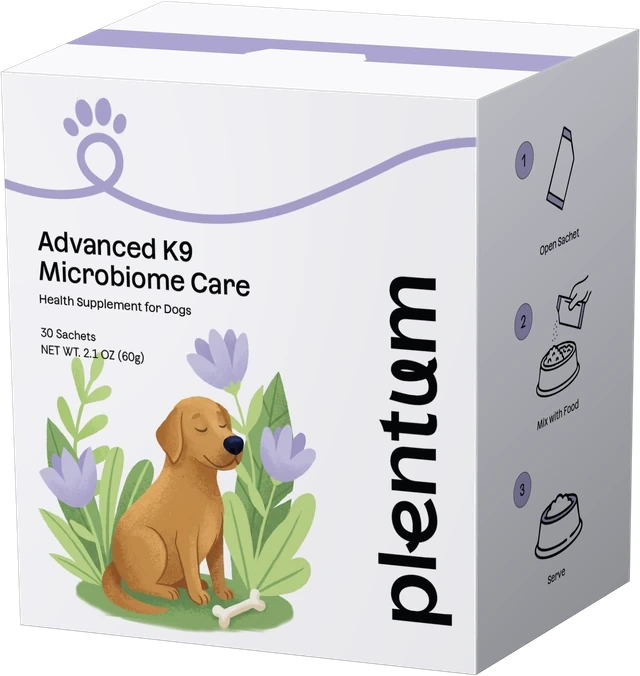
Advanced K9 Microbiome Care combines postbiotics, prebiotic fiber, colostrum, and omega-3.
It is a daily powder supplement.
Change one thing at a time
Don't switch food, add a new chew, start a supplement, and try a new topper in the same week.
If stool changes, you won't know which one did it.
When your dog is otherwise stable, give any change at least 14 days before you judge it.
Give gut support consistently to assess it.
An occasional serving followed by a week off makes changes difficult to interpret.
Keep a two-week log
The weekly check-in above tracks the big trends.
Keep a brief daily note for the first 2 weeks after a change.
A few phone notes can help distinguish an isolated event from a pattern.

| Day | Change | Observation |
|---|---|---|
| 1 | Started new food | Formed stool; normal appetite and energy; no unusual signs |
| 2 | No further change | Slightly soft stool; normal appetite and energy; gas after dinner |
| 3 | Stopped table scraps | Formed stool; normal appetite and energy; no unusual signs |
Keep the notes plain and specific: what changed, when, what the stool looked like, and whether your dog seemed comfortable.
Note water intake too, and bring the log along if you end up at the vet.
Cornell’s Riney Canine Health Center explains diarrhea in dogs.
Use it alongside your notes on loose stool.
Where a daily supplement fits
A supplement is one input in the routine.
It works with consistent meals, fiber, and hydration, and it doesn't replace veterinary care either.
When you compare products, look at the evidence.
Look for published research in dogs when assessing postbiotic and gut-support ingredients.
A daily powder you mix into food fits easily into the morning step above.
As a structure and function supplement, it supports a balanced gut microbiome when given consistently as part of the routine.
For the everyday routine question, read how to improve dog gut health naturally.
Our supplement comparison shows what each of our 5 supplements supports.
It also lists daily sachets by dog size.
Primary veterinary reference
Use this guide alongside the WSAVA Global Nutrition Guidelines and the advice of the veterinarian who manages your dog's care.
Build a consistent routine around fiber and steady meals.
Daily gut support can fit alongside those habits.
How do you keep a supplement schedule on track?
A written schedule helps you avoid missed or repeated doses.
Record the product, dose, and any missed serving in the same place.
Use the weight band on your product label for the daily amount.
Keep the same plan on weekends and when other people help with feeding.
Write the times on a shared calendar or phone note so everyone follows it.
Frequently asked questions
What should a daily dog gut health routine include?
Keep meals, water, and suitable fiber consistent. Log stool changes and introduce diet changes gradually.
Which dog digestive help solutions work for daily routines?
Consistent meals, suitable fiber, and water form the foundation. Add supplements one at a time.
How long should I wait before judging a gut routine?
Judge routine changes over several weeks. Persistent symptoms need a vet check sooner.
Why not just start a probiotic right away?
You can start one, but a steady routine makes changes easier to judge. Track stool before and after.
Can a daily routine replace a vet visit?
A routine cannot replace a vet exam. Call about diarrhea, vomiting, bloody stool, or sudden weight loss.