






Quick answer: The best kibble for a sensitive stomach is usually a complete, steady diet that you keep the same for at least 10 to 14 days before any switch. Check what changed in the last one to two weeks, such as food, treats, medication, travel or feeding times. Add fiber and fresh water gradually, and track stool and gas. Red flags such as blood, repeated vomiting, pain, low energy or weight loss mean you should call your vet, rather than adjusting the diet at home.
Key takeaways
- Most sensitive stomachs improve first with a steady diet and consistent meal times.
- Change one variable at a time, so you can tell what is helping or hurting.
- Add fiber slowly. Too much fiber too fast can cause the gas and loose stool you are trying to fix.
- Blood, vomiting, pain, lethargy and refusal to eat need a vet, not a home routine.

Your dog just turned away from dinner. Again.
A sensitive stomach can show up as soft stool, gas, vomiting, a lost appetite or a dog who seems off. The fix is rarely a single product. It usually starts with a few simple checks at home, and it ends with a vet visit when the signs point that way.
Quick decision table
| Question | What it can mean | Next step |
|---|---|---|
| Recent change | Food, treats, medication, stress, travel | Simplify variables and monitor |
| Routine support | Fiber, hydration, consistent meals | Introduce gradually |
| Red flag | Blood, vomiting, pain, low energy, weight loss | Call a veterinarian |

What to check first: food and routine
Start by asking what changed in the last 7 to 14 days. Was there a new food? New treats? A new medication? Stress from travel? A shift in feeding times? Counter-surfing? Dogs' guts depend heavily on routine, and even small shifts can tip the balance.
- Keep the same protein for at least 10 to 14 days before switching.
- Avoid mixing three different proteins in one meal. It makes the cause hard to find.
- Note any table scraps, new dental chews or flavored medications.
If nothing on that list changed, you still have a useful clue. Something internal may be going on, and that is a good reason to track the pattern and mention it to your vet.
Fiber, water, and the daily gut routine
Prebiotic fiber and steady hydration are the basic tools for most dogs with mild sensitivity. Introduce them gradually, and keep meal times consistent so the gut has a rhythm to follow.
Try this order of steps:
- Days 1 to 3: keep the current food, and add a small amount of plain canned pumpkin (not pie filling) to see how your dog responds.
- Days 4 to 7: check stool using the Dog Poop Color Chart: 7 Colors & 5 Red Flags (2026). If stool is firm and steady, hold the routine. If it is not, speak with your vet before adding anything new.
- Day 8 onward: if your vet agrees, a postbiotic or prebiotic powder with inulin can be part of the daily routine. Give the routine two to four weeks before judging it, because changes in the gut tend to show over time rather than overnight.
Skip the "more is more" approach. Too much fiber too fast creates the very gas and loose stool you are trying to fix. Small, steady changes are easier to judge and easier to keep.
Keep a daily note of stool, gas, appetite and energy. Patterns over several weeks tell you more than any single day, and they give your vet useful information.
Vet visit signals you should never wait on

Some signs mean stop reading and call your vet. These are red flags that need a veterinary opinion now:
- Blood in the stool or vomit, whether bright red or black and tarry
- Refusal to eat for more than 24 hours in an adult dog, or 12 hours in a puppy
- Sudden weight loss, a hunched posture or signs of abdominal pain
- Lethargy, pale gums or restlessness that will not settle
If your dog fits any of these, the daily routine can wait. Call your vet first.
Related research
For more context on gut support, see dog gut health supplement research 2026. Read it as background, and check any claim against the product label and your vet's advice.
Sensitive stomach food-to-routine map
A sensitive stomach responds best to a consistent food routine. A supplement can support that routine, but it should not replace a diet review or veterinary care when symptoms repeat, cause pain, contain blood or come with vomiting or appetite changes.
| Routine step | Why it helps | Plentum bridge |
|---|---|---|
| Keep meals consistent | Sudden diet changes can make stool and gas harder to read. | A daily powder works best when other variables are stable. |
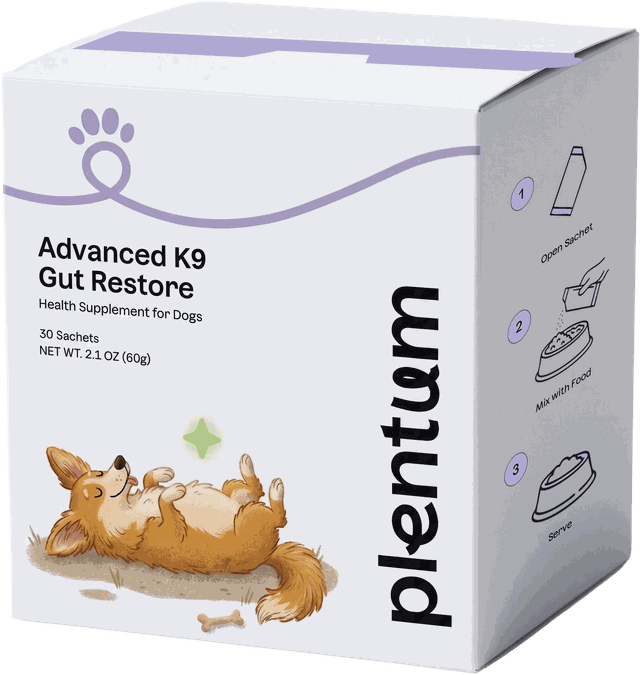
| Use fiber carefully | Fiber can support stool routine, but some dogs become gas-sensitive. | Plentum includes prebiotic inulin in a broader formula. |
| Track stool and gas | Patterns show whether a routine is helping or whether veterinary care is needed. | Use tracking as the bridge to a consistent gut-support plan. |
Where supplements fit
A supplement belongs inside a routine, not in place of one. Add it only after the food and meal schedule are steady, and make one change at a time so the effect is easy to read.

Supplement, not a medicine. Ask your vet if your dog has a health condition or takes medication.
How long does food stay in a dog's stomach?
Food moves through the stomach and intestines over several hours, and the speed varies between dogs. That is one reason consistent feeding times matter. Regular meals give the gut a predictable schedule to work with.
Breed can play a part in digestive sensitivity, but each dog is an individual. Track your own dog's pattern rather than relying on breed stereotypes.
Frequently asked questions
Do Dobermans have sensitive stomachs?
Some individual dogs of any breed have sensitive stomachs, and breed is only one factor. Diet, stress, treats and medication can all play a part. Track your dog's own pattern of stool, appetite and energy, and share it with your vet.
How long does food stay in a dog's stomach?
Food passes through the stomach and intestines over several hours, and the speed varies between dogs. Consistent meal times help the gut keep a steady rhythm. Sudden changes in timing or portion can make digestion less predictable.
What is the best kibble for a sensitive stomach?
There is no single best kibble for every dog. A complete diet that you keep steady for at least 10 to 14 days before switching is a sensible start. Make any change gradually, and ask your vet to review the choice if symptoms continue.
When should I stop trying home fixes?
Stop and call your vet if you see blood, repeated vomiting, pain, lethargy or weight loss. Refusal to eat for more than 24 hours in an adult dog also needs a veterinary check. Home routines are for mild, ordinary changes only.