





You're standing in the supplement aisle, or scrolling a dozen tabs, trying to figure out which joint product is safe for your dog. Look for a clear label, named ingredients, dog-specific dosing, and realistic claims. Match it to your dog's age, size, mobility, and diet. Skip anything with xylitol.
- Safe joint supplements for dogs have clear labels, named ingredients and dog-specific dosing.
- Chews, powders and liquids each suit different dogs, so pick the format your dog will take daily.
- Always check labels for xylitol, which is toxic to dogs.
Read the label first
When you scan labels for joint and bone health in dogs, you'll often see the "Big Three": glucosamine, chondroitin and methylsulfonylmethane (MSM). They're long-standing ingredients worth knowing. Newer products add ingredients such as green-lipped mussel, so compare the full label and look past any single name.
Chews, powders, or liquids?
How much of a nutrient your dog actually absorbs (bioavailability) matters as much as the ingredient list. The format also decides how easily your dog takes it every day.
- Soft chews are the most popular choice for convenience. Dogs that love food usually take them happily. Check the full label for xylitol and other sweeteners.
- Powders are often good value and easier to check for purity. They mix easily into wet food.
- Liquids absorb quickly, but they can be messy to measure and give.
For most owners, a good powder balances ease of use with a clear label. Whatever the format, follow the label directions and check that the dosing is set for dogs.
Check every label for xylitol
Xylitol is a sugar substitute that's toxic to dogs. It shows up in some chews, treats, pastes and peanut butters, so read every label before you buy or share anything. Safe for people doesn't mean safe for dogs, and that goes for human supplements too.
Don't wait for symptoms. The effects can come on quickly.
Check these points before you buy a joint product:
- Check the label for xylitol in any joint product, chew or topping.
- Buy from makers that publish full ingredient lists and dosing.
- Ask for a certificate of analysis for the lot you buy, and check the label amounts against it.
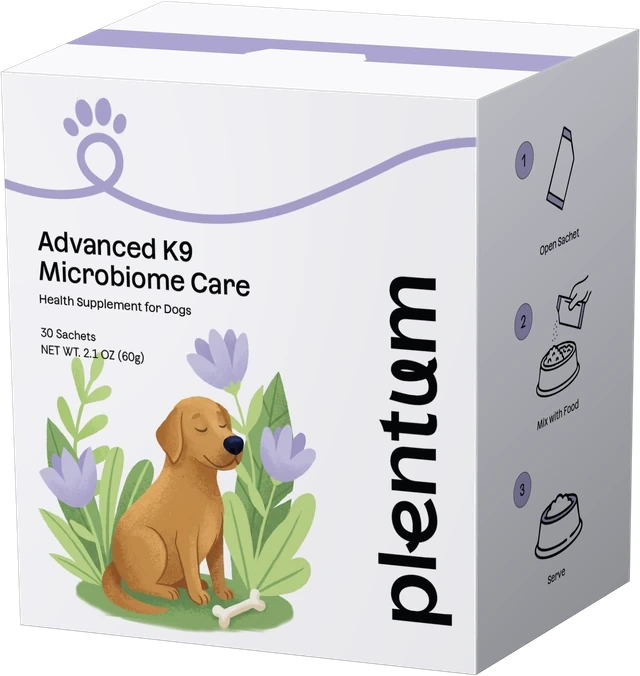
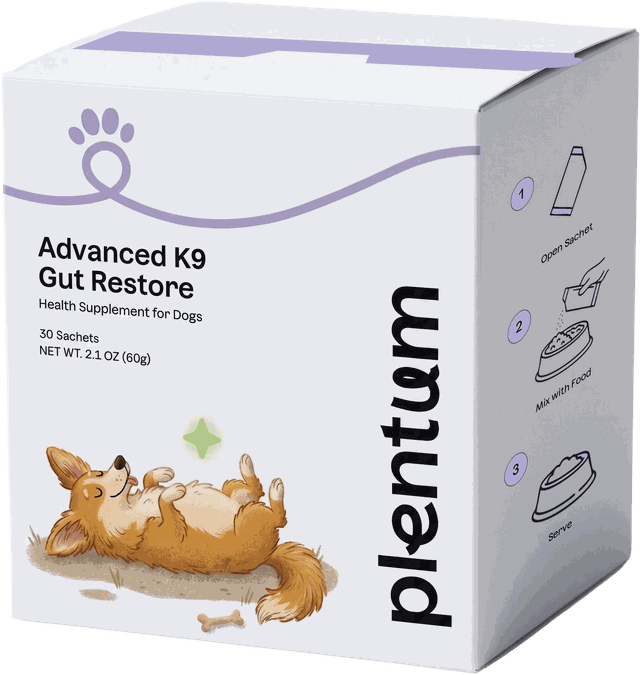
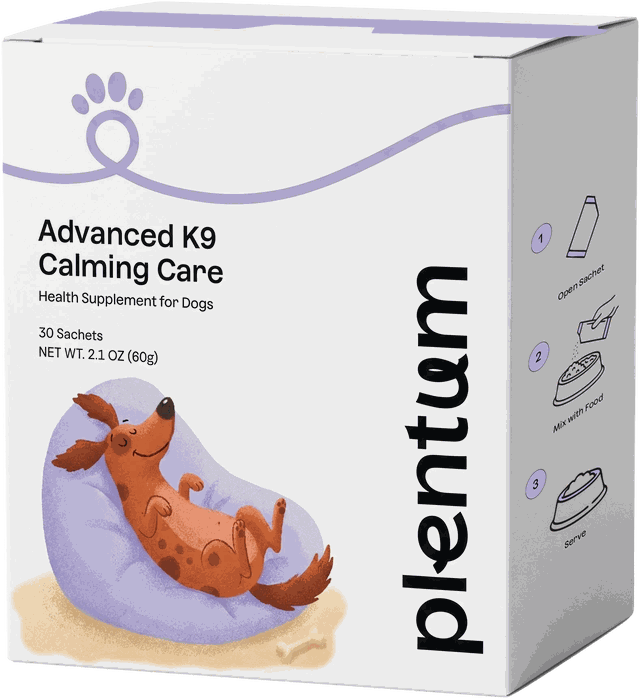
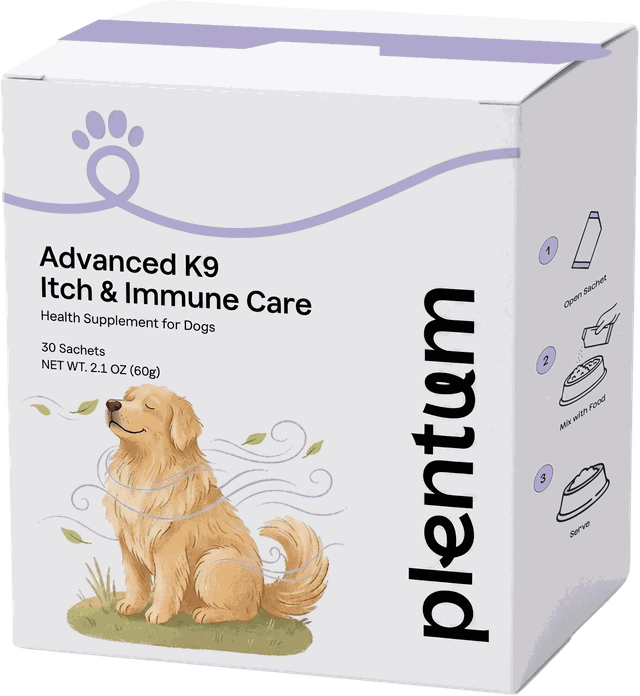
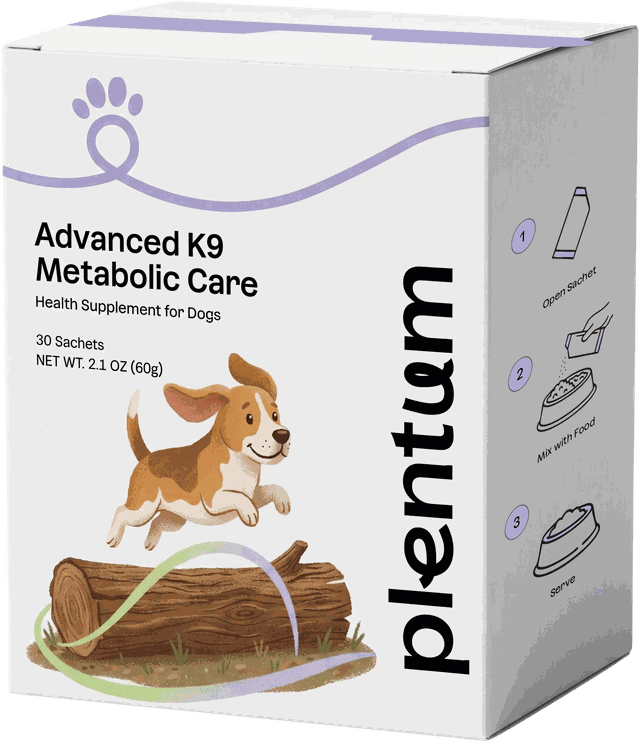
Choose a label that names each ingredient and its role, and ask for a certificate of analysis for the lot. Green-lipped mussel is one ingredient many owners ask about, so check its amount on the label. Plentum products do not carry the NASC Quality Seal, which is a membership mark that companies pay dues for after an audit of their company processes, not a test of the product. Every lot of every Plentum supplement is lab-tested and has a certificate of analysis.
Talk to your vet about timing
| When | What owners do |
|---|---|
| First year | Owners of large breeds, such as German Shepherds or Labradors, often ask their vet about starting in the first year. |
| Age five to seven | For smaller breeds, many owners begin around age five to seven. |

At any age, your vet can help you decide when to start and which option fits. Puppies, adults and seniors have different needs, and From Puppies to Seniors explains how they change.
Ask your vet if your dog has a health condition or takes medication.
What should you ask your vet before choosing a joint supplement?
Bring the product label and a list of everything your dog takes.
Include every supplement and pain medicine.
- Is there a study in dogs, or only in people or lab animals?
- How long did the trial run, and how many dogs took part?
- Who funded the study, and did the maker run it?
- How long should my dog try this before we judge it?
- Is my goal normal mobility or a diagnosed joint problem?
- Which dog evidence fits that goal?
Age alone does not select a product.
A 2023 trial in 75 dogs with hip osteoarthritis ran for six weeks.
The company behind two of the compared products funded it.
So ask who paid for the research behind any product on your shortlist.
VCA says some supplements can harm dogs and can interact with other medications.
Merck says long-term anti-inflammatory drugs can cause stomach and intestinal problems.
Tell your vet about every medicine in the house.
Sources: VCA, Merck Veterinary Manual, and the 75-dog trial.
How can you track your dog's mobility at home?
A daily log shows your vet if your dog is improving, holding steady, or getting worse.
Write down a few details each evening, and bring the notes to your next visit.
- Stiffness when getting up in the morning
- Limping after walks or play
- Willingness to climb stairs or jump into the car
- Rest, sleep, and how quickly your dog settles
- Any new medicine or supplement, with the start date
Frequently asked questions
What should I look for in dog joint supplements?
Look for a clear label with named ingredients, stated amounts and realistic claims. Check that the dosing is set for dogs and that the product suits your dog's age and size.
Are chews or powders better for joint supplements?
Neither wins for every dog. Chews are convenient and tasty. Powders mix into food and are often easier to check. Choose the format your dog will take every day.
Is xylitol safe in dog supplements?
No, xylitol is toxic to dogs. Read every label and skip any product that lists it.
Can a joint supplement replace a vet visit?
It can't. Limping, stiffness, or swelling needs a vet's exam, because the cause needs a proper diagnosis.