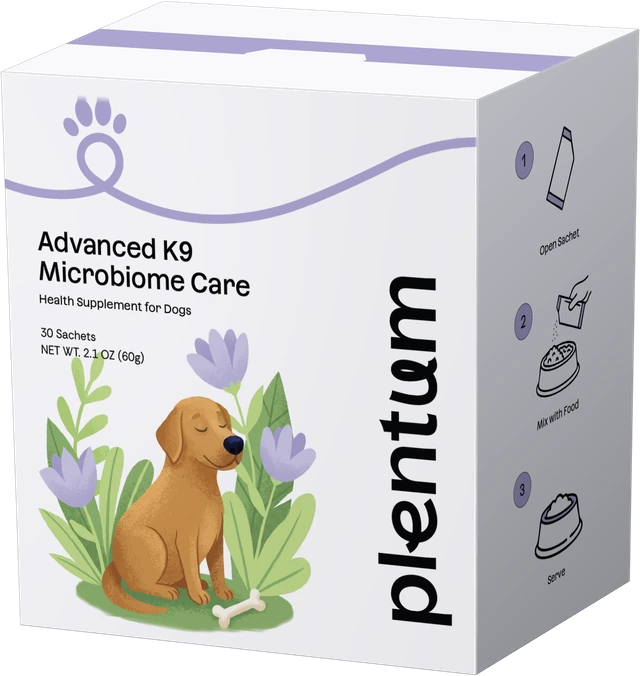

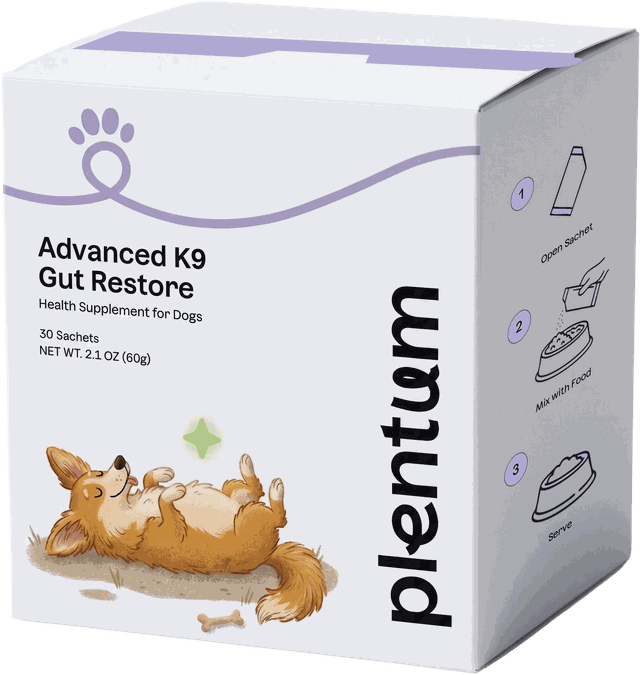

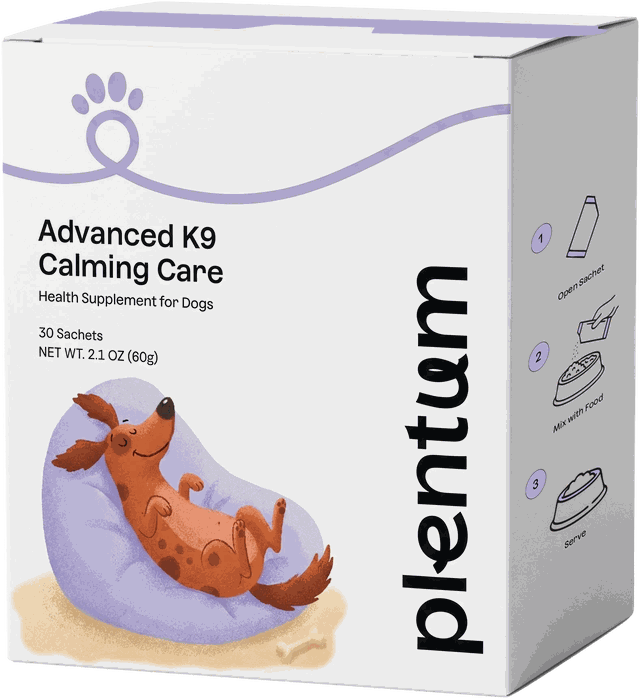

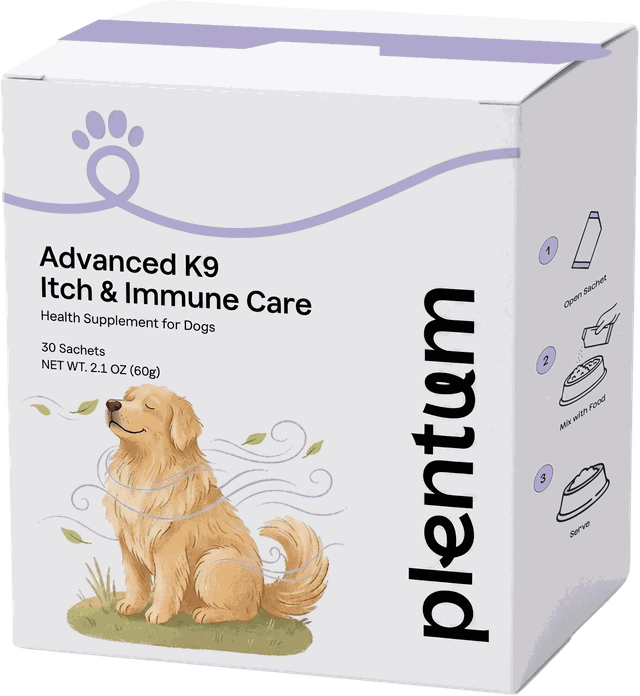

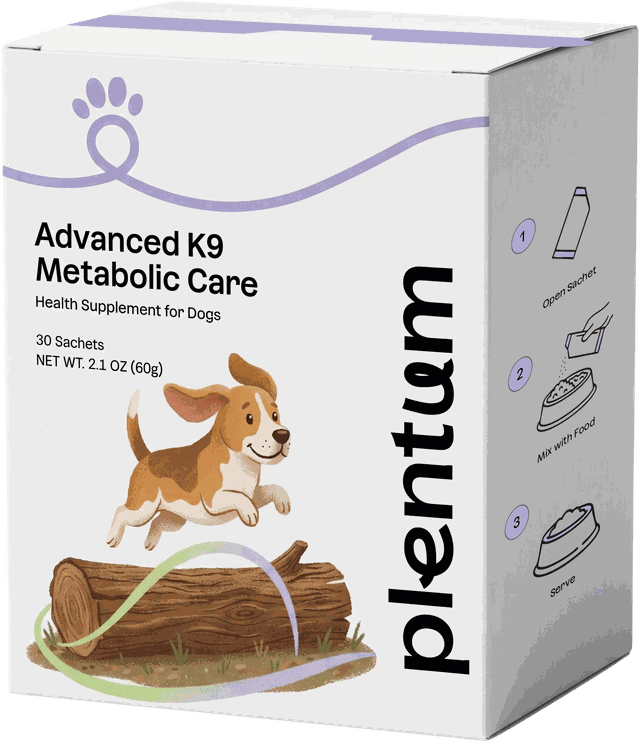


Quick answer: The rise of natural dog supplements reflects owners looking for daily support for digestion, skin and routine wellness. Natural dog supplements may support routine wellness when the label is clear, dog-specific and realistic. They do not diagnose or treat symptoms. Check the ingredients, dose, storage and format, and involve your vet for any persistent change in digestion, skin, pain, appetite or behavior.
Key takeaways
- "Natural" describes where an ingredient comes from. It does not show that a supplement is safe or effective for your dog.
- Look for dog-specific evidence that matches the exact ingredient, dose and format, not just a scientific-sounding name.
- Fiber, probiotics, prebiotics and postbiotics are the categories most often linked to a normal digestive routine. Even these are about support, not treatment.
- "Natural" does not mean safe with every medication or health condition.
- Persistent or severe symptoms need a vet first. A supplement is not the first answer.

What "natural" actually means on a dog supplement label
On a label, "natural" usually describes where the ingredients come from. It does not tell you whether the product is right for your dog, how much to give or whether it does what the package suggests. A plant-derived ingredient can still be strong, and a natural product can still upset a sensitive stomach.
Evaluate it like any other daily choice. Check what is inside, how much is in each serving, how the product is stored, how your dog handles it and whether the claim stays realistic.
- Ingredient list: every ingredient named, with the amount per serving.
- Directions: a clear serving size for your dog's weight.
- Storage: follow the storage instructions on the label.
- Claims: words like "supports" describe a daily routine, not a cure.
The FDA piece nobody warns you about
Pet supplements sit under a set of rules that most owners never read. The U.S. Food and Drug Administration explains how pet food and animal supplement-style products are regulated, and it sets rules for what labels and claims can say. A label is not proof that a product has been tested in your dog.
In practice, do not treat a confident label as a guarantee. Look for plain claims about daily support, and be wary of any label that promises to treat a named disease or to deliver fast results.
Ingredient categories that actually have research behind them
Some categories are easier to talk about honestly when the wording stays in daily support territory. Here is what the evidence supports:

- Fiber sources: may support stool quality and regularity when the rest of the diet is stable.
- Probiotics, prebiotics and postbiotics: may support the gut environment and a normal digestive routine. A 2023 Cornell veterinary study tracked 47 beagles over 12 weeks and reported stool-quality improvements in a postbiotic group compared with placebo. One study in beagles does not settle the question for every dog.
- Colostrum and beta-glucans: are often discussed around immune and gut-barrier support, but claims should stay measured.
- Herbal ingredients: can be biologically active, so they deserve more caution around medications, liver disease, pregnancy, puppies and senior dogs.
The important word is support. Supplements should never be framed as shortcuts around diet quality, veterinary care, medication plans, diagnosis or urgent symptoms.
Research-backed versus marketing-backed — how to tell
Research-backed should mean more than a scientific-sounding ingredient name. Look for evidence in dogs, a transparent serving direction, realistic outcomes and a claim that matches the exact ingredient, dose and format.
Marketing-backed claims usually look different. They lean on vague science words and big promises about health outcomes, and they leave out the dose. If you cannot find the amount of each ingredient on the label, treat the claim with caution and ask the seller before you buy.
Safety boundaries you should never cross
Do not use a supplement as the first answer for severe or persistent symptoms. Vomiting, blood in stool, weight loss, appetite loss, lethargy, collapse, severe pain, repeated diarrhea and sudden abdominal swelling need veterinary guidance, fast. Bloat signs are especially urgent, so learn them in advance: Dog Bloated Stomach: Causes, Warning Signs and What to Do Immediately.
Be extra careful if your dog takes medication or has liver disease, kidney disease, a history of pancreatitis, allergies, pregnancy, nursing needs, seizures or chronic gastrointestinal issues. Natural ingredients can interact with medications or complicate a medical plan. "Natural" does not mean "safe with everything."
Format comparison: powder, chew, capsule, topper
The same ingredient can feel completely different depending on format. Each format trades convenience against something else, so pick the one your dog will take every day.
| Format | Strength | Watch for |
|---|---|---|
| Chew | Easy to give | Flavoring, binders and sometimes 30-50 calories per chew, which adds up |
| Powder | Mixes into meals and can be started slowly | Needs a dog that accepts meal mixing |
| Capsule | Precise dosing | Some dogs fight them |
| Topper | Simple to add to food | Can change calories or texture more than you expect |
For picky dogs or dogs with sensitive stomachs, a powder is often the easiest place to start, because it can be mixed in gradually. Compare daily routines with Powder vs Chew Dog Supplements: How to Compare Formats. For a broader evidence check, read Do Dog Supplements Really Work? What to Know Before You Buy. For ingredient-level screening, use The Top 9 Ingredients to Look For in Your Dog’s Supplement.
Where supplements fit
A supplement is one small part of a daily routine. It works alongside a stable diet, regular veterinary checkups and a clear plan for any health concern, and it never replaces them. Introduce any new product one change at a time, so you can tell what your dog is responding to.
Supplement, not a medicine. Ask your vet if your dog has a health condition or takes medication.
Source notes
For regulatory context, see FDA's explanation of how pet food and animal supplement-style products are regulated and FDA's page on animal food labeling and pet food claims. For nutraceutical context in veterinary patients, see the MSD Veterinary Manual overview of nutraceuticals and dietary supplements.
Frequently asked questions
Are natural dog supplements safe for every dog?
No. "Natural" does not mean safe with everything. Dogs on medication, dogs with liver or kidney disease, pregnant or nursing dogs, and puppies or senior dogs should get a vet's advice before starting any supplement.
What should a dog supplement label show?
Look for each ingredient, the amount per serving, serving directions for your dog's weight and storage instructions. If any of these are missing, ask the seller before you buy.
Can a supplement replace veterinary care?
No. Supplements may support routine wellness, but they do not diagnose or treat symptoms. Persistent or severe changes in digestion, skin, pain, appetite or behavior need a vet.
How can I tell whether a supplement is helping?
Record your dog's baseline and change one thing at a time. Note appetite, stool, vomiting, comfort and energy in dated entries, so you can see a trend rather than judging from single days.