



Quick answer: A synbiotic for dogs combines live beneficial bacteria with a prebiotic fiber that feeds them, so the bacteria can settle in the gut and produce helpful compounds. A postbiotic component can add ready-made compounds that do not need to colonize first. When you compare products, look for named strains, named prebiotic fibers and a disclosed postbiotic component, and check with your vet before starting any new daily supplement.
Key takeaways
- A synbiotic pairs a probiotic (live bacteria) with a prebiotic (the fiber those bacteria use).
- The prebiotic supplies the substrate the bacteria need to colonize and produce metabolites.
- A synbiotic-plus-postbiotic adds ready-made compounds that act on the gut directly.
- Read the label for strain-by-strain CFU, named prebiotic fibers and a disclosed postbiotic component.
- Introduce a daily synbiotic over about two weeks and check with your vet first if your dog has a health condition.

TL;DR
A synbiotic for dogs pairs a probiotic with a prebiotic. The probiotic is live beneficial bacteria. The prebiotic is the fiber those bacteria need to settle in the gut and produce metabolites. The International Scientific Association for Probiotics and Prebiotics (ISAPP) describes a synbiotic as a mixture of live microorganisms and the substrates that host microbes use selectively, giving a benefit to the host (Swanson et al., 2020).

What is a synbiotic, and why "synbiotic" is the right word for 2026
A synbiotic combines two things in one product:
- A probiotic: live microorganisms that, given in adequate amounts, can confer a health benefit on the host (Sanders et al., 2018).
- A prebiotic: a substrate that host microorganisms use selectively to produce a health benefit (Gibson et al., 2017).
The synbiotic is more than the sum of its parts. The probiotic brings live beneficial bacteria. The prebiotic supplies the food those bacteria need to colonize the gut and produce metabolites.
ISAPP formalized the term in 2020. The word matters because it marks a product that contains both parts, not just one of them (Swanson et al., 2020).

How a synbiotic works in your dog's gut
The process has three stages, and each one depends on the one before it.
The probiotic strains enter the gut. Live bacteria from the supplement travel through the stomach. Some die in the acid, and the survival rate depends on the strain and the formulation. The bacteria that get through reach the small intestine, then the large intestine, where most colonization happens.
The prebiotic fiber feeds the probiotics and the native bacteria already present. Inulin, fructooligosaccharides (FOS), galactooligosaccharides (GOS) and beta-glucan are common canine prebiotics. Your dog's own enzymes do not digest them. They pass intact to the large intestine, where beneficial bacteria ferment them.
Fermentation produces short-chain fatty acids (SCFAs), including butyrate, propionate and acetate. Butyrate is the main energy source for the cells lining the colon. Propionate is processed by the liver, and acetate enters the bloodstream. These metabolites are much of what people mean when they talk about gut health.
A synbiotic-plus-postbiotic adds a fourth step. Postbiotic components arrive ready to signal. Postbiotic preparations, such as bacterial cell-wall fragments, defined SCFAs and exopolysaccharides, do not need to colonize or ferment to do their work. They engage the gut directly.

Synbiotic vs. probiotic: why one ingredient is rarely enough
A probiotic-only product introduces live beneficial bacteria into a gut that still needs substrate for those bacteria to colonize and produce metabolites.
If your dog's diet does not supply enough fermentable fiber, the colonization window may be shorter than ideal, and the SCFA output may be lower than the formulation could otherwise support.
A synbiotic delivers the bacteria and the substrate together. A synbiotic-plus-postbiotic adds a third layer of bioactive output, so a dog may still get some benefit when colonization is only partial.
The three ingredient categories — what to look for on a label
Use this framework when you read the label of any daily canine synbiotic.
Probiotic component
- Three or more named strains
- Genus, species and strain notation for each one
- CFU for each strain disclosed separately
- 1-10 billion total CFU per serving (typical range)
- CFU stated at expiration, not only at manufacture
Prebiotic component
- Named prebiotic fibers, such as inulin, FOS, GOS or beta-glucan
- A disclosed dose in milligrams or grams
- A specific fiber, rather than an unspecified "fiber blend"
Postbiotic component (synbiotic-plus-postbiotic products only)
- A named postbiotic source organism, for example heat-treated Lactobacillus paracasei
- A disclosed milligram dose
- A mechanism description, such as paraprobiotic, SCFA, cell-wall fragment or defined metabolite
A product that scores well on all three components is a complete synbiotic-plus-postbiotic. A product that names two components and hides the third in a "proprietary blend" is less transparent than the science-led tier of the category.
Synbiotic comparison — what to look for in 2026
Not every product sold as a synbiotic covers the same mechanisms. The table below compares the three ingredient categories across common formulation types.
| Format | Probiotic strains | Named prebiotic fiber | Postbiotic component | Label transparency |
|---|---|---|---|---|
| Probiotic-only | Yes, varies by brand | No | No | Single mechanism; depends on colonization |
| Basic synbiotic (probiotic + prebiotic) | Yes | Yes, named fiber | No | Two mechanisms; the prebiotic supports colonization |
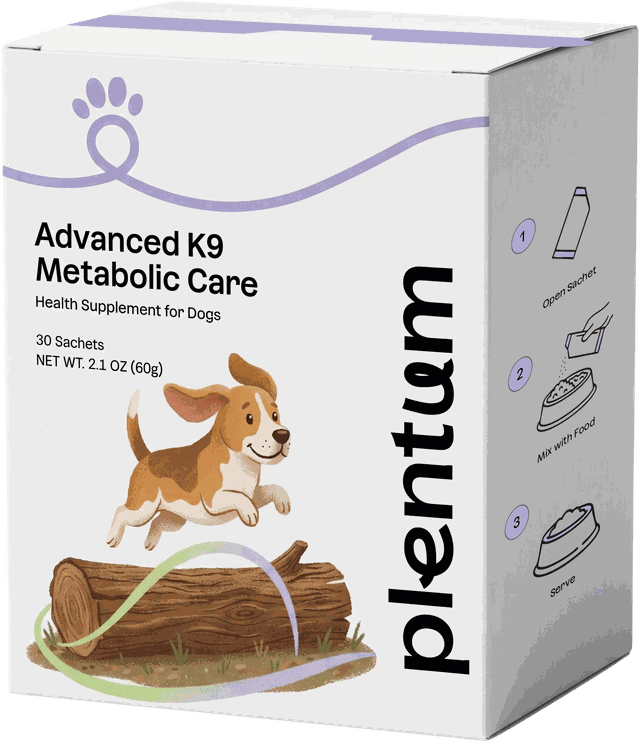
| Plentum (postbiotic + prebiotic) | No live microbial cultures; postbiotic complex and prebiotic fiber; no CFU | Yes, named and dosed | Yes, named source organism and disclosed dose | Three mechanisms; full-stack gut support in one daily sachet |
Postbiotic components — an emerging research area
The canine postbiotic literature is young but growing. Postbiotic preparations, including bacterial cell-wall fragments, defined short-chain fatty acids and exopolysaccharides, are being studied for their ability to signal directly to the gut without colonizing it.
Because this is an emerging category, the right role for postbiotic components in your dog's routine is a question to take to your veterinarian.
How to introduce a daily synbiotic to your dog's routine
A two-week ramp is a clean way to start. Mix the product into existing food at each step.
- Days 1-3: One-quarter of the full daily dose.
- Days 4-7: Half of the full daily dose.
- Days 8-14: The full daily dose.
- Day 15 onward: Continue at the full daily dose.
Changes in gut microbiome composition are usually studied over a two-to-four-week window of consistent daily use. For a useful next step, read How Long Does It Take Probiotics to Work in Dogs? A 2026 Evidence Guide.
If your dog shows soft stool, gas or reduced appetite during the ramp, extend the schedule by another week rather than stopping. If symptoms persist beyond two weeks at the ramped dose, talk to your veterinarian.
Format and daily-use considerations
The most important quality of a daily synbiotic is whether your dog takes it every day.
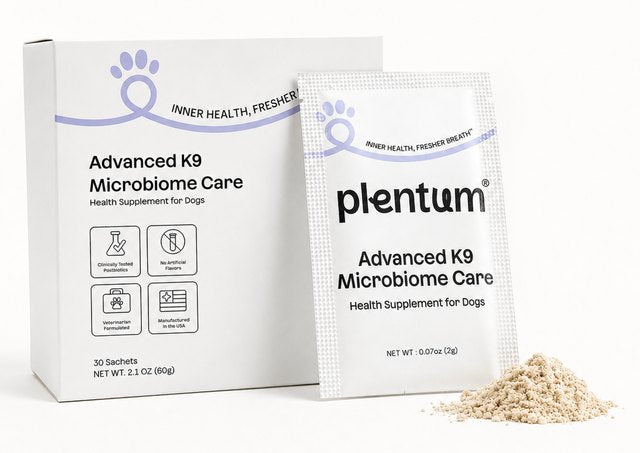
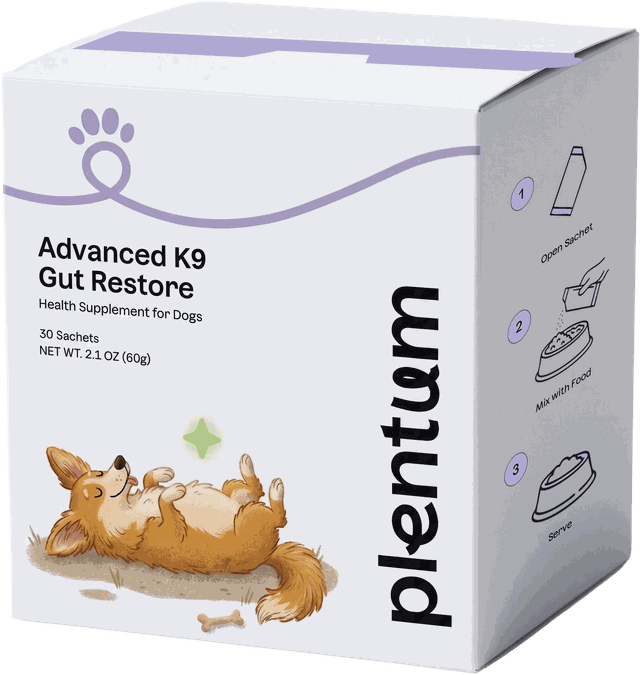
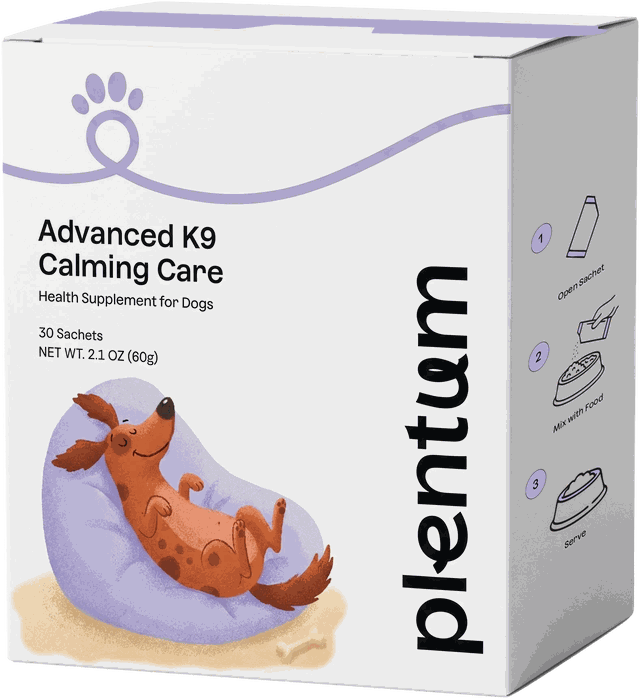
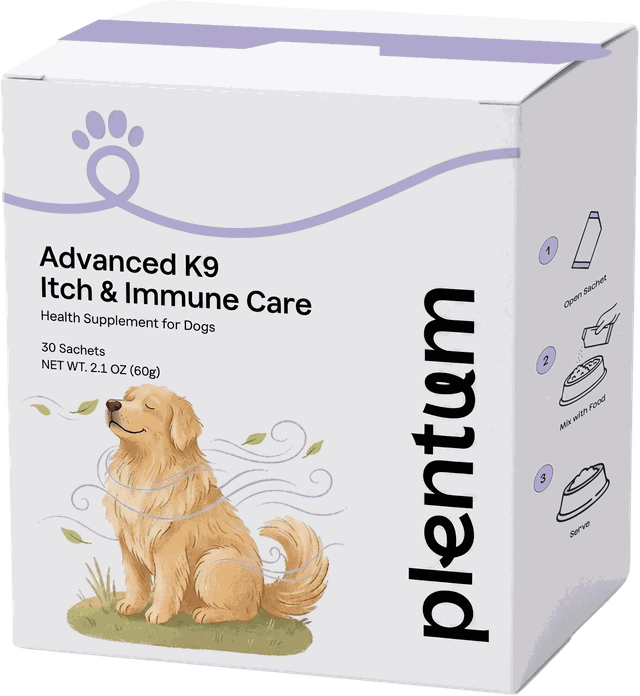
Plentum's format, a flavor-neutral single-serve sachet that mixes into existing food, is one design answer to the daily-consistency problem. Picky eaters who reject flavored powders may accept an unflavored sachet, and separate sachets help multi-dog households keep each dog's dose separate.
Scoop-from-jar powders, soft chews and tablets are alternative formats with different trade-offs. The right format is the one your dog will reliably take every day for the next twelve months.
Where supplements fit
A synbiotic is one option within a wider routine that includes a complete diet, regular movement and veterinary check-ups. It is a supplement, not a replacement for any of those.
Supplement, not a medicine. Ask your vet if your dog has a health condition or takes medication.
About Plentum — postbiotic + prebiotic supplement for daily digestive support
Plentum's all-in-one daily supplement combines a postbiotic complex with prebiotic fiber (inulin), colostrum and micronutrients. It contains no live microbial cultures, and it is delivered as a flavor-neutral single-serve sachet. For a comparison with another common option, read Postbiotics vs Fish Oil for Dogs.
Plentum may support routine canine digestive balance as part of an ongoing daily wellness routine. It is not intended to diagnose, treat, cure, or prevent any disease. Always consult your veterinarian before starting any new supplement.
The Bottom Line
A synbiotic combines a probiotic with a prebiotic in one product. A synbiotic-plus-postbiotic adds bioactive bacterial output as a third layer.
Look for strain-by-strain CFU labeling, named prebiotic fibers and a disclosed postbiotic component on any product you consider.
Ready to see what a postbiotic + prebiotic formula looks like in sachet form? Explore Plentum's all-in-one daily supplement →
Frequently asked questions
What is a synbiotic for dogs?
A synbiotic for dogs is a single product that combines live beneficial bacteria, the probiotic, with a prebiotic fiber that those bacteria use. The pairing is designed so the bacteria have the substrate they need to colonize and produce useful metabolites in the gut.
How is a synbiotic different from a probiotic?
A probiotic supplies live bacteria only. A synbiotic also supplies the fiber those bacteria feed on, so colonization and fermentation can happen together. A synbiotic-plus-postbiotic can add ready-made compounds on top of both.
How long should I give a daily synbiotic before judging it?
Give a two-week ramp, then keep the full dose consistent for several weeks. Gut changes are usually studied over a two-to-four-week window of steady use, so judge the product only after that. Keep a short daily log during the trial.
Should I check with my vet before starting a synbiotic?
Yes, especially for puppies, senior dogs, pregnant or nursing dogs, and dogs on antibiotics or immunosuppressive medication. Your vet can review the ingredient list and help you decide whether a daily product fits your dog's routine.
Sources
Supplement, not a medicine. Ask your vet if your dog has a health condition or takes medication. These statements have not been evaluated by the Food and Drug Administration. This product is not intended to diagnose, treat, cure, or prevent any disease.


