







Quick answer: Keeping a dog's joints healthy comes down to four practical factors: steady, controlled exercise, a healthy body weight, attention to gut health, and timely vet care when pain appears. Exercise should be scaled to your dog rather than all or nothing. Pain that limits movement deserves a vet visit, because less movement can lead to more stiffness over time.
Key takeaways
- Controlled, steady exercise is usually better than none or unlimited activity.
- Body weight is one of the most useful joint factors you can manage at home.
- The link between gut health and joint health is still being studied, so treat it as an area of interest.
- Breed, size and age change the risk, so ask your vet when monitoring should start.
- Supplements are one part of a plan, not a replacement for vet care.
- Pain that limits movement needs a vet, who can discuss options that suit your dog.
The big four: what actually moves the needle
Four areas make the biggest difference for most dogs: controlled exercise, a healthy body weight, the gut and immune connection, and early vet care when pain shows up. None of them works alone, and none is a quick fix. Together they form a routine you can build step by step.

Controlled exercise. Not no exercise. Not unlimited exercise. The right amount for your dog. Swimming, leash walks on soft surfaces and short sessions that build gradually are common choices. Your vet or a rehabilitation therapist can help you find the right level for your dog's joints and fitness.
Pain that needs attention. Pain changes how a dog moves. A dog that hurts often stops using a joint, and less movement can bring more stiffness. That is why pain should be discussed with a vet rather than managed by guesswork. Your vet can explain which pain management options are appropriate for your dog's age, weight and other health conditions.
The gut-joint connection (yes, it is a thing)
The idea that gut health and joint health are linked is still being studied. Gut bacteria interact with the immune system, and immune activity can influence inflammation throughout the body. Researchers are still working out how strong that link is in dogs, so treat it as an area of interest rather than settled fact.
It helps to watch the whole dog. Changes that appear together can be easier to discuss with your vet than separate, unrelated worries.
- Gas, bloating or soft stools are worth noting alongside any joint changes.
- Inconsistent appetite can signal a general health issue that your vet should review.
- Joint stiffness plus digestive changes is worth a combined conversation with your vet.
Exercise smarter, not harder
Better exercise habits can make a real difference for most dogs:
- Warm up with five minutes of slow walking before any activity.
- Choose softer surfaces when possible, and avoid long runs on hard pavement.
- Build duration slowly, with no more than about a 10% increase per week.
- Watch for compensation: head bobbing, hip hiking or weight shifting off one leg.
Swimming can suit dogs who enjoy water, because it takes weight off the joints while building muscle. Not every dog is a swimmer, and that is fine. Leash walks on grass with short breaks for sniffing and play work well too.
Where supplements fit
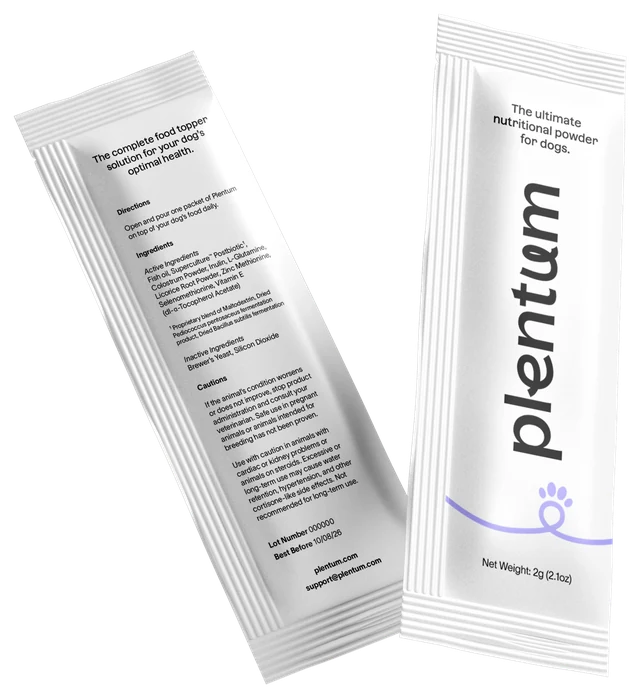
Supplements can be one piece of a joint plan, alongside a healthy weight, controlled exercise and regular vet care. They are not a replacement for a diagnosis, or for pain management planned by your vet.
If you are considering a supplement, start by reading the label. Look for named ingredients and clear directions. Share the plan with your vet, especially if your dog takes medication.
Supplement, not a medicine. Ask your vet if your dog has a health condition or takes medication.
Breed-specific risk: why some dogs need extra help
Genetics and environment both shape joint health. Some breeds carry a higher risk of joint problems, so their owners may benefit from earlier monitoring and steady weight control. Your vet can tell you whether your dog's breed, size and history call for extra attention, and can suggest when to start checks.
A puppy from a breed with a known joint risk may need a growth plan that your vet reviews at each visit. Keeping that plan written down makes it easier to follow over time.
Supplements that actually have evidence
Supplements are often marketed for joint health, but the evidence varies a lot from one product to the next. When you read about a supplement, check whether there are studies on that exact product, whether the work was done in dogs, how many dogs took part and who funded the research.
Small studies, studies run by a manufacturer and studies in other species can all be useful clues. None of them proves a benefit for your dog. Treat promising results as a reason to ask questions, not as a promise.
Senior dogs: what changes
The signs creep in slowly:
- Hesitation on stairs
- Reluctance to jump onto the couch or into the car
- Sleeping more than usual
- Irritability when certain spots are touched
Each of these deserves a note and a conversation with your vet, rather than a guess. Older dogs often adapt quietly, so a short written log of daily habits can reveal changes that are easy to miss.
The role of professional help
Do not go it alone. A certified veterinary rehabilitation therapist can assess your dog's gait, look for weaknesses you may not see, and design a program around them. Hydrotherapy, laser therapy and acupuncture are offered at some clinics, and your vet can tell you whether any of them suit your dog.
Your regular vet can also discuss pain management options. If supplements are not enough on their own, that is a sign to talk again with your vet, not a failure of the plan.
Putting it all together
Joint health is not one thing. It is a routine built from weight, movement, nutrition, pain management and, increasingly, attention to gut health. Start where you are. If your dog is overweight, that is a practical first step. If your dog is already in pain, talk with your vet about options alongside lifestyle changes. If your dog is healthy but high-risk by breed, plan earlier checks now.
Frequently asked questions
What should I know about keeping a dog's joints healthy?
Four factors matter most: steady, controlled exercise, a healthy weight, attention to gut health and timely vet care for pain. No single step works alone. Start with the one you can measure, such as weight, and review progress with your vet.
How can I reduce inflammation in canine joints?
Your vet is the right person to ask about inflammation, because causes and options depend on your dog's history. Practical steps many owners control include keeping a healthy weight, choosing gentle exercise and keeping a record of stiffness. Ask about anything you plan to add, including supplements.
Are joint supplements worth trying?
Evidence varies by product. Look for studies on the exact product, ideally in dogs, and read the label for named ingredients. Give a chosen product a fair trial of several weeks, talk to your vet first and stop if new symptoms appear.
When should I see a vet about joint stiffness?
Book a visit when stiffness lasts more than a day, when your dog is reluctant to climb or stand, or when pain changes how they move. Bring notes on what you have seen and when it started. Your vet can then examine the joints and discuss options.
Sources
General guidance on joint health, exercise and supplement evaluation. Product label directions govern any supplement dose.


