







Guide
Dog oral health and breath research hub
Can a daily supplement support fresher breath in dogs, and what has actually been measured? This hub summarizes the dog studies of an oral-health postbiotic and the veterinary basics that come first.
The question
Bad breath is common in dogs and is often linked to plaque and tartar. Veterinary sources put daily brushing, dental checks and professional cleanings first. Red or bleeding gums, loose or broken teeth, drooling, pawing at the mouth or trouble eating need a veterinarian.
What the evidence says, ingredient by ingredient
| Ingredient | What was studied | Worth knowing | Study |
|---|---|---|---|
| Oral-health postbiotic (COHP), 250 mg a day | In a 14-day randomized, double-blind, placebo-controlled study in 24 dogs, breath sulfur compounds were 27% lower than placebo. | Owner-perceived odor did not differ significantly. Plaque, tartar and gum health were not assessed. | Animals 15(11):1596, 2025 |
| COHP, 150 mg a day | In a 14-day double-blind, placebo-controlled validation study in 24 dogs, breath sulfur compounds were 26% lower than placebo on day 14. | Perceived odor showed only a trend. | Journal of Veterinary Dentistry, 2026 |
| COHP and the oral microbiome | In a 7-day randomized, double-blind study in 10 dogs, shifts in oral bacteria were reported. | Very small and exploratory. | Journal of Veterinary Dentistry 43(6):457-467, 2026 |
All three studies were run and funded by the ingredient supplier, tested the ingredient on its own, and have not yet been independently replicated.
What is still unknown
- Whether the breath effect lasts beyond 14 days, and whether it affects plaque, tartar or gum health.
- Results at doses below 150 mg a day. A Microbiome Care sachet contains 125 mg, so we do not claim the same results.
- Independent replication of the postbiotic studies.
- No study has tested a Plentum formula.
How to judge an oral-care product
- The Veterinary Oral Health Council (VOHC) awards its seal to products that meet its plaque or tartar protocols. Check its accepted products list.
- A supplement supports a routine; it does not replace brushing or professional cleaning.
- Look for the amount of each active per serving and how it compares with the amount studied.
Where Plentum fits
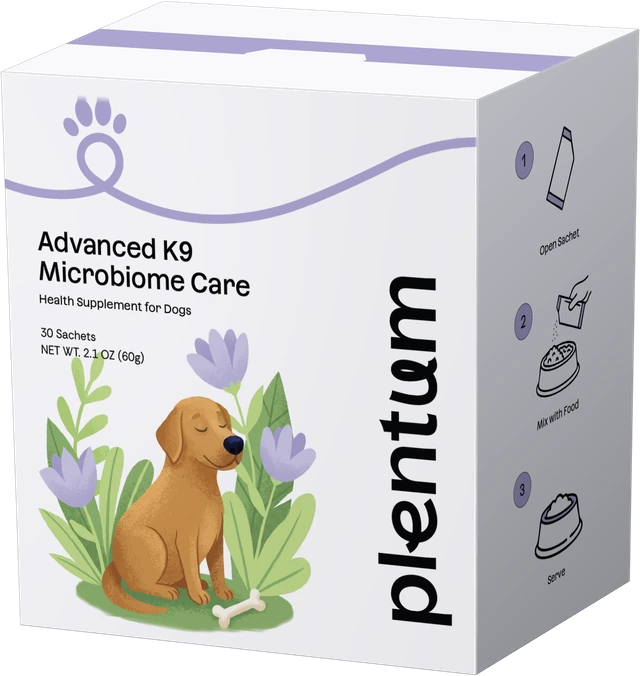
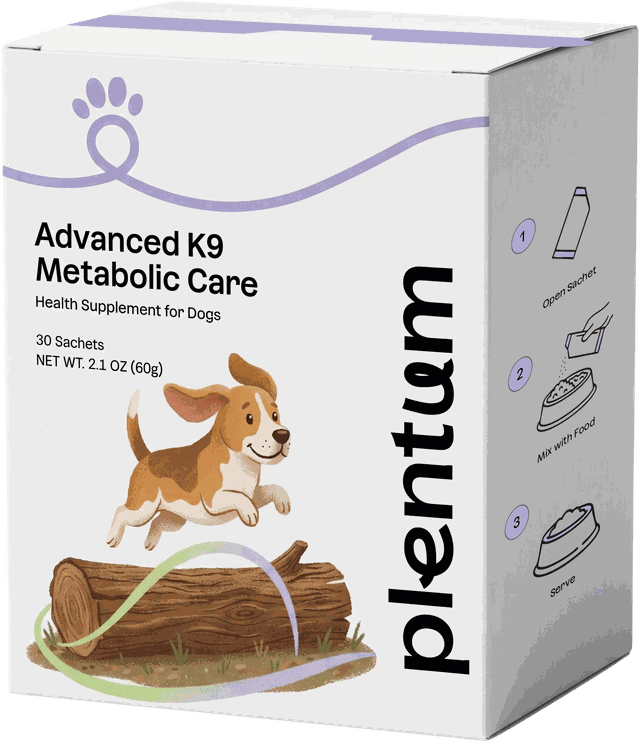
- Advanced K9 Microbiome Care: contains COHP, an oral-health postbiotic made from Pediococcus pentosaceus and Bacillus subtilis fermentation products, plus inulin, colostrum and fish oil, as part of a daily routine.
- Browse oral and breath support, or read the best supplement for dog bad breath.
Sources
Studies
- A novel postbiotic reduces canine halitosis (randomized, double-blind, placebo-controlled). Animals 15(11):1596, 2025.
- Canine halitosis improved with a postbiotic: a validation study. Journal of Veterinary Dentistry, 2026.
- A postbiotic positively shifts the canine oral microbiome. Journal of Veterinary Dentistry 43(6):457-467, 2026.
Veterinary and nutrition references
- Pet dental care. AVMA; checked 10 Oct 2026.
- About the Veterinary Oral Health Council. VOHC; checked 10 Oct 2026.
- VOHC accepted products. VOHC; checked 10 Oct 2026.
- VOHC protocols and submissions. VOHC; checked 10 Oct 2026.
- Periodontal disease in small animals. Merck Veterinary Manual; checked 10 Oct 2026.
- Periodontal disease. Cornell Riney Canine Health Center; checked 10 Oct 2026.
- Animal food labeling and pet food claims. U.S. FDA; checked 10 Oct 2026.
Studies listed here tested ingredients, not Plentum products. Where a study was funded or run by an ingredient supplier, we say so. This page is educational and does not diagnose, treat, cure or prevent any disease. Talk to your veterinarian before adding a supplement, especially if your dog takes medication, is pregnant or nursing, or has a diagnosed condition.
Last reviewed 10 October 2026. This hub brings together 3 of our earlier 2026 topic reports into one page with a single, checked source list. See all topics in the Plentum research library.
For general education only, not veterinary advice. Talk to your veterinarian if your dog has a health condition or takes medication, or if signs persist or get worse. These statements have not been evaluated by the Food and Drug Administration. Plentum products are not intended to diagnose, treat, cure, or prevent any disease.