






Quick Answer: Yes, dogs can eat peas — fresh, frozen, or cooked. Green peas, sugar snap peas, and snow peas are all safe. They are low in calories, high in protein for a vegetable, and provide fiber, vitamins, and minerals. Avoid canned peas with added salt and skip peas for dogs with kidney disease due to purine content.
Are Peas Safe for Dogs?
Peas are a safe, nutritious treat for most dogs. They appear as an ingredient in many commercial dog foods — both grain-inclusive and grain-free formulations — which speaks to their generally recognized safety and nutritional value.
Multiple types of peas are appropriate for dogs: green garden peas, sugar snap peas (pod and all), snow peas, and split peas. Each provides similar nutritional benefits with slightly different textures.
Nutritional Benefits of Peas for Dogs
One cup of green peas provides approximately 8 grams of protein — unusually high for a plant food — making peas a meaningful protein contributor.
Plant protein — supports muscle maintenance and overall nutrition.
Dietary fiber (soluble and insoluble) — soluble fiber feeds beneficial gut bacteria as a prebiotic. Insoluble fiber promotes healthy bowel movements.
Vitamin K — essential for blood clotting and bone health. A particularly good plant source.
Vitamin C — antioxidant immune support. More retained in raw or minimally cooked peas.
B vitamins — including thiamine (B1) for energy metabolism and nerve function, and folate (B9) for cell division and DNA synthesis.
Iron — supports red blood cell production. Zinc — supports immune function and skin health. Lutein — carotenoid antioxidant that supports visual health.
A Note on Peas and Heart Health
In 2018, the FDA began investigating a potential association between grain-free dog diets heavy in legumes and dilated cardiomyopathy (DCM). This investigation is ongoing and the relationship is not fully understood.
The key nuance: the concern is about grain-free diets where legumes form a major dietary portion, not about occasional peas as treats. See the FDA's DCM investigation updates for the most current information.
Dogs That Should Limit or Avoid Peas
Dogs with kidney disease or uric acid kidney stones — peas contain purines, which metabolize into uric acid. Dogs prone to urate kidney stones (particularly Dalmatians) should have peas limited based on veterinary guidance.
How to Serve Peas to Dogs
Fresh or frozen peas (plain, no salt or sauce) are the best options. Frozen peas are particularly convenient — pre-portioned, the right size, served frozen or thawed.
Cooked peas (lightly steamed or boiled, plain) are easy to digest and appropriate for all dogs including seniors and those with dental issues.
Snow peas and sugar snap peas can be served raw with the pod — rinse thoroughly and remove tough strings.
Avoid: canned peas with high sodium, peas in cream or butter sauce, seasoned frozen pea varieties.
Portions: small dogs — 1-2 tablespoons; medium dogs — 3-4 tablespoons; large dogs — up to 1/2 cup. Stay within the 10% daily treat guideline.
Peas and Your Dog's Gut Health
The fiber in peas — particularly soluble pectin — has documented prebiotic effects on the gut microbiome. Legume-sourced fibers support the growth of beneficial Bifidobacterium and Lactobacillus species. The combination of protein, fiber, and micronutrients in peas makes them one of the more complete vegetable treats available — genuine nutritional contribution, not just empty calories.
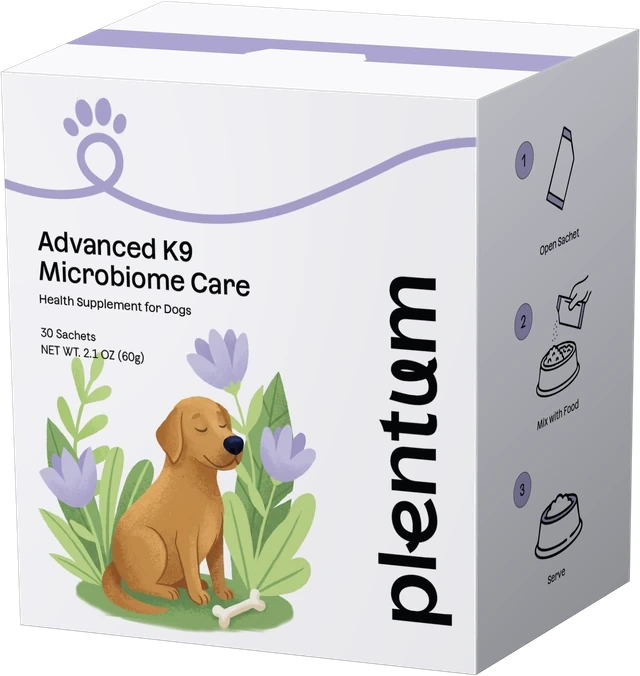
To support your dog's gut microbiome comprehensively, pair vegetable treats like peas with a daily probiotic sachet like Plentum's Advanced K9 Microbiome Care, which provides canine-specific probiotic strains, prebiotic fiber, digestive enzymes, and a proprietary postbiotic blend for complete daily gut support. Rated 5★ by 5,185+ dog parents. Read our dog gut health guide.
Frequently Asked Questions
Can dogs eat frozen peas?
Yes, frozen peas are safe and convenient — pre-portioned, already the right size, and can be served frozen or thawed. Many dogs enjoy the cold texture. Avoid frozen peas with added sodium or sauce.
Are peas bad for dogs with heart disease?
This is an area of ongoing research. The FDA has investigated a potential link between grain-free diets heavy in legumes (including peas) and dilated cardiomyopathy (DCM) in dogs. If your dog has heart disease or eats a diet heavy in legumes, discuss with your veterinarian.
Can dogs eat snow peas or sugar snap peas?
Yes, both snow peas and sugar snap peas are safe for dogs. They are completely edible including the pod, making them convenient treats. Rinse thoroughly and remove any tough strings.
What about canned peas?
Plain canned peas with no added salt or sauce are safe. However, most canned vegetables contain significant sodium. Frozen or fresh peas are better choices. If using canned peas, rinse them thoroughly to reduce sodium content.
How many peas can I give my dog per day?
Peas are low in calories (about 62 per cup). Small dogs: 1-2 tablespoons; medium dogs: 3-4 tablespoons; large dogs: up to 1/2 cup. Avoid large quantities due to purine content, which may be a concern for dogs prone to kidney stones.
This article is for educational purposes only. If your dog has kidney disease or a history of kidney stones, consult your veterinarian before adding peas to their diet.
Support your dog's health with Advanced K9 Microbiome Care — the postbiotic supplement trusted by 5,185+ dog parents. One sachet a day.
Plentum supplements are not intended to diagnose, treat, cure, or prevent any disease. Consult your veterinarian before starting any new supplement regimen.