





You've brought home a puppy, the pet-store shelf has a dozen probiotics, and every label says something different. Here's the fast way to sort them: the best probiotic for a puppy in 2026 names its strains with deposit numbers like ATCC or DSM, states a clear CFU count, fits a young dog's age and has third-party quality testing. A postbiotic is a nice bonus.
Three points to keep in mind:
- Look for strain names with deposit numbers, not just a genus name such as Lactobacillus.
- Third-party quality testing and a short, clear label are signs of tighter quality control.
- The puppy gut keeps developing through the first year, so an age-appropriate supplement matters.
Why does the label matter so much? A puppy's gut microbiome develops fast in the first 6 months and keeps maturing through the first year, and those early microbes play recognized roles in immune development, digestion and the gut barrier (Guard et al., 2017).
That's where postbiotics come in. They're the non-living output of beneficial microbes, so they deliver ready-made signaling components without needing live strains to survive a gut that's still developing, which is why they may suit puppies well. Some owners look for live strains, prebiotic fiber and postbiotics together.

What's going on in a puppy's gut
A puppy isn't a small adult. Her gut microbiome is still developing, her immune system is still calibrating and her digestive enzymes are still maturing, so a lot is changing in that first year. Research in companion animals and humans keeps landing on a few themes (Suchodolski, 2022).
A lot of a dog's immune tissue sits in or near the gut. The early microbial crowd helps the immune system learn the difference between a real threat and something harmless, and that early signaling is linked to how the immune system works later on.
The intestinal lining matures over the first months, too. Gut microbes make short-chain fatty acids, butyrate especially, which are a main fuel for the cells lining the colon and play recognized roles in supporting the gut barrier.
Meanwhile the pancreas and small intestine are tuning their enzymes to what a puppy eats, and the microbiome and enzymes grow up together. The gut-brain axis is switched on early as well: early gut signaling may influence stress reactivity and behavioral development, through pathways researchers are still mapping.
That's why good food, ordinary everyday exposures and, if your vet advises it, the right supplement are worth thinking about early.
Reading the label: six things to check
Plenty of products say "probiotic" on the front. See what to look for on the back.

1. Strain names with deposit numbers
A real probiotic is named down to the strain, not just "Lactobacillus" or "Bifidobacterium." You want the full name plus a culture-collection deposit number from ATCC, DSM, NCIMB or LMG, like Lactobacillus acidophilus DSM 13241. Watch for trade names, too: Bifidobacterium animalis subsp. lactis BB-12 is a trade designation, and the strain is deposited as DSM 15954. If the label stops at the genus, the maker isn't committing to a specific strain, and the formula can change from lot to lot without telling you.
2. A clear dose: CFU for live strains, mass for postbiotics
For live strains, the CFU (colony-forming unit) count tells you how many viable organisms you get per dose. Postbiotics aren't alive by definition (ISAPP, Salminen et al., 2021), so CFU doesn't apply, and their dose is listed by weight instead. Either way, the number should be right there on the label.
3. Third-party quality testing
Look for named third-party testing for purity and microbial contamination. Silence about testing isn't automatically a red flag, but a company that shows its work is telling you something about its quality control.
4. A supplement made for your puppy's age
Under 12 weeks, stick with products made for puppies or labeled for "all life stages." A specialized adult supplement probably isn't the right place to start a young dog.
5. A format that holds up in shipping and storage
Live probiotics don't love heat, moisture or time, and CFU counts can drop significantly between the warehouse and your kitchen counter. That's part of why postbiotics have caught on: they're shelf-stable, with nothing that needs to stay alive.
6. An open ingredient list
Read the full label, including the other ingredients, so you know what your puppy gets. A good label doesn't make you guess what's in it.
Why postbiotics may suit puppies
A postbiotic is the non-living bioactive output of beneficial microbes: cell-wall components, short-chain fatty acids, exopolysaccharides, and defined metabolites. Unlike live probiotics, they don't have to stay alive or colonize the gut to send their signals. Postbiotics for dogs: what they are and why your dog's gut needs them has the fuller definition.
The puppy gut is a moving target. Stomach pH, bile acids, digestive enzymes and the resident microbes all shift during the first year, and live strains have a harder time surviving a gut that's still changing. Postbiotics sidestep that by arriving ready-made.
There's a timing argument too. Postbiotic cell-wall components and metabolites interact with pattern-recognition receptors on immune cells and with the cells lining the gut (Aguilar-Toala et al., 2018; Vinderola et al., 2022). Getting those signals pre-formed may support a calibrating immune system without waiting for a puppy's own microbes to make them.
There's also a boring, practical reason. Most puppy parents keep a supplement around for weeks or months. Live CFU counts can fall in storage, while postbiotic components stay stable, so the labeled dose should hold from the first sachet to the last.
Some products pair a synbiotic (live probiotic plus prebiotic fiber) with a postbiotic to cover all three. Evidence for that combination in puppies is still thin, so it's a question for your vet, not a sure thing. See how the three types compare.
| Feature | Live probiotic | Postbiotic | Synbiotic + postbiotic (sachet) |
|---|---|---|---|
| What it delivers | Live beneficial microbial strains | Non-living bioactive output (pre-formed signaling components) | Live strains, prebiotic fiber, and pre-formed postbiotic components |
| How the dose is measured | CFU count | By mass | CFU count plus postbiotic dose by mass |
| Depends on live strains surviving the puppy gut | Yes | No | Partly: the postbiotic components don't, the live strains do |
| Fit for a developing puppy gut | May struggle in a still-maturing gut | May be especially relevant for puppies | Often discussed as a way to cover all three categories at once |
| Delivery format mentioned | Not specified | Not specified | Sachet |
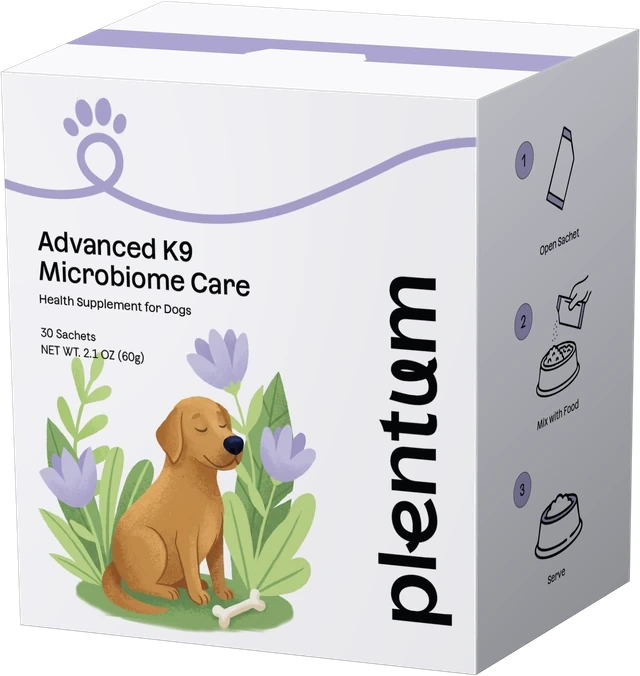
A note from us, since this is our blog: Plentum Microbiome Care isn't a probiotic. It's a daily prebiotic and postbiotic powder with no live cultures, so it sits closest to the postbiotic column in that table, not the synbiotic one, and the strain-name and CFU checks earlier in this guide don't apply to it. If you and your vet want live strains for your puppy, it isn't that product.
Whatever you choose, it's one piece of a plan that already includes a complete puppy diet, regular checkups and a steady routine, not a stand-in for any of them.
Starting one, step by step
Talk to your vet first, especially if your puppy is under 12 weeks, has a health condition or takes medication. If you both agree a probiotic makes sense, bring it in the way you'd bring in any diet change: slowly.
Even when the label gives a dose for your puppy's weight, a sensible start is half that dose for the first three days. Score the poop against a standard fecal scoring chart, and note any change in appetite, energy or behavior. Three easy days at half dose means you can move to the full labeled dose.
After that, keep it steady, because a supplement works best given regularly, not on and off. Mention it at vet visits so it becomes part of the bigger wellness plan.
Mistakes new puppy owners make
The big one is changing too much at once. Your puppy is already adjusting to a new home, new food, a new schedule and new people. Add a handful of supplements on day one and you'll have no idea what's helping.
Skipping the vet conversation is a close second. Your vet knows your puppy's history, breed quirks and any developmental concerns, and a quick mention at a routine visit is enough to get started.
Shopping on price alone can backfire, since the cheapest bottle is often the one with the least third-party testing and the vaguest strain names. And if 30 days go by without the change you hoped for.

Frequently asked questions
What should I look for first in a puppy probiotic?
Start with strain names that include culture-collection deposit numbers, like ATCC or DSM. Then look for a clear CFU count, third-party quality testing and a supplement made for young dogs. If the label names only the genus, keep shopping.
Are postbiotics the same as probiotics?
No, probiotics are live microbes, while postbiotics are the non-living bioactive output of beneficial microbes, so they're dosed by mass instead of by CFU.
How should I start a probiotic with my puppy?
If your puppy does fine, move to the full labeled dose and keep it steady.
When should I call the vet about my puppy's gut?
Call promptly for any GI symptom in a puppy under 12 weeks, soft stool that won't return to normal, vomiting, appetite changes or lethargy. Puppies have less reserve than adult dogs, so it's fine to ask early.
Sources
Five supplements, each aimed at a different need
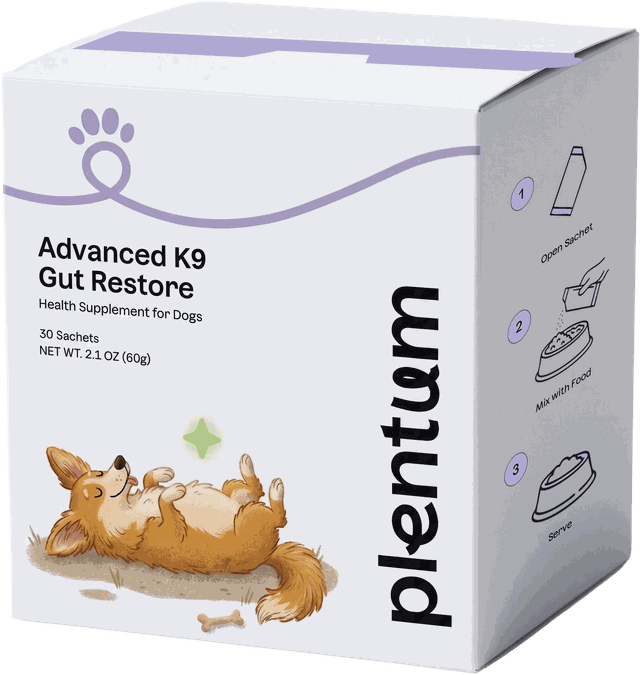
- Gut RestoreFits this guide It supports normal bowel function and healthy stool consistency, and helps maintain a balanced gut. From $1.50/day
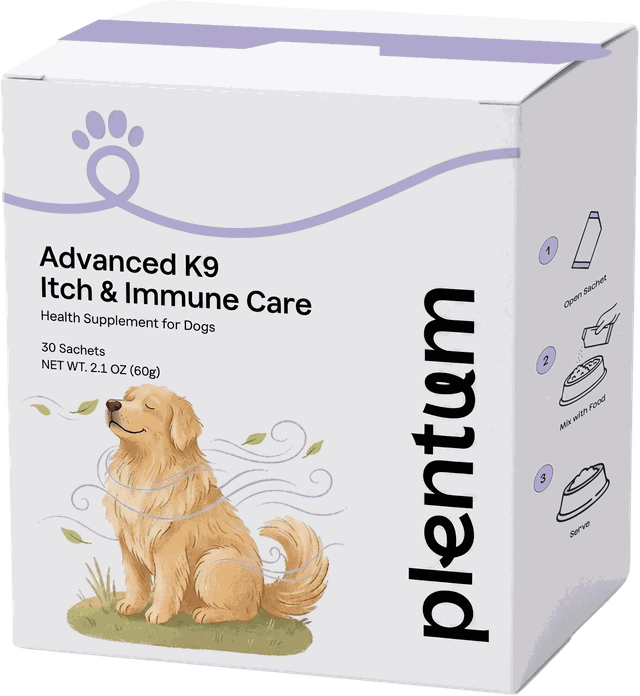
- Itch & Immune Care It supports a normal immune response to environmental and seasonal triggers, and helps maintain a healthy coat. From $1.50/day
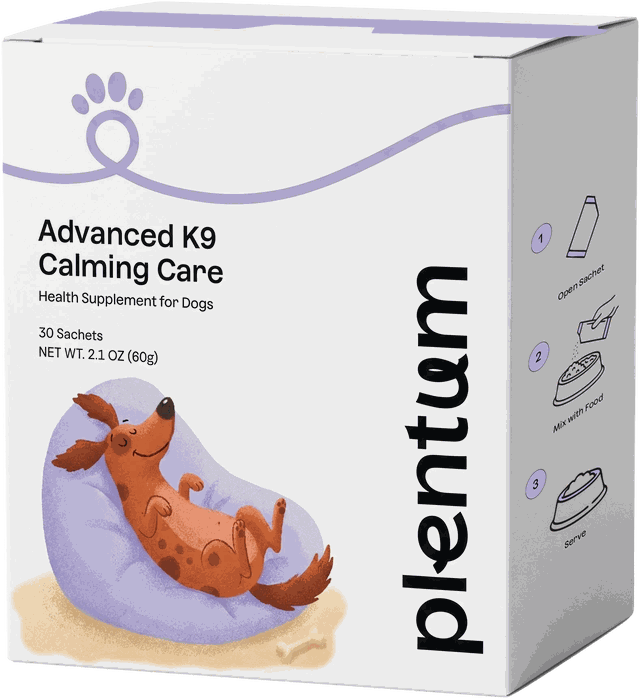
- Calming Care It supports a calm, relaxed demeanor during occasional situational stress such as storms, travel, or vet visits. From $1.50/day
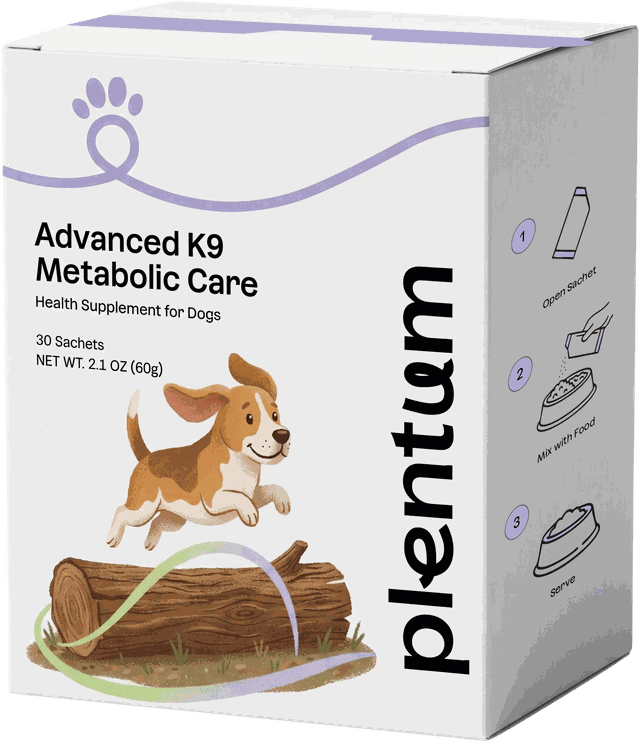
- Metabolic Care It supports healthy weight management alongside measured portions and daily exercise. From $1.50/day
- Microbiome Care It’s a daily powder with a postbiotic and prebiotic foundation, plus colostrum and omega-3, to support gut, oral, skin, and coat health. From $1.17/day