





It's day three of the new food, and your dog's stool has gone soft. Before you panic or give up on the bag, check how fast you moved. Most diarrhea during a food switch comes from changing too quickly, and a slower schedule usually settles it. Day three is also when most owners start doubting everything, including the bag.
To switch dog food without diarrhea, change it gradually over 10 days, or 14 days for a sensitive dog. Start with 25% new food and 75% old, move to 50/50, then 75% new, and finish on 100% new food by day 10.
- The most common cause of diarrhea during a food switch is changing too fast, not the new food itself.
- A standard 10-day schedule moves from 25% new food to 100% new food in steps.
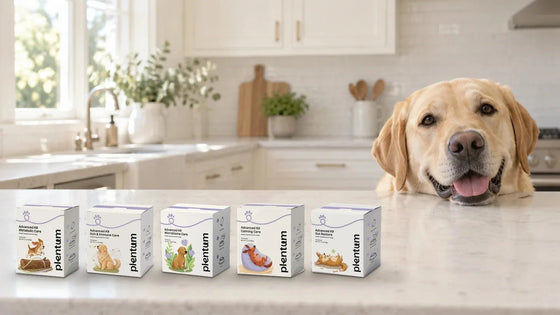
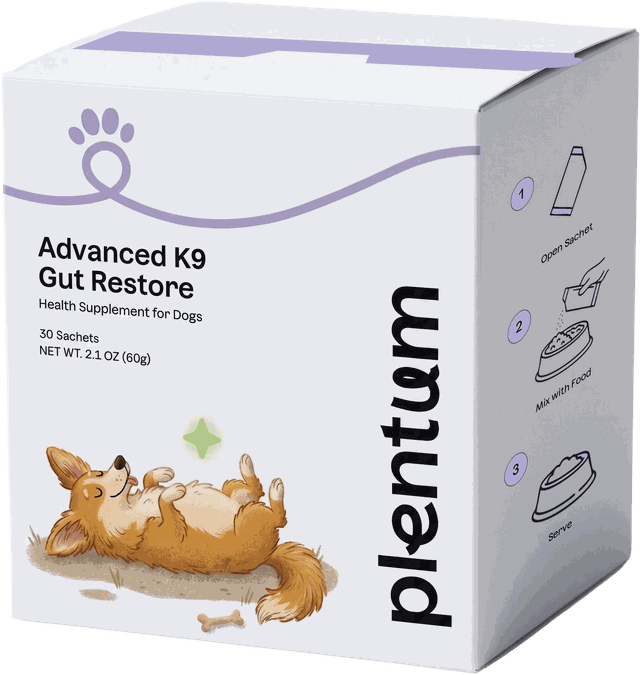
If you want a daily supplement for this, Advanced K9 Gut Restore helps support a balanced gut during a food switch, a road trip, or a course of antibiotics.
The standard 10-day schedule
Most veterinarians recommend this for healthy adult dogs with no history of GI sensitivity. The total amount of food stays the same at every stage, and only the ratio changes.
- Days 1-3: 75% old food, 25% new food. Mix well so your dog can't pick out one food. Feed the calorie-adjusted portions at normal times and watch the stool. A slight softening on day 2 or 3 is common and usually fine.
- Days 4-6: 50% old food, 50% new food. If your dog is handling the change, stool should settle by the middle. Energy, appetite and behavior should stay normal.
- Days 7-9: 25% old food, 75% new food. The new food now leads, and stool should stay formed.
- Day 10 onward: 100% new food. Your dog is fully on the new food, with normal stool, appetite and energy.
If you see watery diarrhea, vomiting or refusal to eat at any stage, stop advancing the ratio. For most healthy adult dogs, this schedule makes for a smooth switch, and it's pleasantly boring.

The 14-day schedule for sensitive dogs
Some dogs need a slower switch: puppies, seniors, dogs with a history of GI issues, dogs with allergies or atopic dermatitis, and dogs that have had antibiotics in the past three months. Fourteen days gives the microbiome and digestive system more time.
- Days 1-4: 75% old food, 25% new food.
- Days 5-8: 50% old food, 50% new food.
- Days 9-12: 25% old food, 75% new food.
- Days 13-14: 100% new food.
The idea is the same, gradual exposure, but each step lasts longer. Dogs on limited-ingredient or other specialist diets may need three or four weeks, and your vet can help set the pace. Boring is the goal here too.

| Mix | Standard 10-day | Sensitive 14-day |
|---|---|---|
| 75% old, 25% new | Days 1 to 3 | Days 1 to 4 |
| 50% old, 50% new | Days 4 to 6 | Days 5 to 8 |
| 25% old, 75% new | Days 7 to 9 | Days 9 to 12 |
| 100% new | Day 10 onward | Days 13 to 14 |
Why a sudden change loosens stool
When you change your dog's food overnight, three things happen at once in the digestive tract, and any one of them can loosen stool.
The gut microbiome shifts first. Your dog's gut holds trillions of microorganisms, including bacteria, archaea, fungi and viruses, adapted to the current diet. A new food takes away the fuel the old microbes liked and hands plenty to a different crowd. That change produces gas and short-chain fatty acids that can disrupt normal stool formation (Suchodolski, 2022). If gas builds up during the switch, our guide to Dog Gas Remedies: 7 Fast Practical Fixes (2026) has practical steps.
Next, the digestive enzymes have to adjust. The pancreas and small intestine make enzymes to match what your dog usually eats. A new protein, a different fat profile or more carbohydrate changes the demand, and the system needs time to catch up. Meanwhile more undigested food reaches the colon, and that often shows up as loose stool.
Finally, the immune system samples the new ingredients. Much of the immune tissue sits in or near the gut and checks anything new. Most dogs sail through, but in sensitive dogs that checking can cause enough inflammation to contribute to loose stool.
A gradual switch gives the microbiome, the enzymes and the immune tissue time to adapt without any one being overwhelmed.

What adjusts during a switch
- Gut microbesThey shift toward bacteria that use the new food
- Digestive enzymesThe pancreas and gut adjust to new proteins and fats
- Immune tissueGut immune cells sample the new ingredients
Mistakes that derail a switch
Even with a gradual schedule, a few slips can undo it.
- Changing too many things at once. A new treat, chew, topper or supplement on day one adds variables, and if diarrhea develops you won't know which caused it. Keep everything else the same.
- Free-feeding. You need to know how much old and new food your dog actually eats, and free-feeding hides the real ratio.
- Poor mixing. If the foods sit apart in the bowl, some dogs pick out their favorite. Mix thoroughly, and if you're blending kibble with wet food, mash the wet food into the kibble.
- Ignoring GI history. A dog who struggled with a switch before is more likely to struggle again, so plan a longer schedule.
- Skipping the transition because the new food is better. Even an upgrade needs a gradual switch. The microbiome can't tell the new food is higher quality. It just notices its usual fuel changed, and it has opinions about that.
Measure every meal, and jot down stool, appetite and energy each day on a note or a calendar. A dated record shows if your dog is improving and gives your vet clear information if you call.
Why your dog's weight can change after a food switch
Ask your vet about unexplained weight changes before adjusting portions.
| What you notice | What to check first | Next step |
|---|---|---|
| Weight gain on the same scoop | Compare both foods’ calorie density and grams eaten | Review the daily calorie target with your vet |
| Weight loss despite finished bowls | Compare both foods’ calorie density and grams eaten | Ask your vet about unexplained weight loss |
| Substantial underfeeding or a prescription diet | The prescribed feeding plan | Contact the prescribing vet before increasing food |
Use a daily calorie target already appropriate for your dog. Prescription-diet changes follow the prescribing vet's plan.
- Set aside calories for extras, then calculate each food's full daily grams from the same remaining meal-calorie target.
- Use each food's calories per gram. Weigh the schedule's fraction of each full daily portion, then combine them.
- For healthy maintenance feeding, keep extras within 10% of daily calories. Therapeutic diets may have stricter limits.
The portion guide explains weighing meals. Add amounts eaten and weight changes to your existing meal log.
A sudden swollen belly needs emergency care. See when to see your vet.
If the stool goes soft anyway
Some dogs get loose stool despite careful planning. What to do depends on how bad it is and how long it lasts.
- Mild loose stool with no other symptoms, lasting less than 24 hours: hold the current ratio for two or three more days. Don't move to the next stage until the stool is formed again, then continue more slowly.
- Loose stool beyond 48 hours, or with reduced appetite: go back to more of the old food and let the stool settle. Once it's formed again, restart the transition more slowly.
- Watery diarrhea, vomiting, lethargy, blood in the stool, or signs of pain: stop the transition right away and call your veterinarian. Blood or mucus counts too. These aren't normal transition symptoms and may point to something that needs an exam.
As a rule of thumb, any GI symptom that gets worse after 24 hours deserves a call to the vet. Studies suggest the canine gut microbiome can take days to weeks to adjust to a new diet (Suchodolski, 2022; Lin et al., 2022). Slow improvement is expected in that window. Getting steadily worse is not.
When in doubt, call.

Where a supplement fits
A supplement can be one part of a plan that also includes a careful food switch. A dog with loose stool needs its diet and symptoms reviewed first. Once your vet agrees a supplement is suitable, start it on an ordinary day and not the day you advance the ratio, so you can tell what caused any change.
Postbiotics are compounds left behind when gut bacteria ferment food, including metabolites and cell wall fragments. They don't depend on live bacteria, and their role during a food switch is still being studied in dogs. Think of them as one support within a wider plan.
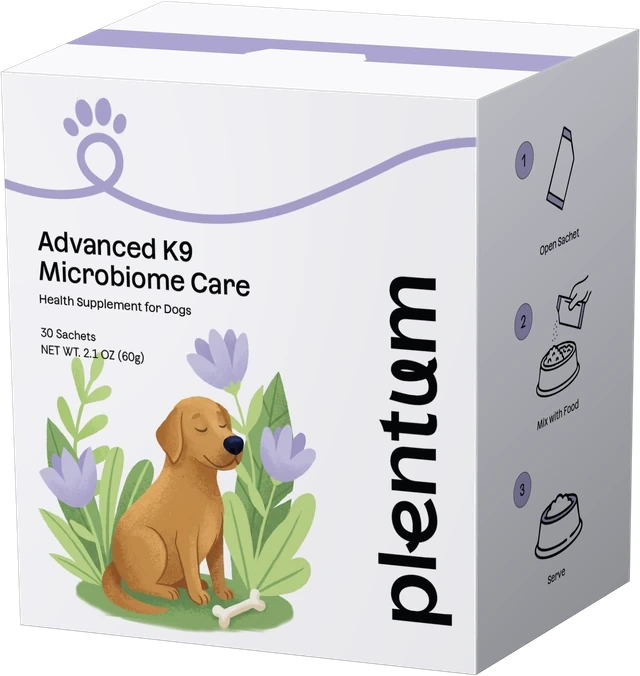
Some owners want a daily gut product alongside a diet change or for ongoing maintenance. The Plentum Advanced K9 Microbiome Care is a daily postbiotic and prebiotic powder, given at 1 to 3 sachets a day by weight, that you stir into food. It's a daily foundation for ongoing use, so the feeding steps above matter far more during a difficult switch.
This powder contains bovine colostrum.
For a switch in progress, Advanced K9 Gut Restore helps maintain a balanced intestinal microbiome during dietary change, with 10 billion CFU and three fibers, at 1 to 4 sachets a day by weight. Gut Restore's ingredient breakdown explains why the fibers are there.
Slow switch, sudden switch or a vet-guided switch
The pace you choose matters more than the food you choose.
| Option | How it works | Best fit |
|---|---|---|
| Slow switch | Mixes old and new food over 10 to 14 days | Most healthy adult dogs |
| Sudden switch | Changes the whole bowl in one day | Only when the vet says the old food must stop now |
| Vet-guided switch | A plan of 3 to 4 weeks or a prescription diet | Dogs with IBD, EPI, kidney disease, or a history of hard switches |
Frequently asked questions
Is a little soft stool on day 2 or 3 normal?
A slight softening is common and usually fine. Hold the ratio steady until the stool is formed again before you move on.
Can I speed up the schedule if my dog seems fine?
You can, but that's how most switch-related diarrhea starts. Dogs who seem fine on day 4 can still have a gut that hasn't caught up, so the extra days are cheap insurance.
Does a better food need a transition too?
Yes, the gut reacts to any change in what it's fed, whether the new bag is cheaper or fancier.
Can a probiotic or postbiotic help during a switch?
A gut-focused product may add some support, and its effects in dogs are still being studied. It works alongside the gradual schedule.
Sources
Do treats and table scraps count?
Yes. Treats, table scraps, chews, and gravies add to the new diet, even in small amounts. Count them in the transition, or give fewer during the switch so the change stays gradual.