








Quick answer: Postbiotics may support healthy weight in dogs by supporting the gut signals that relate to appetite, inflammation and energy use. The effect is modest and still being studied. Fiber type, portion control, exercise and veterinary checks matter more. This guide explains 7 practical ways to think about postbiotics and healthy weight, and when to call your vet about unexplained weight change.
Key takeaways
- Your dog's gut bacteria produce compounds that can influence appetite, inflammation, energy use and fat storage.
- The two studies discussed here were small, both have authors from the companies involved, and neither is a stand-alone weight plan.
- Fermentable fibers such as chicory root, inulin and psyllium are one way to feed the microbes that make these compounds.
- Postbiotics cannot make up for a calorie-heavy diet, too little exercise or a health problem that needs diagnosis.
- Track weight, treats, stool, appetite and movement for eight to twelve weeks before you judge a change.

Why the Gut Microbiome Matters for Weight
Your dog's gut is home to a large community of bacteria. Those bacteria process what your dog eats, and the compounds they produce can reach the rest of the body.
In practical terms, your dog's gut bacteria produce compounds that can affect appetite, inflammation, energy use and fat storage. Food is the main input the microbes receive, so what you feed shapes what they make.
When bacteria ferment certain fibers, they make short-chain fatty acids such as butyrate, propionate and acetate. These compounds nourish the cells lining the colon, support the intestinal barrier and help regulate energy balance.
- Butyrate fuels cells in the colon.
- Propionate helps regulate energy metabolism.
- A stronger gut barrier may reduce inflammatory signals.
That does not make a supplement a substitute for portion control. It does explain why fiber type and gut health deserve attention when you think about a healthy weight.
What the Research Actually Shows
Two studies are worth knowing about. Each one is small or narrow, and each answers a different question, so read them as early evidence rather than proof.
A 2023 crossover study in Frontiers in Veterinary Science followed 39 adult dogs, including healthy dogs and dogs with well-managed chronic gastroenteritis. Each dog ate a control food and two test foods, in turn, with four-week feeding periods. The test food with a polyphenol-rich fiber bundle was linked to lower body weight than the control food. Both test foods improved stool scores compared with the control. The study tested four-week diet periods, so a few meals will not tell you much about your own dog.
A 2026 Microbiology Spectrum study took a different approach. Healthy Beagle dogs were fed a high-calorie diet at three times their daily energy requirement for eight weeks. Some dogs were given pasteurized Akkermansia muciniphila and others a placebo. The dogs given the pasteurized bacteria gained less weight and showed changes in inflammatory markers and bile acid profiles. This was a controlled study in a specific population on a specific diet, so it does not show what happens in every dog eating a normal diet.
Both of these papers have authors who work for companies that make the products studied. That does not make the results wrong, but it is a reason to read them carefully and look for independent confirmation.
How Fiber Type Affects the Result
More fiber is not automatically better. The type matters.
Soluble, fermentable fibers such as chicory root, inulin, psyllium and certain fruit fibers provide fuel for beneficial bacteria. Insoluble fiber, including cellulose, adds bulk and helps stool move through the digestive tract.
- Chicory root or inulin: fermentable sources that can support the production of postbiotic compounds.
- Psyllium: useful for stool moisture and regularity.
- Pumpkin: a gentle food topper when it is served plain.
- Cellulose: mainly adds insoluble fiber and bulk.
Increase fiber only if the stool stays firm. Loose stool is a sign to slow down, not to add more.
Where supplements fit
A targeted postbiotic supplement may fit some routines, while food changes may be enough for others. Neither one replaces appropriate portions, regular movement and veterinary care. Look for ingredients that have been tested in dogs, clear feeding instructions and a product made for dogs. Compare labels rather than marketing claims.
Supplement, not a medicine. Ask your vet if your dog has a health condition or takes medication. Contains chitosan (shellfish).
The Inflammation Connection
Extra body fat is not stored passively. Fat tissue releases inflammatory messengers called cytokines. These messengers can interfere with insulin signaling and with appetite regulation.
That makes losing weight more difficult, even when a dog is eating less. It is one reason weight can stall for reasons that have little to do with portions alone.
Think of the cycle this way:
- A poor diet or an imbalance in the gut can reduce microbial diversity.
- Reduced fermentation means fewer helpful microbial compounds.
- A weaker gut barrier can allow more inflammatory signaling.
- Inflammation can encourage weight gain and disrupt appetite.
Those conditions need diagnosis and treatment from your veterinarian. Diet changes alone are not a replacement for that work.
What to Do This Week
Start with the ingredient list on your dog's current food. Look for fermentable sources such as chicory root, beet pulp, inulin or psyllium. Then measure portions rather than filling the bowl by eye.
Next, track three things for eight to twelve weeks:
- Weekly body weight or body-condition score.
- Daily treat calories, including training bites and table scraps.
- Stool consistency, appetite, energy and ease of movement.
If you add pumpkin, introduce it gradually, and do not use pie filling. If diarrhea develops, stop the new topper and contact your veterinarian, especially if it lasts more than a day or comes with vomiting, lethargy or blood.
Compare the formulas
Five formulas, each built for one job
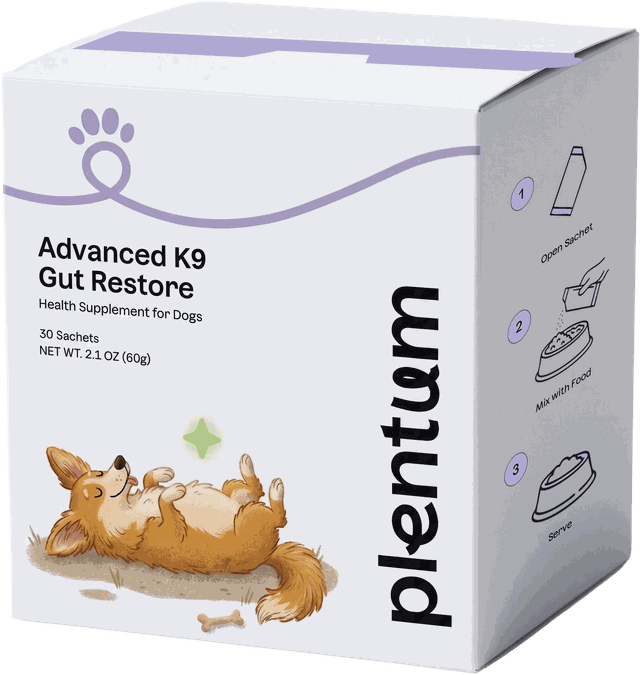
- Gut Restore Supports normal bowel function and healthy stool consistency, and helps maintain a balanced gut. From $1.50/day
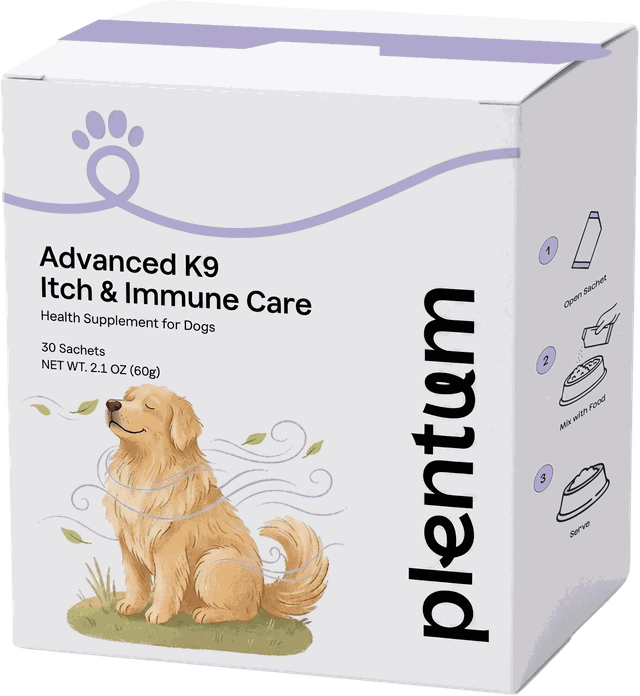
- Itch & Immune Care Supports a normal immune response to environmental and seasonal triggers, and helps maintain a healthy coat. From $1.50/day
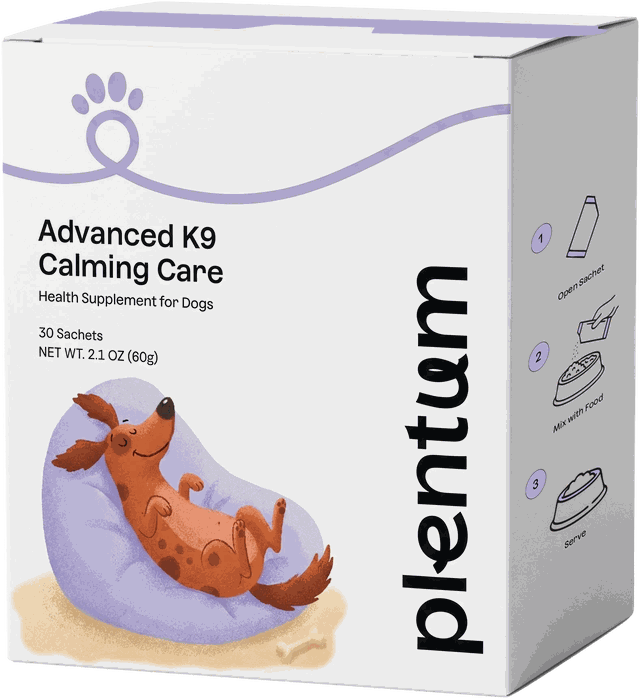
- Calming Care Supports a calm, relaxed demeanor during occasional situational stress such as storms, travel or vet visits. From $1.50/day
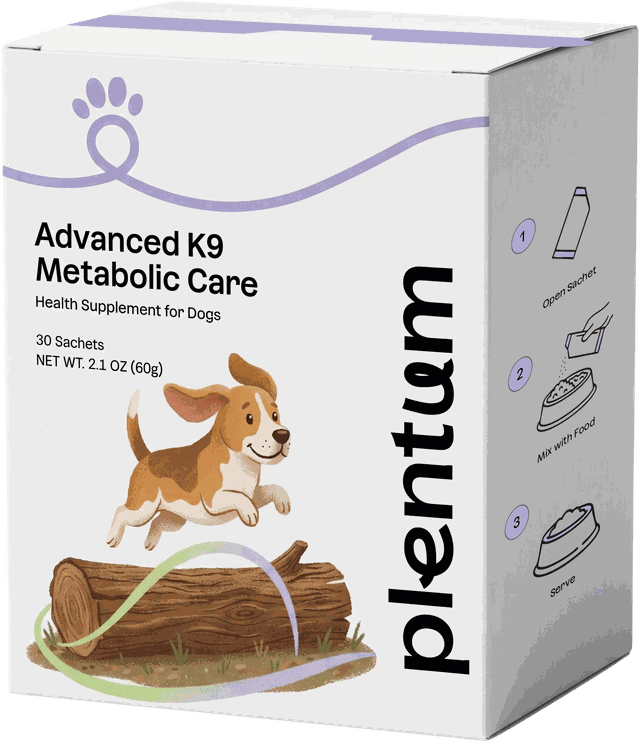
- Metabolic CareFits this guide Supports proper weight management alongside portion control and exercise. From $1.50/day
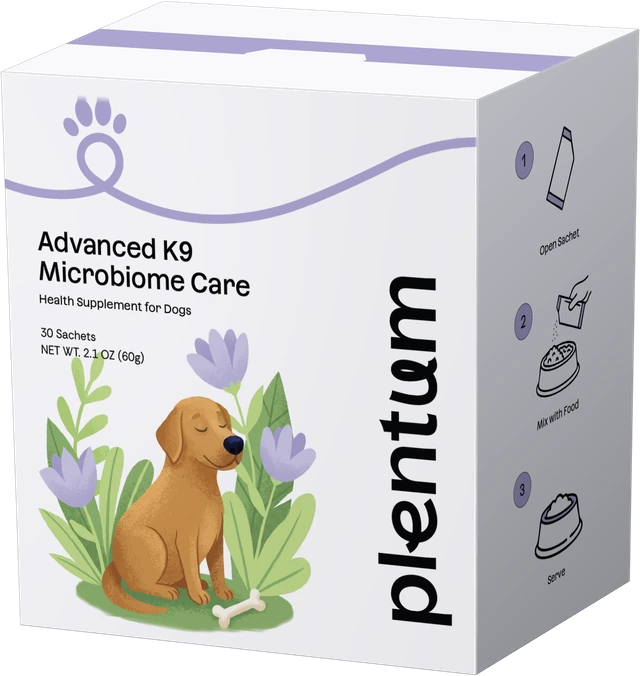
- Microbiome Care A daily powder with a postbiotic and prebiotic foundation, plus colostrum and omega-3, to support gut, oral, skin and coat health. From $1.17/day
What Postbiotics Can't Replace
Postbiotics will not cancel out a calorie-heavy diet, and they are not a reason to skip exercise. They work alongside appropriate portions, regular movement, veterinary care and a diet your dog can tolerate.
Pasteurized bacteria are not alive, so they do not multiply in the digestive tract. Their potential benefit comes from the organisms and their components. That is one reason heat-treated preparations can be easier to store than live products, although storage instructions on the label still apply.
Run any choice past your veterinarian if your dog takes medication or has a chronic condition.
When to Call Your Vet
Bring your dog's body-condition score to the next wellness visit. Mention any change in appetite, activity, stool quality or the ability to jump and climb, even if it seems minor.
Ask your vet to rule out thyroid disease, Cushing's disease, diabetes, pain and other issues before you assume weight gain is simply dietary. Your vet can also calculate a safe calorie target and help you choose a rate of weight change that protects lean muscle.
Postbiotics cannot create healthy weight without calorie control
Body weight changes when calorie intake and energy use stay out of balance over time. Pain, endocrine disease, medication effects and illness can also change appetite or activity. Weigh food and treats, record your dog's weight and body-condition score, and confirm the target with your veterinary team.
Postbiotic preparations may influence microbial metabolites or gut signaling in specific settings. The evidence does not support using them as stand-alone weight products. The exact preparation, amount, diet, type of dog and measured outcome decide whether a study applies to your dog.
Measure function as well as the scale
The scale is only one measure. Track waist and rib coverage, muscle condition, mobility, appetite, stool, energy and weekly or veterinary-directed weight checks. Together these show whether a change is working in daily life, not just on paper.
Seek veterinary review for unexplained weight change, excessive thirst, weakness, vomiting, diarrhea, pain or loss of normal activity. Share your dated notes with your vet so the trend is clear at the next visit.
Frequently asked questions
Can postbiotics help my dog lose weight?
Postbiotics are one possible part of a weight plan, not a plan on their own. The studies that exist are small or narrow, and their authors include people from the companies that make the products. Portion control, exercise and veterinary guidance still do most of the work.
Which fibers are best for the gut?
Soluble, fermentable fibers such as chicory root, inulin and psyllium feed beneficial bacteria. Insoluble fiber such as cellulose mainly adds bulk. Increase any fiber slowly, and stop if the stool becomes loose.
How long should I track a change before I decide it works?
Track weight, treats, stool, appetite and movement for eight to twelve weeks. Keep the notes dated so you can see trends rather than single days. Bring them to your vet at the next visit.
When should I call the vet about weight?
Call your vet about unexplained weight change, excessive thirst, weakness, vomiting, diarrhea, pain or loss of normal activity. Your vet can check for thyroid disease, Cushing's disease, diabetes and pain before assuming the weight gain is simply dietary.
Sources
- Adding a polyphenol-rich fiber bundle to food impacts the gastrointestinal microbiome and metabolome in dogs — Frontiers in Veterinary Science (2023)
- Pasteurized Akkermansia muciniphila Muc(T) reduces high-caloric diet-induced weight gain and alters bile acid and inflammatory profiles in dogs — Microbiology Spectrum (2026)


