








Quick answer: Probiotics for dogs are live beneficial bacteria that may support digestion and the gut microbiome. Gut health can also connect to immune, skin and coat signs, but the evidence depends on the strain, the dose and the outcome measured. Routine support and medical care are different things, so persistent digestive signs need a vet before you choose any product. Ask your vet whether a probiotic, a postbiotic or neither suits your dog.
Key takeaways
- Probiotics are live bacteria that may support your dog's gut microbiome.
- Gut support is different from medical care, so persistent signs need a veterinary check.
- Live cultures can struggle with survival, strain differences and potency over time.
- Postbiotics are compounds made by beneficial bacteria, and they do not depend on bacterial survival.
- Daily habits such as a steady diet, stress control and fresh water matter as much as any supplement.

What are probiotics and why do dogs need them?
Probiotics are live beneficial bacteria that support the gut microbiome, the community of microorganisms that lives in your dog's digestive tract.

A balanced gut microbiome is linked to several everyday functions:
- Supports healthy digestion and nutrient absorption.
- Supports normal immune signaling as part of the gut barrier and microbiome system.
- May interact with behavior-related pathways through the gut-brain axis.
- Supports skin and coat health from within.
Dogs can experience gut imbalances from stress, diet changes, medications (especially antibiotics) or aging. That is where targeted gut support can come in.

The problem with traditional probiotics
Many pet parents turn to standard probiotic supplements. Live-culture probiotics can face practical challenges:
- Survival issues: live bacteria often cannot survive stomach acid, heat or shelf storage.
- Strain variability: not all probiotic strains offer the same benefits.
- Inconsistent delivery: many products can lose potency before they reach your dog's gut.

Postbiotics: the next generation of gut health support
Postbiotics are compounds that beneficial bacteria produce or leave behind. They are not live bacteria, so a postbiotic product is not a probiotic, even when both are discussed in the same guide.
- Stable compounds that are generally easier to store than live cultures.
- Consistent potency, which depends on the maker's quality control.
- Direct gut support that does not rely on bacterial survival.
This approach is designed to support your dog's digestive balance without relying on live bacteria surviving the trip through the gut.

Where supplements fit
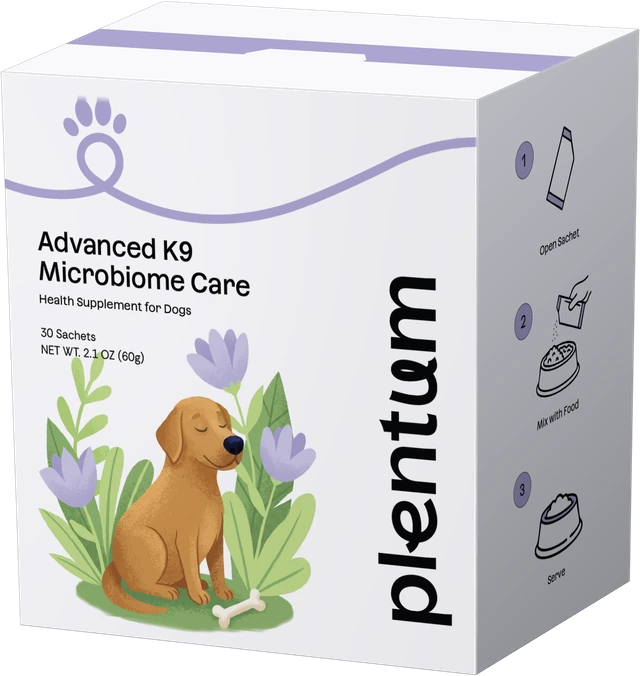
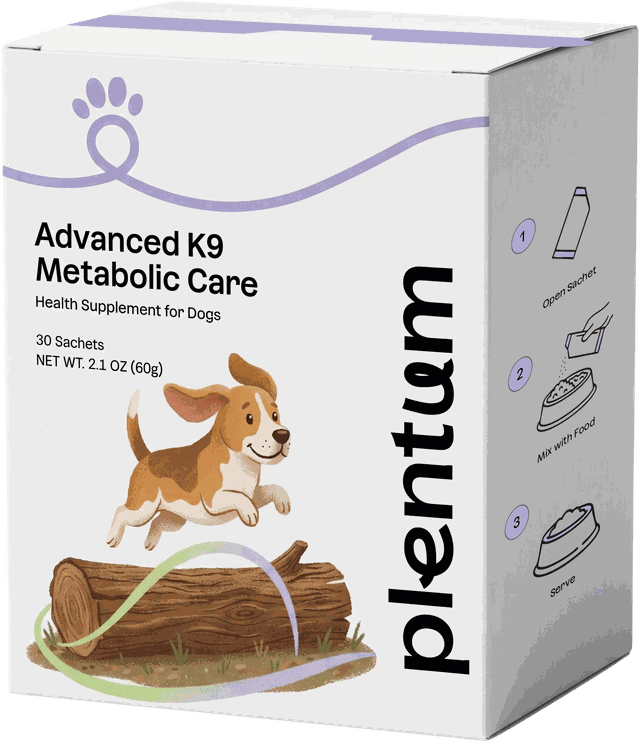
Some owners who want a daily postbiotic and prebiotic option look at Plentum's Advanced K9 Microbiome Care, a powder that you sprinkle on food. It is not a live-culture probiotic, so it works differently from the products described above.
Supplement, not a medicine. Ask your vet if your dog has a health condition or takes medication.
Signs your dog may need gut health support
Watch for these common signs that your dog's gut may need attention:
- Irregular bowel movements or digestive upset.
- Dull coat or skin irritation.
- Low energy or mood changes.
- Recent antibiotic use.
- Diet changes or food sensitivities.
- Age-related digestive changes in senior dogs.
Several of these signs can also come from conditions a vet needs to assess, so talk with your vet before you decide what is going on.
How to support your dog's gut health daily
Supporting gut health goes beyond supplementation. Consider these whole-body habits:
- Feed a high-quality, consistent diet built on whole-food ingredients.
- Minimize unnecessary antibiotic use, and talk with your vet about any course.
- Add a gut-supporting supplement, such as a postbiotic formula, if your vet agrees.
- Reduce stress through routine, exercise and mental enrichment.
- Provide fresh, clean water at all times.
Why pet parents choose Plentum for gut health
Plentum's gut health range is built around a few practical points that owners often ask about:
- Postbiotic and prebiotic approach: designed for daily use, rather than relying on live cultures.
- Convenient sachets: easy daily dosing that you sprinkle on food.
- Research-minded formulas: developed with animal health research in mind.
- Clear directions: serving guidance based on your dog's weight, which you follow as written on the sachet.
Getting started: probiotics for dog gut health made simple
- Assess your dog's current gut health: note any digestive concerns or symptoms.
- Talk with your vet: decide whether a probiotic, a postbiotic or no supplement suits your dog.
- Start with the recommended serving: follow the sachet directions for your dog's weight.
- Monitor progress: track changes in digestion, energy and overall wellness.
- Stay consistent: gut health changes are easiest to judge with daily use.
The bottom line on probiotics for dog gut health
Your dog's gut health influences a lot of daily comfort and function. Traditional probiotics can offer benefits, but live cultures have practical limits. Postbiotic formulas aim for more consistent support for the canine microbiome.
Choosing evidence-informed options and working with your vet helps you invest in your dog's long-term vitality, comfort and happiness.
Frequently asked questions
Are probiotics for dogs safe to give every day?
Many owners ask this question. The answer depends on the product, your dog's health and any medications. Ask your vet before you start a daily probiotic or postbiotic routine, and note any changes in stool or appetite.
What is the difference between a probiotic and a postbiotic?
A probiotic contains live bacteria, while a postbiotic is made of compounds that do not rely on bacterial survival. Because postbiotics are not live cultures, they do not need to survive stomach acid. Your vet can help you decide which approach suits your dog.
What signs suggest my dog needs gut support?
Irregular bowel movements, digestive upset, a dull coat, low energy or mood changes can all be signs. Recent antibiotics and diet changes are common triggers. If signs persist, see your vet before you assume a supplement will solve them.
How long should I give a gut health supplement before judging it?
Give a routine a fair trial and keep notes on stool, appetite and energy. Change only one thing at a time so you can see what helps. Your vet can advise on a reasonable timeline for your dog.
Can probiotics replace a vet visit?
No. Persistent digestive signs, blood in the stool or weight loss need a veterinary examination. Supplements can be one part of a plan your vet agrees with.
Sources
Primary veterinary reference
Use this owner guide alongside the WSAVA Global Nutrition Guidelines and the advice of the veterinarian managing your dog's care.
Supplement, not a medicine. Ask your vet if your dog has a health condition or takes medication. These statements have not been evaluated by the Food and Drug Administration. This product is not intended to diagnose, treat, cure, or prevent any disease.


