









Quick answer: What can I give my Shih Tzu for constipation? Start with more water, a little plain canned pumpkin (not pie filling) and gentle movement, and expect softer stools within 12-24 hours. If there is no change after 24 hours, straining continues or your dog seems unwell, call your vet. Do not give human laxatives, mineral oil or enemas unless your vet directs it.
Key takeaways
- Shih Tzus have a short, flat (brachycephalic) face that affects chewing, digestion, hydration and how well they tolerate some medications. All of this adds to constipation risk.
- Causes range from dehydration and low-fiber diets to orthopedic pain, stress and neurological issues.
- Most mild cases improve with diet tweaks, more water and gentle gut support. Chronic constipation needs a vet visit.
- Older Shih Tzus are especially vulnerable because of lower activity, joint pain and early neutering-related health concerns.
- Constipation in a Shih Tzu dog that strains without producing stool, cannot urinate or vomits is an emergency.
Why Shih Tzus Are Prone to Constipation
You can't talk about Shih Tzu health without talking about their face. That squished skull — the same one that makes them photogenic — also means Best Supplement for Dog Bad Breath: What to Look For crowding, jaw alignment issues, and a tendency to swallow food with barely any chewing. Poor chewing leads to larger food particles reaching the colon, which can slow motility and create dry, hard stools.

Another 2024 study in Acta Veterinaria Scandinavica looked at tear film and ocular surface health in this breed and found that nearly all evaluated Shih Tzus had incomplete eyelid blinks and structural eyelid abnormalities that contribute to chronic irritation. Incomplete blinks are a window into the breed's broader neuromuscular tendencies — the same sluggish muscle tone that affects the colon.
Other common contributors are easy to overlook. Not drinking enough, a diet low in fiber, less exercise, joint or hip pain that makes squatting uncomfortable, stress and some medications can all slow things down. Small breeds can also strain because of urinary or anal-gland problems, so it helps to confirm that your dog is passing urine normally.
Solutions That Actually Work
Work through these steps in order and change one thing at a time. That way you can see what helps and what does not.
Step 1: Fix the water first
Add warm water to kibble, switch to a pet water fountain, or offer bone broth (low sodium, no onion). Dogs often drink more when water is moving or flavored. You'd be amazed how many "constipation emergencies" are just dehydration.
Step 2: Add fiber (carefully)
Pure canned pumpkin (not pie filling — that has sugar and spices) works for most dogs. Start with one teaspoon for a small Shih Tzu and adjust up to two teaspoons per meal. Psyllium husk is another option, but dose carefully because too much can backfire.
- Timeline: expect softer stools within 12–24 hours
- Stop and reassess: if no change after 24 hours, move to step 3
Fiber is not automatically safe for every dog. If your dog is dehydrated, or an obstruction, pelvic pain, neurologic disease or severe constipation is possible, check with your vet before adding more.
Step 3: Support the gut with postbiotics
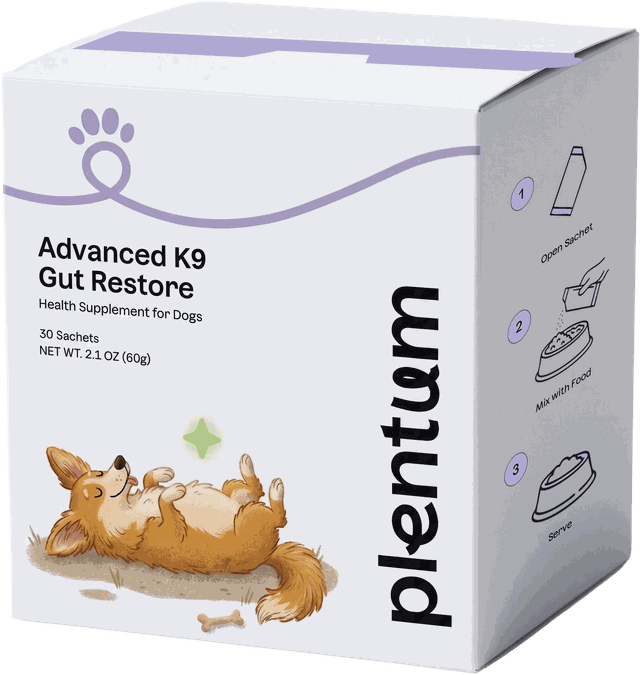
Postbiotics are the by-products that gut bacteria make, and they are used to support normal bowel function and healthy stool consistency. Some owners add a daily postbiotic and prebiotic supplement to food once the basics (water, fiber, movement) are in place. A supplement will not unblock a dog that is truly constipated, so it belongs after steps 1 and 2, not instead of them.
Step 4: Get them moving
Walking helps the colon work. Short, regular walks after meals are easier on a flat-faced breed than one long outing, especially in warm weather. Watch your dog's breathing and head home if it becomes noisy or labored.
Step 5: Watch the calcium
Extra calcium from bones, bone meal or some home-prepared diets can firm up stools. If you feed bones or a homemade diet, ask your vet to check that the balance is right. Avoid giving bones as a quick fix.
Where supplements fit
Water, fiber, movement and a suitable diet come first. A daily gut-support supplement can be one extra layer for a dog whose stools tend to run dry or irregular. Choose one made for dogs, introduce it on its own so you can judge the effect, and give it consistently.
Supplement, not a medicine. Ask your vet if your dog has a health condition or takes medication.
When It's a Bigger Problem
One slow day is not a diagnosis. A pattern is. If stools stay hard or small for several days, if constipation keeps coming back, or if your dog strains again and again, something else may be going on. Pain, an enlarged or inflamed prostate, anal-gland disease, a narrowed pelvis after an injury, a nerve problem or an obstruction can all look like simple constipation.
Older Shih Tzus and dogs with arthritis or back pain are at higher risk. Joint pain makes the squatting posture uncomfortable, and some dogs hold on rather than strain.
Constipation means more than skipping one bowel movement
Track the time since the last normal stool, repeated straining, stool size and hardness, appetite, vomiting, abdominal comfort, water intake, activity, diet, bones or foreign material, grooming, and medications. Small breeds can also strain because of urinary or anal-gland disease, so confirm that urine is passing normally.
Mild cases may improve with hydration, appropriate movement, and a diet adjustment selected with a veterinarian, but fiber is not automatically safe when dehydration, obstruction, pelvic pain, neurologic disease, or severe constipation is possible. Avoid mineral oil, human laxatives, enemas, or improvised dosing unless a veterinarian directs it.
Red Flags That Mean "Vet Now"
Some signs should not wait for the 24-hour check. Call your vet or an emergency clinic the same day if you see any of these:
- Repeated, unproductive straining, or crying out while trying to pass stool.
- Your dog cannot urinate, or is straining to urinate.
- Vomiting, a swollen or painful belly, or a belly that is hard to the touch.
- Blood in or around the stool.
- Marked lethargy, weakness or refusing food.
Know the Shih Tzu constipation red flags
Seek prompt care for repeated unproductive straining, inability to urinate, vomiting, abdominal swelling or pain, blood, marked lethargy, refusal to eat, weakness, or more than a brief departure from the dog's normal pattern. Bring a list of foods, treats, medications, and recent stool observations.
How to Read a Supplement Label (Without Getting Fooled)
Labels can be confusing. A short checklist keeps you on the right track.
- Read the ingredient list. Look for what each ingredient is and the amount per serving, not just the front-of-pack claims.
- Know the type. Probiotics are live bacteria. Prebiotics feed gut bacteria. Postbiotics are the by-products of bacteria. They are not the same thing, so check which one the product actually contains.
- Be wary of big promises. A supplement supports normal function. It does not cure disease, and a label that says otherwise is a red flag.
- Check it suits your dog. Ask your vet before starting if your dog has a health condition or takes medication.
- Start one product at a time and keep a dated note of stools, appetite and energy so you can judge the effect.
Frequently asked questions
What can I give my Shih Tzu for constipation?
Start with extra water (warm water on kibble or a fountain) and one to two teaspoons of plain canned pumpkin per meal, plus gentle walks. Do not use human laxatives, mineral oil or enemas unless your vet directs it. If nothing changes after 24 hours, call your clinic.
What should I do if I think my Shih Tzu is constipated?
Note when the last normal stool was, whether your dog is straining, and whether urine is passing normally. Then fix the water first, add a little fiber and keep your dog moving. If there is vomiting, belly pain, blood or no improvement, see your vet.
How long can a Shih Tzu go without pooping?
Most dogs go at least once a day, so a missed day is worth watching. If your Shih Tzu strains, is uncomfortable or has not passed stool after 24 hours of home steps, speak to your vet. Do not wait if there is vomiting or a swollen belly.
Why are Shih Tzus prone to constipation?
Their short, crowded jaw often means they swallow food with little chewing, so larger particles reach the colon. Add dehydration, low fiber, less exercise and joint pain, and stools can turn dry and hard.


