







Guide
Dog skin, coat and itch research hub
Which skin and coat ingredients have dog studies behind them, and what did those studies actually measure? This hub summarizes the evidence at ingredient level, with dated sources.
The question
Owners of itchy, paw-licking or dull-coated dogs want to know whether a daily supplement can support skin and coat. Nutrition can play a supporting role, but persistent itching, hair loss, sores, ear problems or swollen paws need a veterinary diagnosis first, because the causes range from parasites and infection to food and environmental allergies.
What the evidence says, ingredient by ingredient
| Ingredient | What was studied | Worth knowing | Study |
|---|---|---|---|
| Postbiotic (CIHP) | In a 28-day randomized, double-blind, placebo-controlled study in 30 dogs with mildly elevated itching, a heat-treated Pediococcus acidilactici postbiotic at 150 mg a day was associated with lower owner-rated itch scores and better coat scores than placebo. | Supplier-run and supplier-funded; small groups; not independently replicated. Tested the ingredient, not a Plentum product. | Animals 15(14):2019, 2025 |
| Omega-3 (EPA and DHA) | In a 90-day placebo-controlled study in 24 dogs with dull coats, an EPA+DHA supplement was associated with better coat scores from day 60. A 2024 study showed supplementation raises the omega-3 index in dogs. | Dogs selected for dull coats; the benefit faded after supplementation stopped. Doses were likely higher than a supplement sachet. |
Prostaglandins, Leukotrienes and Essential Fatty Acids, 2020 Animals 14(21):3108, 2024 |
| Bovine colostrum | In a 40-week randomized study in 24 healthy dogs, a colostrum diet was associated with a stronger vaccine antibody response and higher gut IgA. | Immune markers, not skin outcomes. Industry-run. | British Journal of Nutrition, 2013 |
| Spirulina | In a 42-week randomized study in 30 healthy dogs, a spirulina diet was associated with a stronger vaccine antibody response and higher gut IgA. | Immune markers in healthy dogs, not itch outcomes. Industry-funded. | Frontiers in Nutrition, 2021 |
What is still unknown
- Whether the gut-skin link seen in research translates into visible skin changes for an individual dog.
- Dog studies of quercetin and of probiotic strains for skin and coat are limited.
- The best omega-3 dose for coat support from a supplement, as opposed to a therapeutic diet.
- Independent replication of the postbiotic itch study.
- No study has tested a Plentum formula.
How to read the label
- Check the ingredient class: a live probiotic (counted in CFU), a postbiotic (inactivated, so no CFU) or a prebiotic fiber.
- Check the amount of each active per serving and the serving by body weight.
- Look for structure and function wording ("supports", "helps maintain"), not disease promises.
- Look for a lot number and best-by date, and ask the brand for the certificate of analysis.
Where Plentum fits
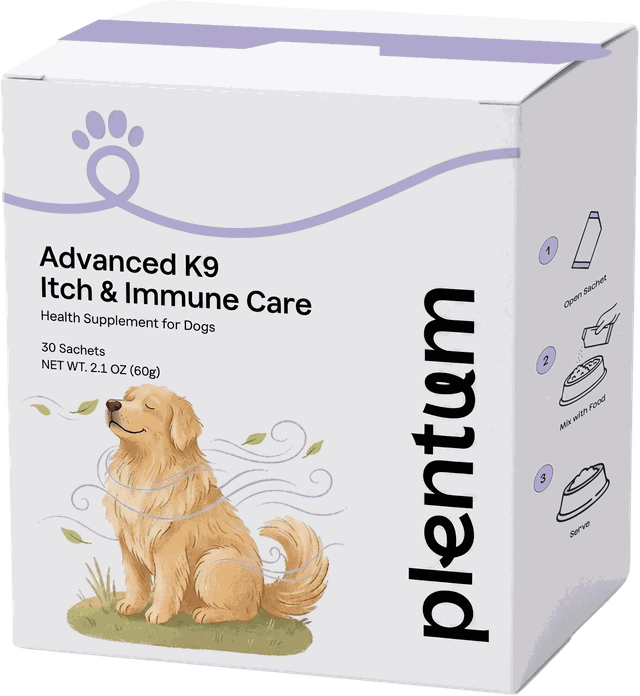
- Advanced K9 Itch & Immune Care: CIHP (a canine immune health postbiotic), microalgae DHA, colostrum, a proprietary probiotic blend (L. casei K9-1, L. fermentum K9-2, L. brevis WF-1B, L. reuteri WF-1) yielding 2 billion CFU, quercetin and spirulina. Supports a normal immune response to seasonal triggers and helps maintain a healthy coat.
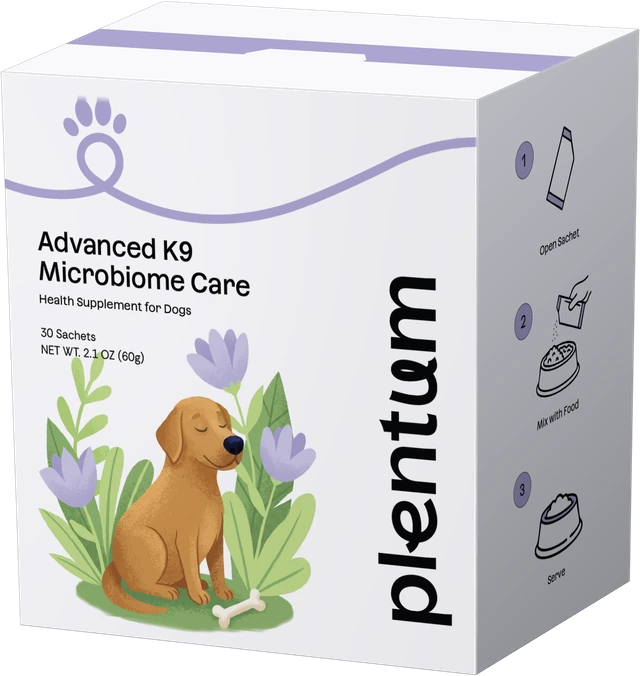
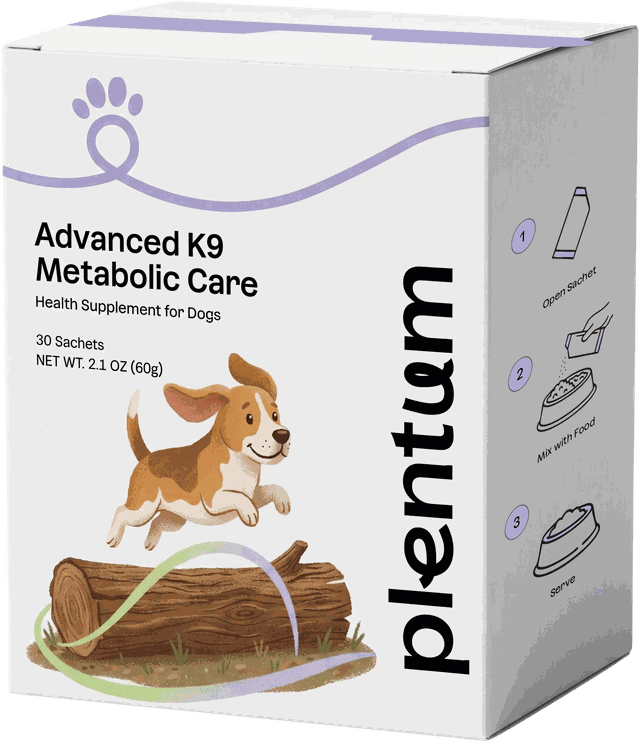
- Advanced K9 Microbiome Care: a daily foundation with fish oil and colostrum.
- Compare them in skin and itch supplements, and read the dog allergy supplement guide.
Sources
Studies
- An indole-rich postbiotic reduces itching in dogs (randomized, double-blind, placebo-controlled). Animals 15(14):2019, 2025.
- EPA+DHA supplementation and coat quality in dogs with dull coats (90 days, placebo-controlled). Prostaglandins, Leukotrienes and Essential Fatty Acids, 2020.
- Omega-3 supplementation, the omega-3 index, quality of life and pain scores in dogs. Animals 14(21):3108, 2024.
- Supplementation of diets with bovine colostrum influences immune function in dogs. British Journal of Nutrition, 2013.
- Spirulina-supplemented diet and immune markers in healthy dogs (randomized, 42 weeks). Frontiers in Nutrition, 2021.
Veterinary and nutrition references
- Allergies in dogs. Merck Veterinary Manual; checked 10 Oct 2026.
- Itching (pruritus) in dogs. Merck Veterinary Manual; checked 10 Oct 2026.
- Interdigital furunculosis in dogs. Merck Veterinary Manual; checked 10 Oct 2026.
- Nutritional requirements and related diseases of small animals. Merck Veterinary Manual; checked 10 Oct 2026.
- Dog and cat foods. Merck Veterinary Manual; checked 10 Oct 2026.
- WSAVA Global Nutrition Guidelines. WSAVA; checked 10 Oct 2026.
- Selecting a pet food for your pet (Global Nutrition Toolkit). WSAVA, updated 2021; checked 10 Oct 2026.
- Animal food labeling and pet food claims. U.S. FDA; checked 10 Oct 2026.
Studies listed here tested ingredients, not Plentum products. Where a study was funded or run by an ingredient supplier, we say so. This page is educational and does not diagnose, treat, cure or prevent any disease. Talk to your veterinarian before adding a supplement, especially if your dog takes medication, is pregnant or nursing, or has a diagnosed condition.
Last reviewed 10 October 2026. This hub brings together 6 of our earlier 2026 topic reports into one page with a single, checked source list. See all topics in the Plentum research library.
For general education only, not veterinary advice. Talk to your veterinarian if your dog has a health condition or takes medication, or if signs persist or get worse. These statements have not been evaluated by the Food and Drug Administration. Plentum products are not intended to diagnose, treat, cure, or prevent any disease.