





Quick answer: Golden Retriever health is best managed as a routine, not a reaction. Prioritize documented hip, elbow, eye and heart screening in breeding lines, keep your dog lean, and watch the skin, ears, mobility, lumps, appetite, stool and energy. Call your veterinarian for limping, pain, swelling, sudden appetite loss, repeated vomiting or diarrhea, breathing changes, collapse or fast-growing lumps.
Key takeaways
- Ask for parent screening records for hips, elbows, eyes and heart before you bring a Golden Retriever puppy home.
- Small changes in mobility are easy to excuse as a hard play session, so track them rather than dismissing them.
- Goldens have a thick double coat that can trap moisture, so ears, skin and paws need regular checks.
- Regular hands-on checks for lumps, plus a simple log of appetite, stool and energy, make changes easier to spot early.
- Call your vet promptly for limping, pain, collapse, breathing changes, repeated vomiting or fast-growing lumps.

Golden Retriever Health Guide: Common Issues Every Owner Should Know
Most Golden Retriever health problems are familiar to vets, and most of them are easier to handle when you know what to watch for. You do not need to memorize every condition. You just need to know which ones matter most for this breed and how to notice them early.
Start with screening, not guesswork
If you are choosing a Golden Retriever puppy, the most important health step happens before the puppy comes home. Ask for parent screening records, not just reassuring language.
For this breed, that usually means hip, elbow, eye and heart documentation from appropriate veterinary specialists and registries. Ask the breeder to show the results for both parents.
The Golden Retriever Club of America recommends parent screening for all four areas before breeding.
Screening does not guarantee a problem-free life. It does, however, change the quality of the decision you make, and it gives your vet a clearer baseline when you talk about growth, activity or joint comfort later on.
Breed matcher
Which formula fits your Golden Retriever?
Pick what you notice most. Each choice goes to the matching Plentum formula.
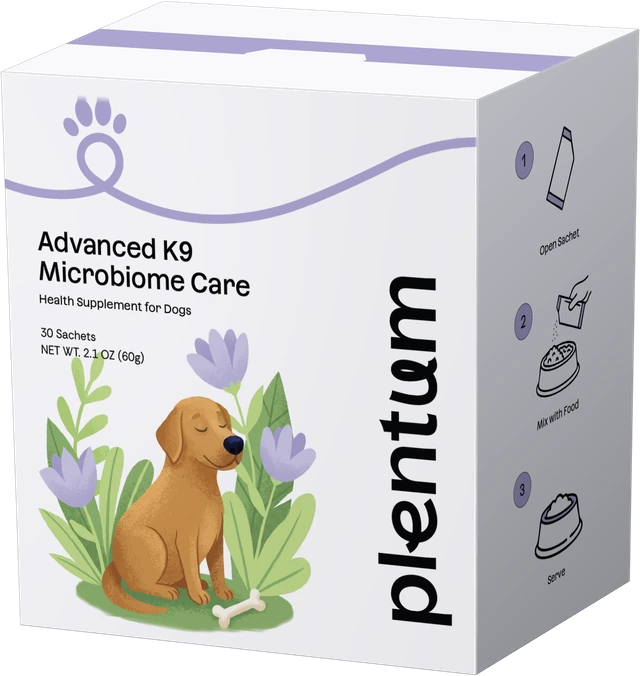
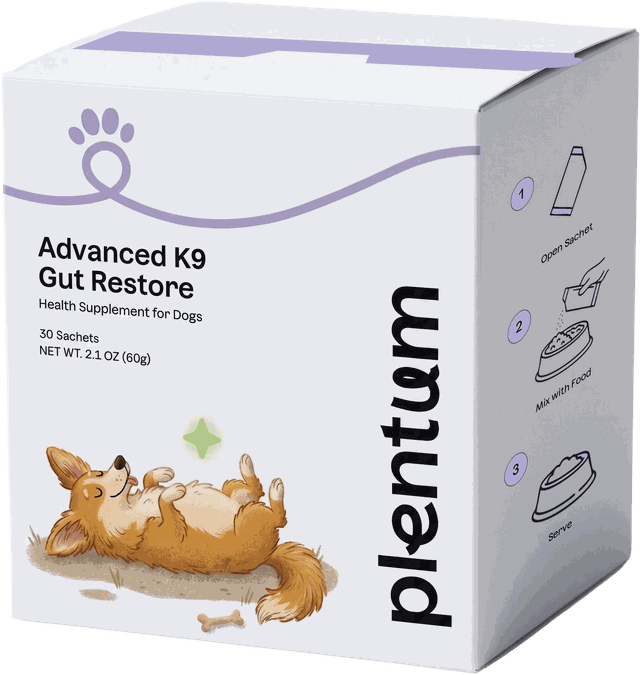
- Loose stool, gas or a sensitive stomachGut Restore
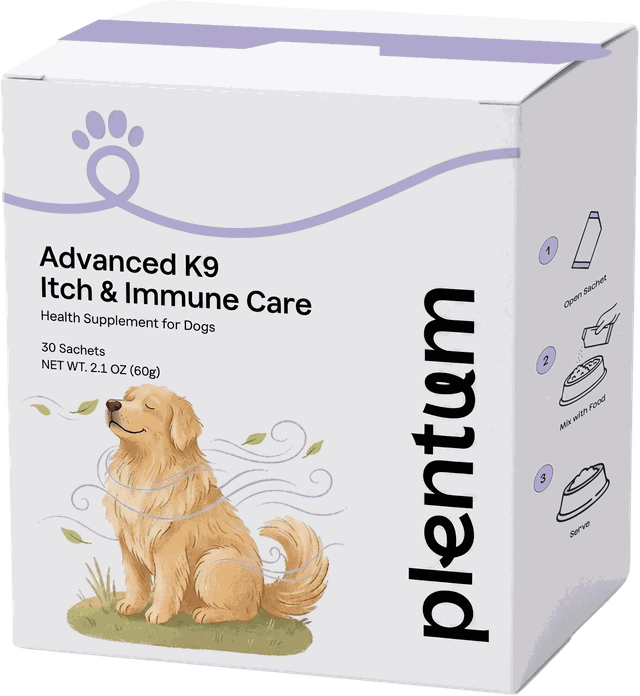
- Itchy skin, paws or a dull coatItch & Immune Care
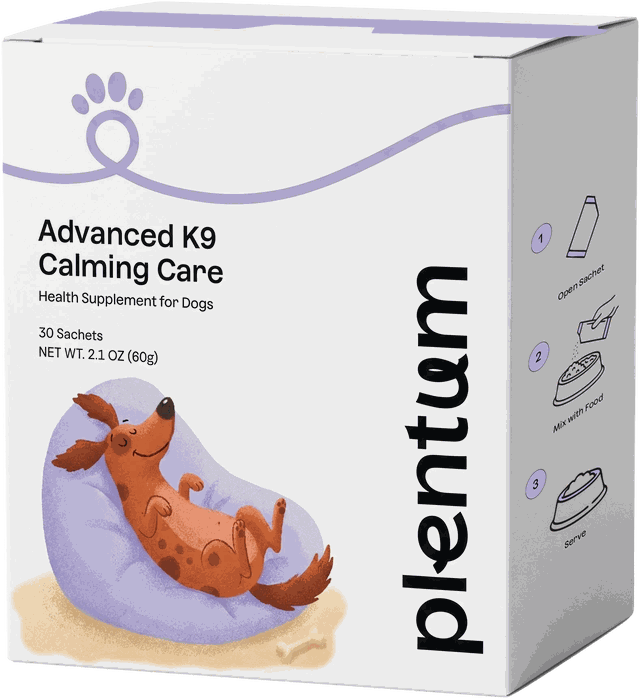
- Nervous in storms, travel or at the vetCalming Care
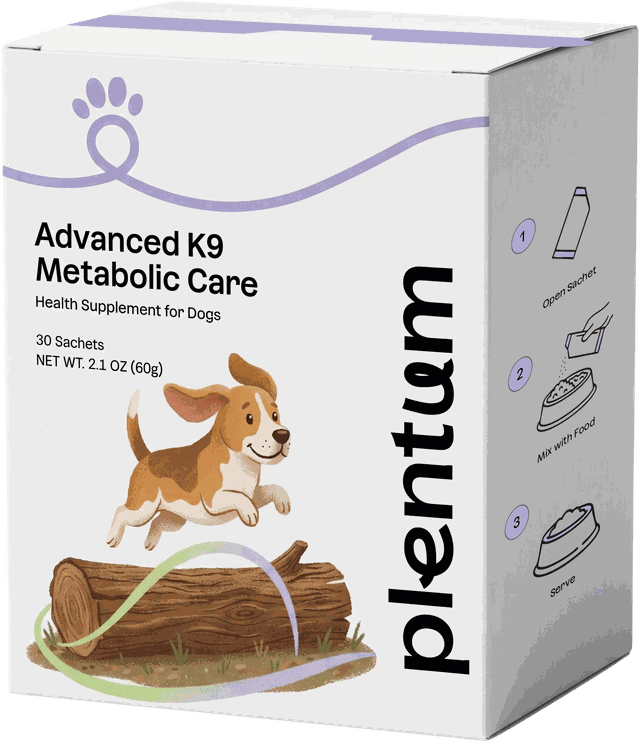
- Extra weight or a big appetiteMetabolic Care
- Just a daily foundationMicrobiome Care
What the research actually tells us
Golden Retrievers are one of the most closely followed breeds in veterinary research. The Morris Animal Foundation's Golden Retriever Lifetime Study has tracked more than 3,000 dogs since 2012. It is one of the largest long-term datasets on cancer, obesity and joint disease in any breed, and it is a big reason owner tracking matters so much.
The table below sums up the main practical points and where each one comes from.
| Area | Practical takeaway | Source |
|---|---|---|
| Breeder screening | Ask for parent records for hips, elbows, eyes and heart rather than relying on broad health promises. | Golden Retriever Club of America |
| Long-term research | Golden Retriever health is followed through large long-term projects, which is one reason careful owner tracking matters. | Morris Animal Foundation |
| Hips and mobility | Hip dysplasia is a developmental orthopedic condition. Limping, stiffness or reluctance to jump deserves veterinary guidance. | Merck Veterinary Manual |
| Owner signs | Owners may notice difficulty rising, reluctance to run or jump, and hind-end lameness. | VCA Hospitals |
| Weight and nutrition routine | Use body condition, activity, life stage and veterinary advice to guide feeding, instead of only following the scoop size on the bag. | WSAVA nutrition toolkit |
Hips, elbows, and the moment you notice something's off
Goldens are active dogs, so small mobility changes are easy to excuse as a hard play session. That is exactly why they often go unnoticed for weeks.
Do not ignore repeated stiffness, limping, trouble rising, bunny-hopping or a sudden drop in enthusiasm for walks. Any of these is a reason to bring the dog in for a check.
According to the Merck Veterinary Manual, hip dysplasia affects roughly 20 percent of Golden Retrievers, which makes it one of the most common orthopedic concerns in the breed.
VCA Hospitals notes that owners often spot it first through subtle signs, such as hesitation before stairs, shorter walks or a dog who used to launch onto the couch now pausing mid-jump.
Weight makes this category more important. A lean Golden carries less mechanical load on developing joints. Ask your vet to score body condition at routine visits, then adjust food, treats and exercise expectations together. Most adult Goldens do well on a body condition score of 4 to 5 out of 9.
Skin, ears, and coat patterns
That thick, gorgeous double coat is also a moisture trap. Goldens are prone to ear and skin complaints in ordinary life, especially when swimming, pollen and grooming gaps overlap.
Watch for these signs:
- Head shaking or ear odor
- Red skin, hot spots or repeated paw chewing
- Scratching that keeps coming back
Drying the ears after swimming, brushing out mats weekly and checking the paws after grass or mud are practical steps. If there is odor, swelling, discharge, pain or broken skin, skip the home experiments and book an exam.
Weight, digestion, and the boring routine that works
Golden Retriever health is easier to manage when the daily routine is boring in the best way. That means measured meals, controlled treats, regular movement, clean water, predictable sleep and a simple log of stool, appetite, vomiting, itching, energy and mobility.
Some research from Cornell's College of Veterinary Medicine discusses links between gut microbiome balance and immune function, skin health and behavioral calm in dogs. The evidence is still developing, but it is one reason digestive health is worth thinking about early, not only when stool gets loose.
If your Golden has a sensitive stomach, change the routine slowly and log each change, so you can see what is helping.
Lumps, appetite, energy, and behavior changes
That alone was the clue. A dog who suddenly avoids stairs, pants at rest, hides, refuses food, drinks much more, loses weight or seems unusually tired is giving you useful information.

The Morris Animal Foundation's lifetime study has reported that cancer affects roughly 60 percent of Goldens, which makes early lump detection one of the most useful habits an owner can build.
Check your dog with your hands during calm grooming sessions. Work across the neck, chest, armpits, belly, legs, feet, tail base and ears. Do not panic over every small bump, but do write down the size, location, texture and growth speed, and ask your vet which ones deserve a visit.
Joint and skin support without overclaiming
Daily support products should be described honestly. They are one part of a routine, and they do not replace a vet exam or a screening record.
If you add a daily supplement, keep the rest of the routine consistent while you track patterns, instead of changing several variables at once. That way you can tell what helped, what did nothing and what made things worse.
Where supplements fit
For Goldens, consistency matters. Do not change food, treats, chews, supplements and activity all at once. A supplement works best as support alongside measured meals, steady exercise and regular vet checks.
Supplement, not a medicine. Ask your vet if your dog has a health condition or takes medication.
When to call your veterinarian
For slower concerns, bring organized notes to the visit. Include when it started, what changed, which side is affected, any food or treat changes, the stool pattern, exercise changes, photos or videos and any family history you know. Good notes make the exam more useful.
Frequently asked questions
What is the most important health step when choosing a Golden Retriever puppy?
Ask for parent screening records for hips, elbows, eyes and heart before the puppy comes home. Records from appropriate specialists and registries are more useful than general assurances. Screening does not guarantee a healthy dog, but it improves the decision.
How can I tell if my Golden Retriever has a joint problem?
Watch for repeated stiffness, limping, trouble rising, bunny-hopping or hesitation before stairs. Reduced enthusiasm for walks is also a useful clue. Any ongoing sign deserves a vet check rather than a wait-and-see approach.
How often should I check my Golden's lumps?
Check during calm grooming sessions, ideally on a regular schedule. Note the size, location, texture and growth speed of any bump. Ask your vet which changes need a visit, and do not wait for a lump to become large before you act.
Why does my Golden's coat and skin need extra attention?
The thick double coat can trap moisture, which makes ears and skin prone to trouble after swimming or in pollen season. Dry the ears, brush out mats and check the paws regularly. Odor, swelling, discharge or broken skin should go to a vet.