





Your Golden is scratching at an ear again, and last night's stool was soft.
The best probiotic for golden retrievers is a daily one with named strains, prebiotic fiber, and ideally a postbiotic component, dosed for a 55 to 75 pound dog.
Why Golden Retrievers need extra gut support
If you've watched your Golden cycle through itchy skin, soft stools, and another ear infection, you already know the breed's reputation. Sensitive digestion, food-triggered flare-ups, and skin trouble that traces back to the gut all come up again and again.
A daily synbiotic pairs live probiotic strains with prebiotic fiber, and ideally a postbiotic. It supports the gut's bacteria, which in turn supports both digestion and skin. Many dogs show changes over six to eight weeks of steady daily use.
- Goldens are known for sensitive digestion, food-triggered flare-ups, and skin concerns that often trace back to the gut.
- The gut-skin axis is the two-way link between the gut microbiome and the skin barrier.
- Expect digestive changes in 2 to 4 weeks and coat changes in 6 to 10 weeks.
Goldens eat like someone's about to take the bowl away. That speed adds to gas, bloating, and the occasional loose stool, and their genetics make food sensitivities more likely than in many other breeds.
The result can be a cycle of gut imbalance that owners spend years managing.
What the gut microbiome is
The gut microbiome is the community of trillions of bacteria and other microorganisms in your dog's digestive tract.
It plays a big part in digestion and immune function, and it shapes how the body responds to environmental triggers and food ingredients. That last part matters a lot for Goldens.
Common gut-related signs Golden owners report
- Loose or inconsistent stools, especially after a food switch
- Frequent gas or bloating
- Stomach upset after rich foods, table scraps, or stress
- Less appetite during flare-ups
- Recurring ear infections with no obvious outside cause
None of these signs are unique to Goldens. Still, eager eating, a genetic food sensitivity, and a dense double coat make everyday gut support worth it, before a flare-up instead of after.
The gut-skin axis: what it means for your Golden's coat
If your Golden has itchy skin, hot spots, or a dull coat despite a good diet, the gut-skin axis may be part of the story.
It's the two-way line of communication between the gut's bacteria and the skin barrier, and because the gut is closely tied to immune and nervous-system signaling, it affects the whole body.
Why Goldens are especially affected
When gut bacteria are out of balance, inflammatory signals can travel through the body and show up on the skin as redness, itching, flaking, or a poor coat.
The breed also carries a higher genetic risk for atopic dermatitis, a long-term inflammatory skin condition driven by the immune system, and for environmental and food allergies.
How gut imbalance shows up on the skin
| Gut signal | How it may appear on the skin or coat | Timeline to improvement with gut support |
|---|---|---|
| Increased intestinal permeability | Itching all over, redness, or hot spots | 4 to 8 weeks of consistent daily supplementation |
| Low microbiome diversity | Dull or thin coat, heavy shedding | 6 to 10 weeks |
| Immune dysregulation | Repeat skin or ear infections | Often longer; involve your vet |
| Food sensitivity | Face rubbing, paw licking, skin fold trouble | 2 to 6 weeks alongside a diet review |
These timelines are general estimates and can't be guaranteed. Every dog's different, and skin problems that hang around need your vet.
Probiotics, prebiotics and postbiotics: which does your Golden need?
Labels and search results often use these terms as if they meant the same thing. They don't, and knowing what each one does makes it easier to choose for a dog with both digestive and skin concerns.

| Type | What it is | Primary role | Especially useful for Golden Retrievers because |
|---|---|---|---|
| Probiotic | Live beneficial bacteria (e.g., Lactobacillus, Bifidobacterium) | Add to and diversify the gut's bacteria | Goldens tend toward dysbiosis from food sensitivity and stress |
| Prebiotic | Non-digestible fiber that feeds beneficial bacteria | Feed and sustain probiotic colonies | Gives new bacteria something to feed on |
| Postbiotic | Beneficial metabolites and compounds produced by bacteria | Bioactive effects, including skin barrier support | May support the gut-skin axis |
| Synbiotic | A combined probiotic + prebiotic supplement | Live bacteria plus the fuel they need | The most practical all-in-one format for daily gut care |
When digestion and skin are both on your mind, a daily synbiotic with postbiotic activity covers the most ground.
The studies on gut ingredients such as probiotics, postbiotics, and fiber are in our gut health research hub, sorted by ingredient. Every supplement in our gut supplement collection is a powder sachet you pour over your dog's usual food.
Which supplement fits your Golden Retriever?
Pick what you notice most. Each choice goes to the matching Plentum supplement.
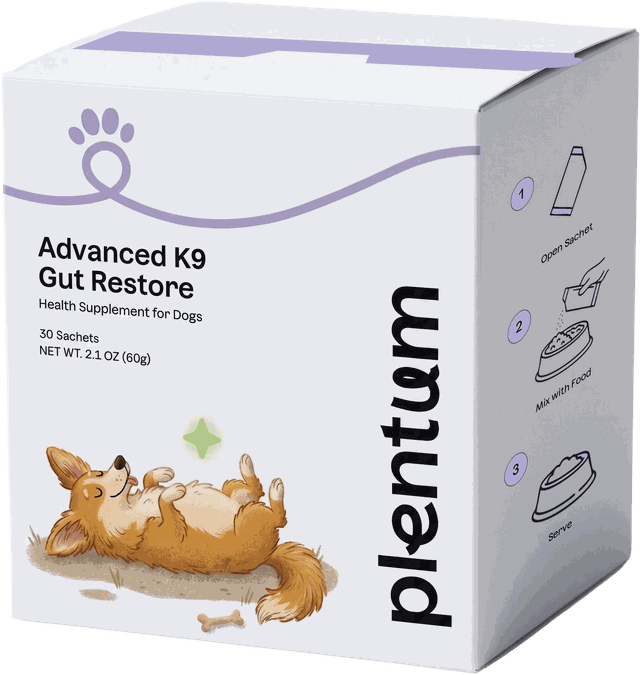
- Loose stool, gas, or a sensitive stomachGut Restore
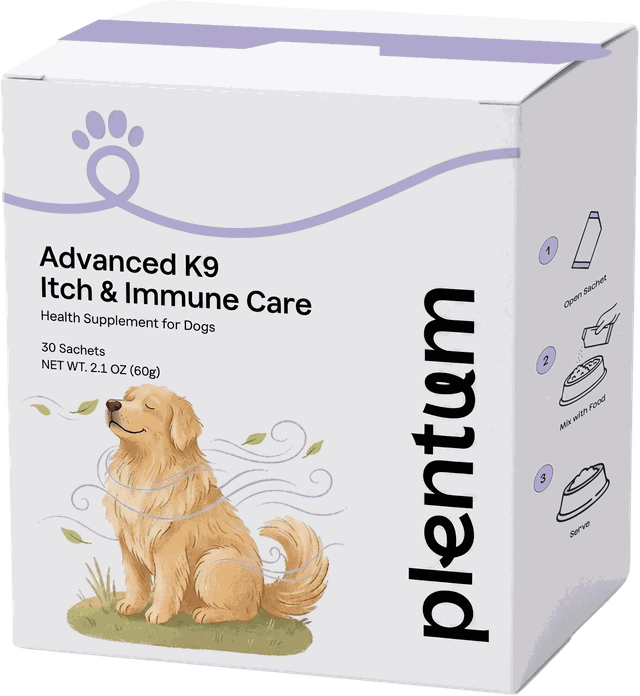
- Itchy skin, paws, or a dull coatItch & Immune Care
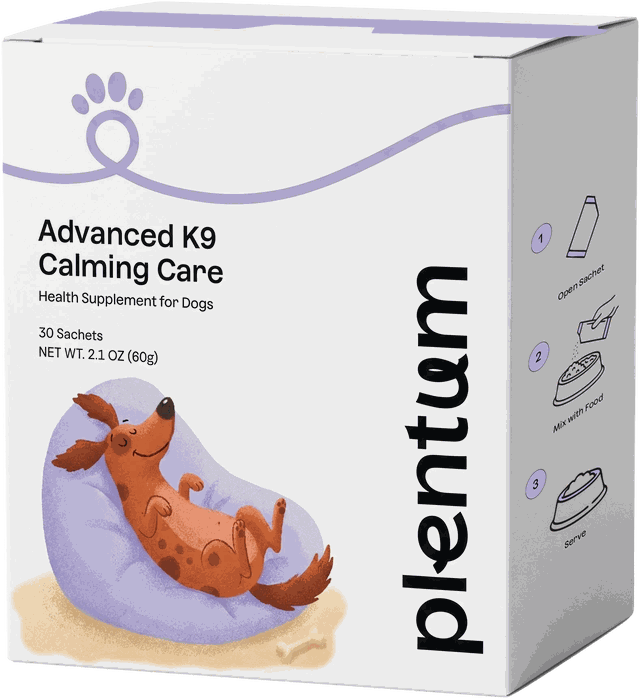
- Nervous in storms, on trips, or at the vetCalming Care
- Extra weight or a big appetiteMetabolic Care
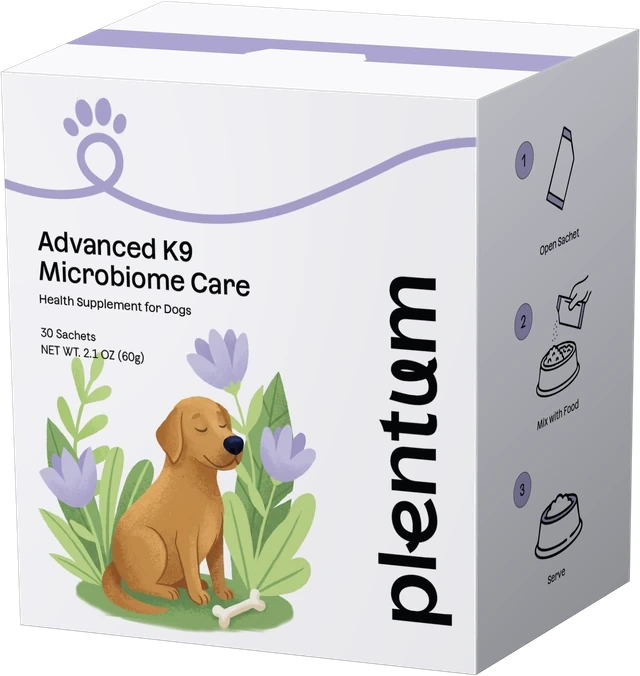
- Just a daily foundationMicrobiome Care
What to look for in a probiotic for Golden Retrievers
Probiotic supplements vary a lot. A few markers separate the useful ones from the ones that look great on the label and do little by the time they reach your dog's gut.
Strain specificity and diversity
Look for named strains, such as Lactobacillus or Bifidobacterium species, in place of a vague "probiotic blend." A named strain list lets you and your vet check what your dog is actually getting.
A CFU count that matches your dog's size
For a medium-to-large breed like a Golden (55 to 75 pounds), many veterinary nutritionists recommend 1 to 5 billion CFU a day.
Under 1 billion is unlikely to do much, and a product claiming 50 billion or more often trades strain quality for a big number.
Survivability and shelf stability
Live bacteria have to survive storage and the trip through the stomach. Check how the brand stores and packages the product, and whether the CFU guarantee holds through the expiration date.
Third-party testing and disclosure
A trustworthy brand publishes its strain list, its CFU guarantee, and a certificate of analysis (CoA) for each lot, with amounts that match the label. If you can't find that on the website within a minute, the company probably doesn't make it a priority.
Quick checklist before you buy
- Named strains, with more detail than "probiotic blend"
- 1 to 5 billion CFU for a medium-to-large breed
- Prebiotic fiber included to help bacteria stick around
- A certificate of analysis for the lot, with amounts that match the label
- Every ingredient listed on the label
How long until you see results?
That depends on what you're tracking and how steadily you give it.
Digestive signs (stool quality, gas, appetite)
Most owners report changes within 2 to 4 weeks. Regular, comfortable stools and less gas tend to show up first, because the gut responds faster than the skin.
Skin and coat signs (itching, shedding, coat shine)
Plan on 6 to 10 weeks for a visible change in the coat. Itching takes longer to calm down. Our skin and coat supplement guide for dogs covers what to look for.
A suggested daily routine
After the first couple of weeks of introducing any product the way its label directs:
- Weeks 3 to 8: move to the full dose. Track stool quality and how often your dog itches each week.
- Weeks 9 to 12: look at coat and skin changes. If nothing's improved, go back to your vet to rule out other causes.
The most common mistake is quitting after two weeks because nothing dramatic happened. Gut bacteria don't change over a weekend, so give it at least 8 weeks.
Five supplements, each aimed at a different need
- Gut RestoreFits this guide It supports normal bowel function and healthy stool consistency, and helps maintain a balanced gut. From $1.50/day
- Itch & Immune Care It supports a normal immune response to environmental and seasonal triggers, and helps maintain a healthy coat. From $1.50/day
- Calming Care It supports a calm, relaxed demeanor during occasional situational stress such as storms, travel, or vet visits. From $1.50/day
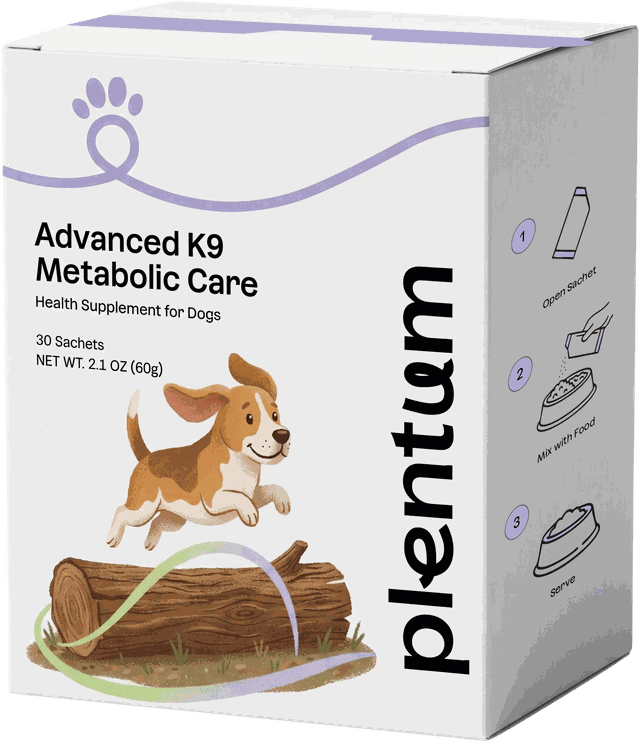
- Metabolic Care It supports healthy weight management alongside measured portions and daily exercise. From $1.50/day
- Microbiome Care It’s a daily powder with a postbiotic and prebiotic foundation, plus colostrum and omega-3, to support gut, oral, skin, and coat health. From $1.17/day
Where supplements fit
A postbiotic-forward supplement like Microbiome Care works differently from a probiotic. It's a postbiotic and prebiotic daily sachet, so its active compounds are already made through fermentation and no live bacteria have to survive the trip to the gut.
For Goldens with seasonal scratching, Itch & Immune Care is our gut-skin supplement. Plenty of Golden owners use both, and the Microbiome Care and Itch & Immune Care bundle puts them together. Our skin, coat and itch collection shows the rest of the options.
When supplements aren't enough
A probiotic has limits.
- Blood in stool or black, tarry stools
- Vomiting that lasts more than 24 hours
- Sudden weight loss or appetite change
- Open sores, hot spots that spread, or oozing skin
- Recurring ear infections (more than 3 per year)
These signs can point to food allergies, parasites, thyroid problems, or autoimmune conditions. A veterinary examination can identify the cause and the right care.
Primary veterinary reference
Use this guide alongside the WSAVA Global Nutrition Guidelines and the advice of the vet who knows your dog.
Frequently asked questions
What are the best supplements for supporting the pet gut-skin axis?
No single supplement is best for every dog. For a Golden Retriever, a daily synbiotic with named probiotic strains, prebiotic fiber and ideally a postbiotic covers the most ground. Give it six to eight weeks and talk it over with your vet.
What is a good probiotic for a Golden Retriever?
Look for named strains, a sensible CFU count (1 to 5 billion for a medium-to-large dog) and prebiotic fiber. A good brand shares a certificate of analysis for each lot.
How long does a probiotic take to work in a Golden Retriever?
Most owners report digestive changes within 2 to 4 weeks. Coat and skin changes usually take 6 to 10 weeks, so give any new product at least 8 weeks before you judge it.
Why are Golden Retrievers prone to gut and skin problems?
Goldens tend to eat fast and are prone to food sensitivities. The breed also has a higher genetic risk for atopic dermatitis, and gut imbalance can show up on the skin through the gut-skin axis.