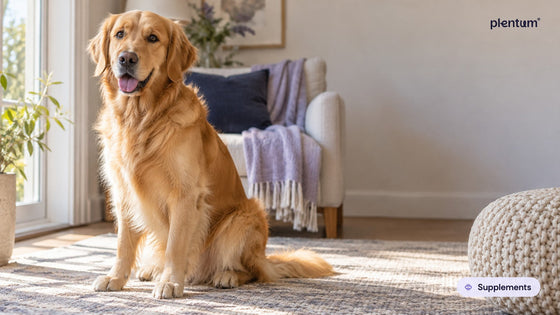






If your Frenchie can clear the room from the couch, you're in good company. The best probiotic for a French Bulldog is the one that fits your dog's gut, weight, and routine, with a label your vet has seen.
Nobody warns you about the gas. The breeder doesn't mention it, and neither does the vet. Then one evening the couch, the car, and the guest room all smell the same.
Their flat faces make them swallow air while they eat. That air ferments into gas, and over time the cycle can irritate the gut in ways most owners never connect to the food bowl.
If your dog is still a puppy, read Can Puppies Take Probiotics? first.
- French Bulldogs are prone to digestive sensitivity due to their flat-faced build and habit of swallowing air.
- Gas, stool sensitivity, skin issues, and eating speed can overlap, so look at the whole routine.
- Choose a product dosed for your dog's weight, and keep packaging freshness in mind for daily use over months.
Why Frenchies have so much gut trouble
French Bulldogs were bred to be companions, and digestion was an afterthought. Their flat-faced (brachycephalic) build makes them gulp air when they eat and drink, which means more gas and belly discomfort.
Add a genetic tendency toward food sensitivities and a body shape that can cause low-grade gut irritation, and you've got a dog that needs steady digestive care. The usual issues:
- Soft stools that keep coming back, often tied to a gut bacteria imbalance or a food sensitivity.
- Heavy gas from swallowed air and fermentation in the gut.
- Bowel flare-ups: ongoing diarrhea, vomiting, or weight loss needs a vet exam to find the cause.
- Seasonal skin flare-ups, often linked to the connection between gut and skin immunity.

Sort out the routine first
In Frenchies, gas, loose stools, skin trouble, and eating speed tend to overlap. Look at the whole day before you buy anything.
To put those observations in context, read our guide to symptoms of poor gut health in dogs.
- A dog who inhales dinner swallows more air, so a slow bowl and measured meals can help.
- A new protein, a fattier food, or different treats can change gas and stools.
- Gut routine and skin comfort are worth looking at together.
- A daily powder should slot into measured meals without turning into another chore.
Worth reading next:
- Dog Gas Remedies: 7 Fast Practical Fixes (2026)
- Best Dog Foods for Sensitive Stomachs: How to Choose
- dog poop color chart: colors, textures and red flags
What to look for in a gut supplement
Live probiotic cultures have to survive storage, stomach acid, and a Frenchie's fast, air-filled gut before they can do anything. That's why a postbiotic + prebiotic base is a sensible place to start.
A postbiotic complex holds the beneficial compounds bacteria produce, and it's already active and shelf-stable. Prebiotic fiber (inulin) feeds your dog's own resident bacteria.
Packaging matters too, since you'll be giving this every day for months. A tub loses freshness every time you pop the lid, while single daily sachets keep each serving fresh and measured.
The dog gut health research hub sums up what published studies say about gut ingredients such as probiotics, postbiotics, and fiber.
Products worth a look
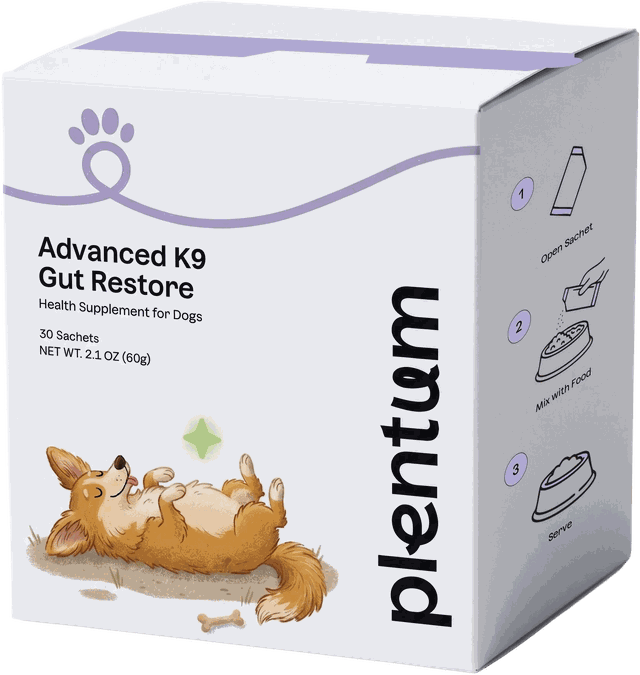
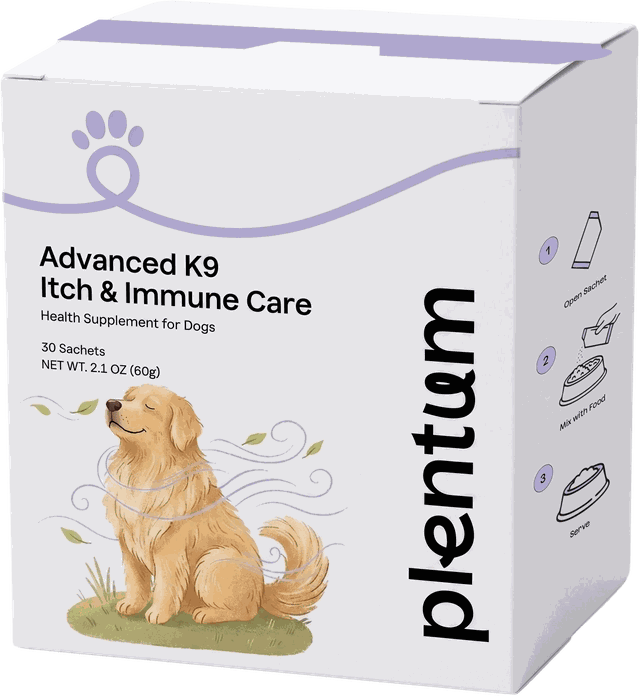
For a gassy or soft-stool Frenchie, a probiotic-and-fiber sachet like Advanced K9 Gut Restore mixes easily into food. If seasonal scratching is the bigger issue, Itch & Immune Care is our skin-and-coat supplement.
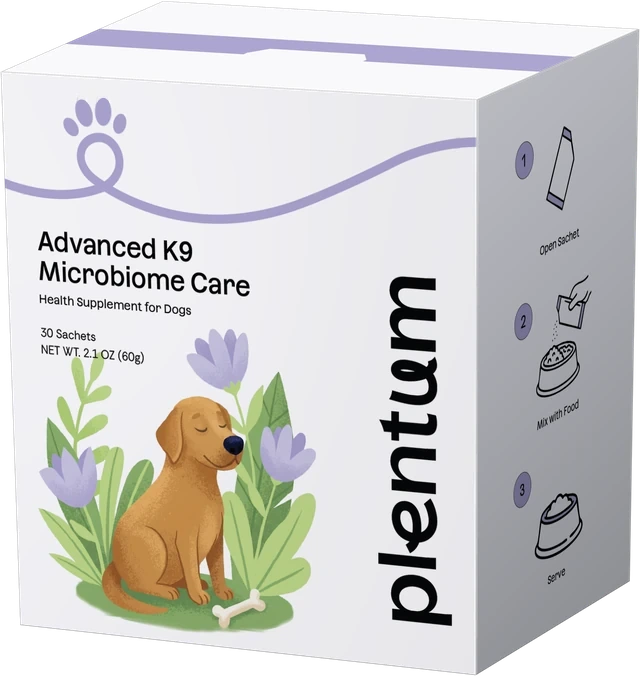
To support healthy stools, Plentum Microbiome Care is a daily postbiotic + prebiotic sachet. It combines:
- An oral-health postbiotic complex
- Prebiotic inulin
- Colostrum
- Omega-3
Stir it into dinner once a day, at:
- 1 sachet for dogs under 20 lb
- 2 sachets for dogs from 20 to 50 lb
- 3 sachets for dogs above 50 lb
A daily postbiotic + prebiotic blend may help maintain gut microbiome balance and support healthy stool consistency. It doesn't replace a vet exam, a measured diet, or a slow bowl.
Which supplement fits your French Bulldog?
Pick what you notice most. Each choice goes to the matching Plentum supplement.
- Loose stool, gas, or a sensitive stomachGut Restore
- Itchy skin, paws, or a dull coatItch & Immune Care
- Nervous in storms, on trips, or at the vetCalming Care
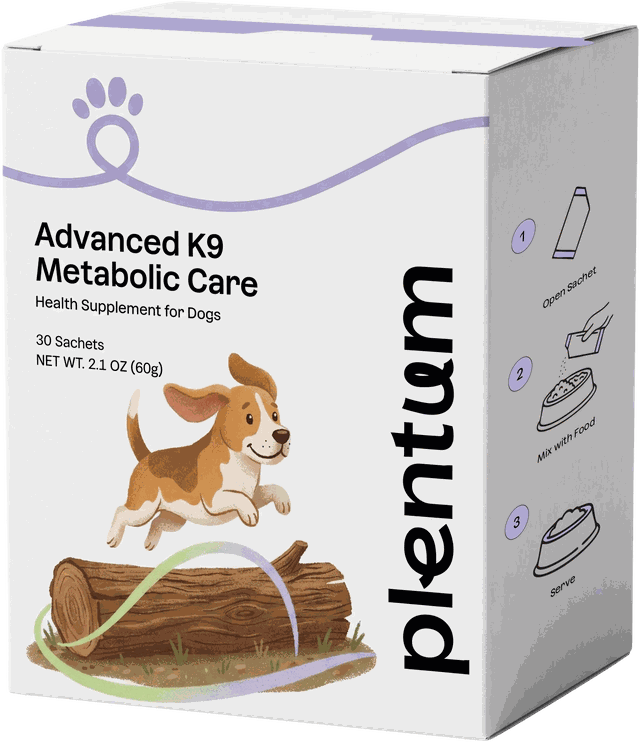
- Extra weight or a big appetiteMetabolic Care
- Just a daily foundationMicrobiome Care
What the research says
The table shows the one study cited here. It was small, 27 dogs with acute diarrhea, and it tested a synbiotic.
It didn't include French Bulldogs, so read it as early dog data that says nothing yet about Frenchies.
| Publication | Year | n-size | Primary endpoint | Result | Source |
|---|---|---|---|---|---|
| Stübing et al., Vet Sci | 2024 | 27 dogs | Clinical course in acute diarrhea + core microbiota | Study of a specific synbiotic in dogs with acute diarrhea | PubMed PMID 38787169 (synbiotic study in dogs) |
Five supplements, each aimed at a different need
- Gut RestoreFits this guide It supports normal bowel function and healthy stool consistency, and helps maintain a balanced gut. From $1.50/day
- Itch & Immune Care It supports a normal immune response to environmental and seasonal triggers, and helps maintain a healthy coat. From $1.50/day
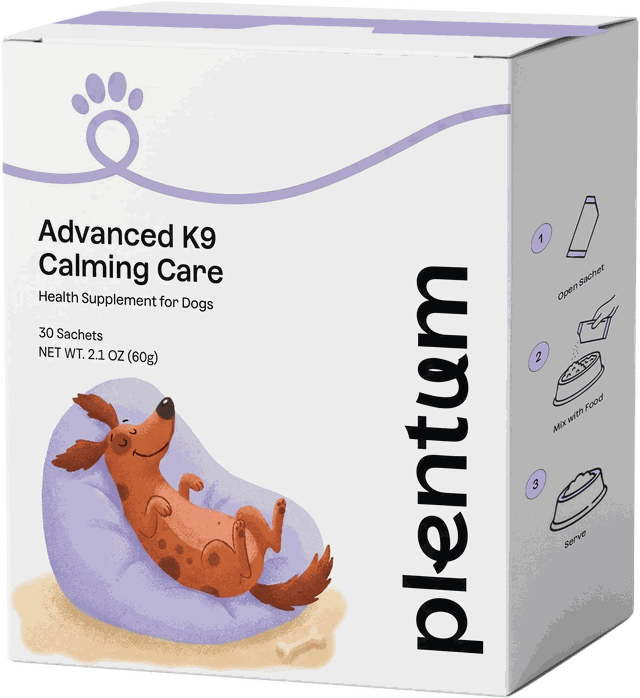
- Calming Care It supports a calm, relaxed demeanor during occasional situational stress such as storms, travel, or vet visits. From $1.50/day
- Metabolic Care It supports healthy weight management alongside measured portions and daily exercise. From $1.50/day
- Microbiome Care It’s a daily powder with a postbiotic and prebiotic foundation, plus colostrum and omega-3, to support gut, oral, skin, and coat health. From $1.17/day
What to track
Every dog is different, so track your own dog.
- Use a new routine every day.
- Change one thing at a time.
- Keep a dated note of stool quality, gas, appetite, and itch.
Your notes let you and your vet see the trend. If stool is loose, probiotics for dogs with diarrhea is the next read.
Tonight's to-do list
Take a good look at your Frenchie. Notice whether the stools are soft, whether guests have started commenting on the gas, and whether the paw licking has gone on for months.
Before changing the routine, read our guide to side effects of probiotics in dogs.
Tonight, start with a slower bowl, measured meals, and a stool note, and book a vet visit if the signs keep going.
Take the 60-second dog supplement quiz to see which supplement fits your dog and the daily sachet count for their weight.
Frequently asked questions
What is the best probiotic for French Bulldogs?
There's no single best product for every Frenchie. Check the label for:
- Clear ingredients
- A dose for your dog's weight
- Fresh packaging
Then decide with your vet whether a live-culture probiotic or a postbiotic + prebiotic routine fits your dog.
Why do French Bulldogs fart so much?
Their flat faces make them swallow air when they eat and drink, and that air ferments in the gut.
Do Frenchies have sensitive stomachs?
Many do. Soft stools, gas, and skin flare-ups often overlap, so look at diet, eating speed, and skin together.
Can I give my dog probiotics every day?
Many daily gut-support products are made for everyday use, so follow the label.
Can a French Bulldog puppy take a probiotic?
Puppies have different needs than adults, and our guide on whether puppies can take probiotics covers the basics.
Sources
- Stübing et al., 2024, Veterinary Sciences: synbiotic versus metronidazole for acute diarrhea in 27 dogs (PubMed PMID 38787169).