



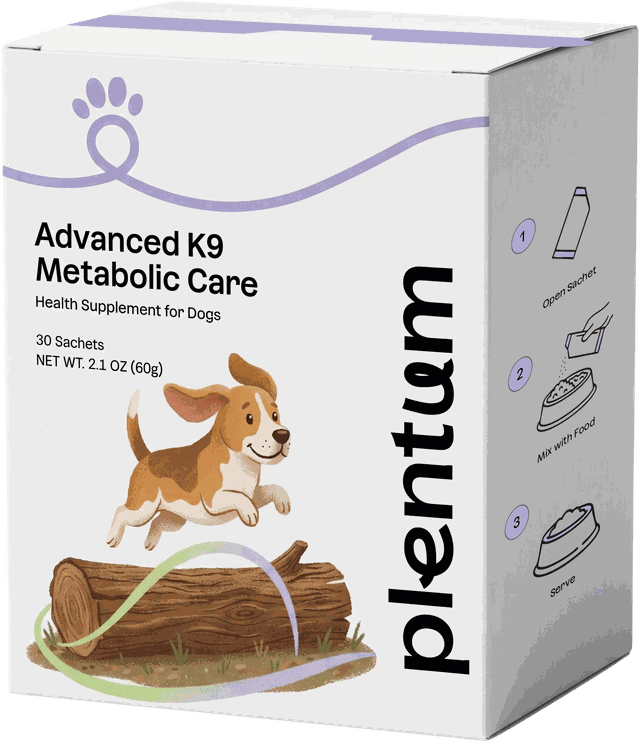


You've opened your dog's probiotics and want to know how often to use them. For a product intended for daily support, follow its label schedule and the serving for your dog's weight.
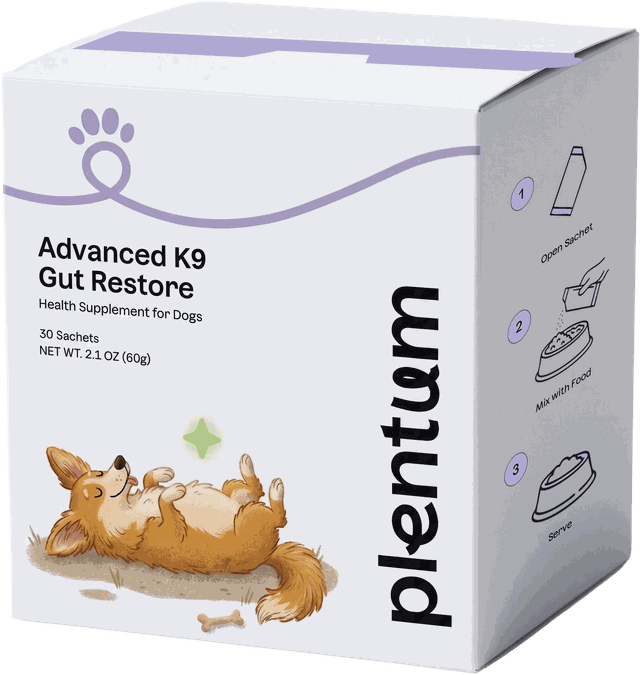
Advanced K9 Gut Restore is intended for daily use from day 1. The serving is measured by weight; daily use does not mean every dog gets the same amount.
Three points on probiotic timing
- Use the schedule on the specific product label, rather than treating all probiotic products as interchangeable.
- Consistency matters more than a bigger dose: a double dose on Tuesday does not make up for skipping Monday and Wednesday.
- Giving a product with a regular meal can make the habit easier to remember. Follow any different instructions on its label.
Your dog's gut is a living system

Your dog's gut holds hundreds of bacterial species living in one busy neighborhood. They compete for resources, keep each other's numbers in check, and react to food, stress, medication, and any bacteria you add with a supplement.
That community never sits still. It shifts with:
- What your dog eats
- How much they run around
- What they're exposed to
- Whether they've had antibiotics or been sick lately
A change in the microbiome does not establish how often every supplement should be given. The product, organisms, intended use, and your dog's health all matter.
Daily vs. occasional: what the data shows
Cornell describes daily probiotics as an option for ongoing care. That does not establish a universal benefit or prove daily dosing beats every occasional-use schedule.
Decide what you want to monitor before starting. Useful observations include:
- Stool consistency and frequency
- Appetite and comfort around meals
- Any change in scratching or coat condition
- Gas and other digestive signs
These observations are a record, not a promise of a result. Evidence for one strain or product does not establish what a different product will do.
Use your dog's health history and the product directions to set a review point. For the long haul, read Are probiotics safe for dogs every day? The long-term safety picture.
Daily makes sense for most dogs
Discuss whether a daily product fits your dog when reviewing any of the following:
- Repeated digestive signs that need assessment before adding a supplement
- Itching or seasonal skin concerns being assessed as part of a care plan
- Age-related changes in diet, appetite, or health
- Long-term medication and possible supplement interactions
- A prescribed antibiotic course and the timing of other products
- A planned change in food
- The current complete diet and the reason for adding daily support
Read the weight-based serving table on the product. Plentum supplements have different sachet counts for different dog weights.
Why consistency usually beats a bigger dose

A missed serving does not call for a larger serving the next day. Use the product's instructions for returning to the usual schedule.
Keep a record of what was given and when. That is more useful than estimating several missed servings and adding them together.
Timing: with food or without?
Use the meal instructions on the label for the product you have. Product-specific directions take priority over a general timing rule.
- Live microorganisms differ in how they tolerate storage and the digestive tract. A general statement about stomach acid cannot establish how every probiotic behaves.
- Choose a feeding time you can remember, and measure the serving before mixing it into food.
If you're still deciding between morning and evening, see Best time to give dog probiotics: morning vs. night (2026 practical guide). The dog probiotic guides on labels, evidence, and daily use sit in one place.
What to expect week by week

Weeks 1 to 2
Use these first weeks to record stool, appetite, gas, and any new signs. Do not assume diarrhea or worsening discomfort is a normal adjustment that must be endured.
Weeks 3 to 4
Review your dated observations against the reason you started. There is no universal week when digestive sensitivity should improve.
Weeks 6 to 8
If you are tracking coat or skin, compare dated photos and the care plan. This window is for recording observations, not a promised deadline for results.
Adjusting for antibiotics, illness and food switches
During and after antibiotics
If your dog receives antibiotics, have the prescribing clinic review the probiotic and its timing. Different medicines and microorganisms require different instructions.
During illness or digestive upset
New vomiting, diarrhea, appetite loss, or worsening discomfort calls for a review of the plan. Do not keep giving a new product solely to finish an assumed adjustment period.
During diet transition
Plan a food transition so you can identify what changed. Keep the supplement schedule within the feeding plan, and follow the clinic's advice if symptoms appear.
Probiotic plus prebiotic: how it affects dosing
A synbiotic combines probiotics with prebiotics. The combination and the amounts are product-specific; the term alone does not establish a result or an appropriate serving.
Where supplements fit
Supplements work alongside:
- A stable diet
- A regular feeding routine
- Your vet's advice
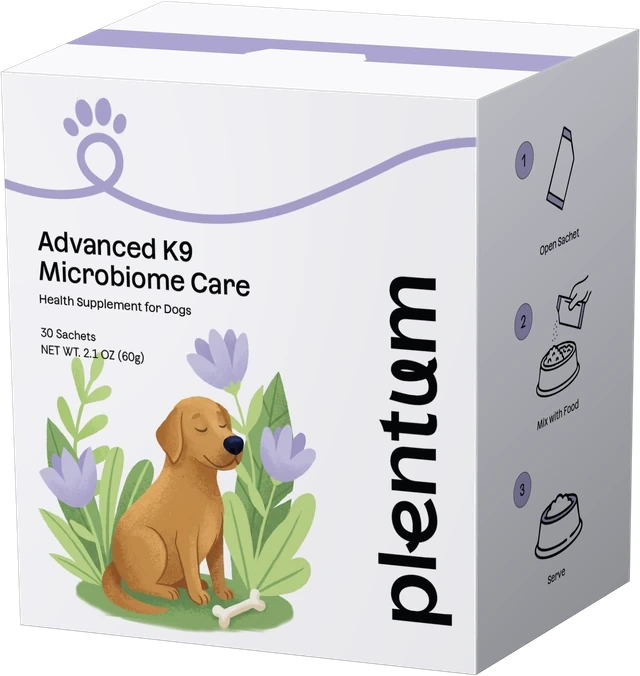
They don't replace any of those. After boarding or a food switch, Advanced K9 Gut Restore is given daily, starting on day 1. Microbiome Care is a postbiotic and prebiotic powder you mix into your dog's food.
Our gut and digestion collection shows how Gut Restore and Microbiome Care each fit a daily routine.
For a steady daily habit, stir a daily probiotic powder into the same meal each day.
The studies on gut ingredients such as probiotics, postbiotics, and fiber are in our gut research hub, sorted by ingredient.
Take the 60-second dog supplement quiz to see which supplement fits your dog and the daily sachet count for their weight.
Frequently asked questions
What if I miss my dog’s daily probiotic?
Follow the product’s missed-dose instructions.
If the next serving is nearly due, skip the missed serving and return to the usual schedule.
Do not give two servings together or add extra to catch up unless your veterinarian specifically directs it.
VCA gives missed-dose guidance for probiotics.
Should I give my dog probiotics every day?
Daily use can fit a product intended for ongoing support, but it is not a requirement for every dog. Choose a specific product and follow its label serving and schedule.
How often should I give my dog probiotics?
Follow the product's instructions. Gut Restore is used daily from day 1, with the serving determined by your dog's weight rather than a universal one-sachet rule.
How long should a dog be on probiotics?
Use the duration agreed for that product and purpose. Gut Restore is intended for ongoing daily support rather than a short course followed automatically by another supplement.
What time of day should I give my dog probiotics?
A regular meal is convenient for many products. Follow the label if it specifies a different way to give the serving.
How long does it take for probiotics to work in dogs?
There is no single timeline for every product or goal. Check evidence for the specific strain or ingredients, and agree on what to monitor rather than expecting a guaranteed week-by-week result.
Can I use a probiotic schedule for prebiotics?
No, a probiotic schedule does not automatically fit a prebiotic. Prebiotics are fiber that feeds gut microbes, while probiotics contain live microorganisms. Consider how that fiber fits the total diet when comparing supplement label directions.
Do severely immunocompromised dogs need extra care with daily probiotics?
Cornell recommends veterinary supervision for severely immunocompromised dogs. Their weakened immune defenses make the added living organisms a specific consideration. When discussing multiple supplements, include each proposed product in that supervised plan.
Sources
Primary veterinary reference
Use this guide alongside the WSAVA Global Nutrition Guidelines and the advice of the vet who looks after your dog.
Cornell explains product selection and daily probiotic use. VCA covers meal timing, missed servings, and interactions.