





Maybe your dog's stool has been a little soft for a few weeks, or the gas after dinner has gotten hard to ignore. Someone mentions postbiotics, and now you're wondering what those are. They're the useful compounds gut bacteria make when they ferment fiber, such as short-chain fatty acids, and they aren't alive.
Before you decide your dog needs gut support, look for a pattern of soft stool, gas, appetite changes, or itchy skin that keeps coming back. One bad day doesn't count.
Three points on postbiotics for dogs:
- Postbiotics are compounds made when gut bacteria ferment fiber. They are not live organisms.
- Look for a repeating pattern of signs rather than one isolated day.
- Choose a clearly labeled supplement, introduce it gradually, and change only one thing at a time.
Postbiotics, probiotics, and prebiotics
Good bacteria in the gut ferment fiber, and what they leave behind is the postbiotic: short-chain fatty acids such as butyrate, acetate, and propionate, plus enzymes, peptides, and bits of cell wall.
- Probiotics: live bacteria added to the gut.
- Prebiotics: fiber that feeds the bacteria already there.
- Postbiotics: what fermentation produces, linked to the gut lining and digestion.
Nothing in a postbiotic is alive, so its compounds work without needing live cells.

What to look for in a probiotic
Probiotics contain living microorganisms, so check the label for named strains, the CFU count and storage instructions.
Not every strain does the same job either, so a bottle that just says "probiotic" tells you less than you'd hope. Postbiotics take another route to gut support.
Live-culture probiotic or postbiotic
| Question | Live-culture probiotic | Postbiotic |
|---|---|---|
| What's inside | Live bacteria or yeast | Compounds made during fermentation |
| Storage | Strain-specific; follow label storage directions | Follow label storage directions |
| Stomach acid | Strain-dependent | Not dependent on living cells |
| How the dose is stated | CFU count (live cells) | Amount of fermentation compounds |
| Research in dogs | Longer history, strain by strain | Newer, with fewer dog studies |
Why the gut gets so much attention
Your dog's gut does a lot more than break down dinner. The intestinal lining works as a barrier, a large share of the immune system sits in tissue along the gut, and gut bacteria are linked to the skin and the brain too.
Postbiotics are one of the ways bacteria in the gut affect the rest of the body, which is why researchers are studying them.

Signs your dog's gut could use some help
Gut trouble rarely shows up as one big symptom. It's usually a handful of small things that are easy to brush off:
- Soft or loose stool that keeps coming back, or stool that swings between firm and loose.
- Frequent gas, or a gurgly belly after meals.
- Occasionally throwing up bile or undigested food.
- A picky or up-and-down appetite.
- Itchy skin, paw licking, or a dull coat. The gut and skin can affect each other.
- Bad breath that dental disease doesn't explain. For other causes, see Dog Breath Smells Like Fish: 7 Causes + 4 Red Flags (2026).
- Low energy, or your dog just seems off.
One or two of these now and then is normal. A cluster that keeps showing up, especially after a food switch, a round of antibiotics, a stressful few weeks, or the digestive changes that come with age, is worth a conversation with your vet.
Where does your dog fit?
Start here once you know what's normal for your dog.
| If this sounds like your dog | What it likely means | What to do |
|---|---|---|
| Healthy overall, but gassy or soft-stooled now and then | A gap in day-to-day gut support, often tied to diet or stress | Consider a daily postbiotic and prebiotic, started slowly |
| You want live cultures specifically | That's a probiotic. A postbiotic gives the products of fermentation instead. | Pick named strains, and follow serving and storage directions |
| On medication or diagnosed with a condition | Supplements can interact with treatment | Check with the prescribing vet before adding a supplement |
| Blood, vomiting, pain, weight loss, or signs getting worse fast | Likely a medical issue, beyond routine support | Call your vet now; severe pain or collapse means emergency care |
What to look for on the label
Plenty of products say "gut health" on the front. Turn the bag over and check for:
- A named postbiotic ingredient, not a vague "digestive blend."
- Prebiotic fiber and other supporting nutrients alongside it, if you want both in one product (sometimes called a synbiotic).
- Quality details you can check: a full ingredient list, a named manufacturer, and third-party testing.
- A format your dog will actually take. A powder mixed into food is easier to keep up than a chew a picky dog spits out.
Compare the dose with other options.

How to start without upsetting the stomach
Even a gentle supplement is a change, and guts like changes slow.
- Start low. Give part of the full serving for the first few days so you don't trigger gas or loose stool.
- Give it with food. Most dogs handle it better mixed into a meal than on an empty stomach.
- Give it every day. Daily use is much easier to judge than an occasional scoop.
- Watch the stool. It's the clearest sign you'll get at home. Give it two to four weeks before you decide whether it's helping.
- Change one thing at a time. If you switch food the same week, you won't know which change did what.
What helps every day, with or without a supplement
A steady diet, low stress, and fresh water do as much for the gut as any scoop of powder. These habits are worth building first:
- Feed a consistent, complete diet in measured portions.
- Give antibiotics only when your vet prescribes them.
- Keep stress down with a steady routine, daily exercise, and things to sniff, chew, and solve.
- Keep fresh, clean water out at all times.
The WSAVA Global Nutrition Guidelines set out the feeding basics vets work from. For a day-by-day plan, see our daily dog gut health routine.
Where a supplement fits
A supplement sits alongside those basics. It doesn't replace them, and it shouldn't cover up a warning sign.
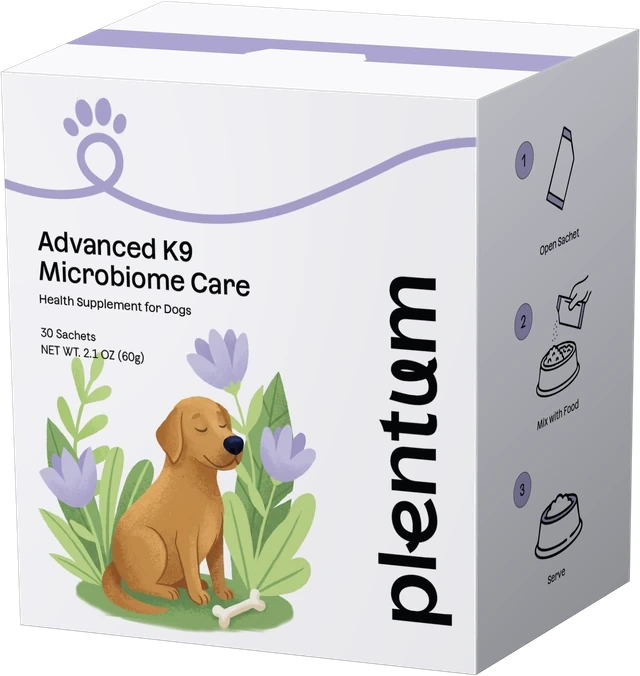
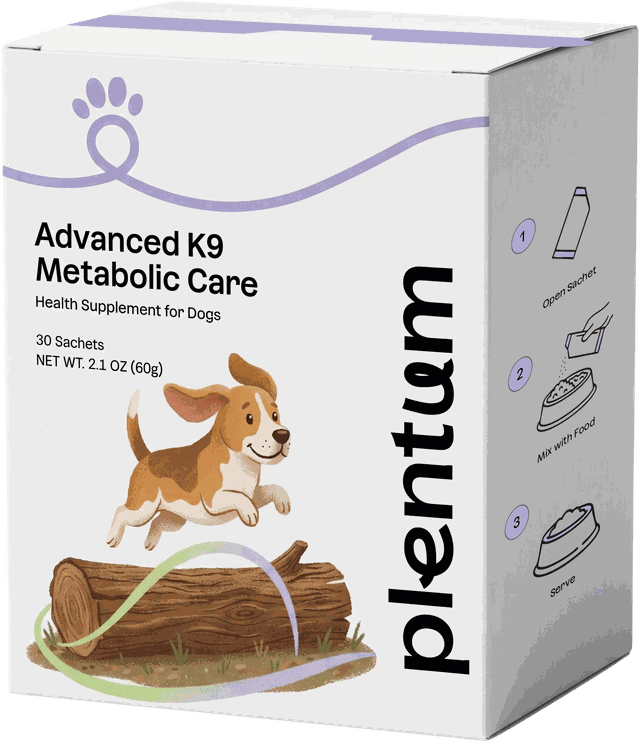
If your dog is otherwise well and you want easy daily gut support, a postbiotic and prebiotic powder is a simple place to start. Plentum's all-in-one dog powder puts postbiotics, prebiotic fiber, and supporting nutrients in daily sachets you mix into regular food once a day. For the full breakdown, see the Advanced K9 Microbiome Care ingredient list.
| Your dog's weight | Sachets a day |
|---|---|
| Up to 20 lb | 1 |
| 20 to 50 lb | 2 |
| Above 50 lb | 3 |
To see it next to our live-culture probiotic, use our side-by-side supplement comparison.

More on the science
Common questions
Are postbiotics alive?
No, they're compounds gut bacteria make during fermentation, such as short-chain fatty acids, enzymes, and peptides. That's the main difference from probiotics.
Why would I pick a postbiotic over a probiotic?
Some owners like that postbiotics work without live bacteria. Your vet can help you decide which approach suits your dog.
How long should I try a gut supplement before deciding?
Give it daily for two to four weeks and track stool, appetite, and energy. Keep everything else the same so you can tell what's making the difference.
Are probiotics for dogs safe to give every day?
For most healthy dogs, daily use is the normal way to give one, but it depends on the product, your dog's health, and any medications. Watch stool and appetite over the first week.
Can probiotics replace a vet visit?
No, a supplement can be one part of a plan, but it can't stand in for an exam. The signs in the vet list above need a vet first.