





You've seen "colostrum" on the back of a dog supplement and wondered what first milk is doing in there. Here's the plain version: colostrum is the rich milk a mother makes right after birth, and the kind in dog products comes from cows.
It's packed with antibodies (immunoglobulins), lactoferrin, growth factors, and proline-rich polypeptides, which is why it shows up in immune support supplements. Below is what the research backs, where it's thin, and how to pick and start a good product.
- Much of the strongest data comes from newborns, livestock, or human studies, and large canine trials are more limited.
- Look for a stated IgG percentage, gentle low-heat processing, clear sourcing and testing, and weight-based dosing.
- Bovine colostrum is a dairy-derived protein, so start with a fraction of the serving.
Is it a fit for your dog?
Find your dog's situation in the table. Think of it as a starting point, not a diagnosis.

| Your dog | What that means | What to do |
|---|---|---|
| Healthy adult, and you'd like some immune and gut support | A reasonable candidate | Pick a tested bovine colostrum product and dose by weight |
| Puppy, senior, or a dog going through stress or recovery | Needs shift at these stages, and puppies get their antibodies from mom's milk | Ask your vet whether colostrum fits your dog's age, diet, and health |
| Has a diagnosed condition or takes medication | Supplements can interact with treatment | Review the supplement with the vet managing the condition or medication |
| Known dairy or beef protein sensitivity | Bovine colostrum is a dairy protein | Skip it, or try it carefully with your vet's guidance |
| Active infection, vomiting, diarrhea, or weight loss | Likely something a supplement can't address | Contact your vet for an assessment before adding a supplement |
What colostrum is
Colostrum is the thick, yellowish milk that comes in during the first hours and days after birth. It's far richer in protein and immune factors than regular milk.
For a newborn, it does two jobs at once: it delivers antibodies directly and helps seal an immature gut lining.


In puppies, those passed-down antibodies are a big part of early immune protection, which is why the first feeds matter so much. The First 72 Hours: A Microbiome Is Born covers that window in more detail.
Why bovine colostrum is used for adult dogs
Your grown dog hasn't needed mom's milk in years, so the real question is whether colostrum's ingredients still do anything useful later on.
That overlap is what makes a cow-based product a plausible dog supplement, and it's the most common form in pet immune supplements.
What's actually in it
Knowing the parts makes it easier to spot where the science ends and the marketing starts.
The headliners are immunoglobulins (IgG, IgA, IgM), which are antibodies that can bind germs in the gut and back up the immune system's first line of defense.
Then there are growth factors such as IGF and TGF. In newborns they help build and maintain the gut lining; whether a scoop of cow colostrum does much of that in an adult dog hasn't been well studied.
Proline-rich polypeptides (PRPs) are small signaling proteins studied for helping the immune response stay balanced rather than just revving it up. Colostrum also carries oligosaccharides and similar prebiotic-like compounds that can feed a healthy gut microbiome.
What the research supports, and what it does not
The better-supported part: the immunoglobulins and lactoferrin in cow colostrum can contribute to immune defense, especially along the gut lining. Some animal and human studies also point to benefits for gut barrier integrity and a balanced inflammatory response.
Those effects make sense biologically, and they're why colostrum earns a spot as a targeted supplement. What the evidence doesn't support is treating it as a cure-all or a stand-in for your vet.
Where the evidence is thinner
A lot of the strongest data comes from newborns, livestock, and people. Big, direct studies in dogs are more limited.
Absorption is a fair question too. Some of these proteins get partly broken down in the stomach before they reach the intestine, which is why processing and format make a real difference.
Choosing a quality colostrum supplement
How colostrum is processed decides how much of the good stuff survives, so products aren't interchangeable. Start with a stated IgG percentage.
Ask how it's made, too. Gentle, low-heat processing matters because too much heat wrecks the very proteins you're paying for. Clear sourcing, ideally from pasture-raised herds, plus third-party testing for purity and contaminants, tells you someone's checking.
You can see how one supplement handles sourcing on the ingredients and formulation page.
Dosing, safety and how to introduce it
Most dogs tolerate colostrum well, but it's a dairy protein, so ease in. Give a fraction of the full serving with food for the first few days and watch for soft stool or gas, which usually settles as the gut adjusts.
After that, dose by weight per the label and stick with it. Immune and gut support build with steady daily use, not one big dose.
Safety notes
- If your dog is sensitive to dairy or beef proteins, skip bovine colostrum or try it only with your vet's guidance.
- Colostrum should never stand in for a diagnosis. Active infection, ongoing vomiting or diarrhea, or weight loss needs a vet visit, not a supplement.
Where supplements fit
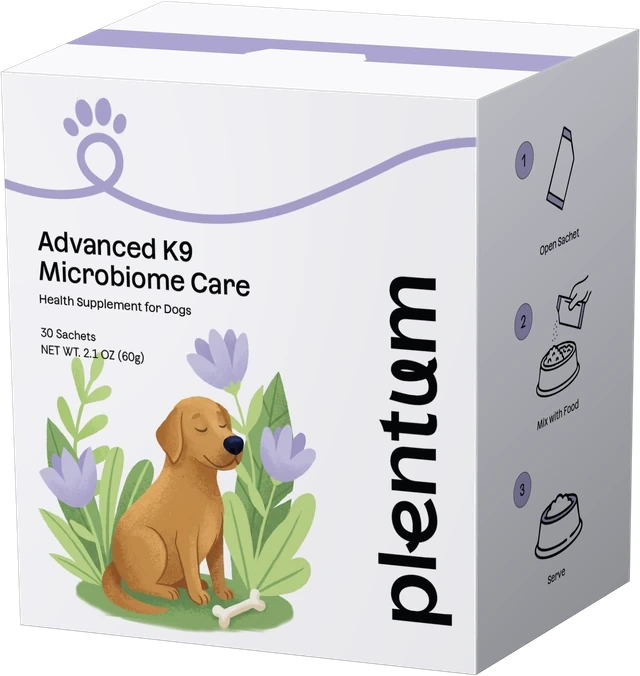
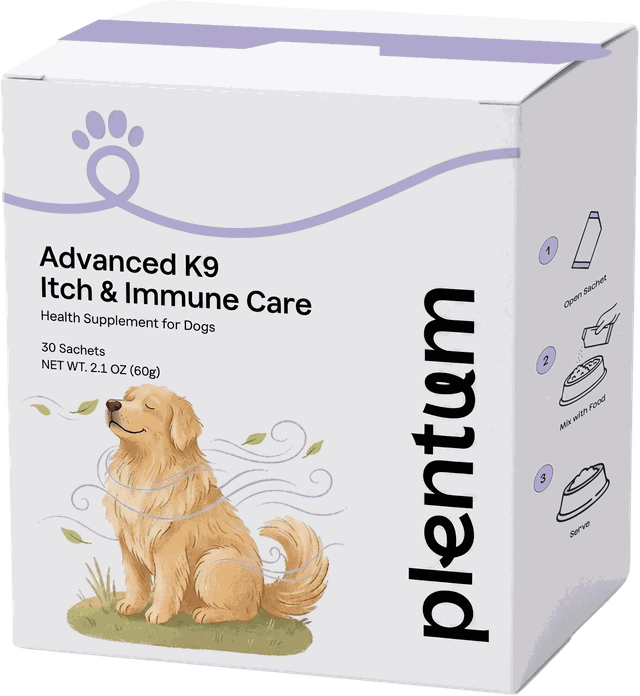
Two Plentum supplements include bovine colostrum: Itch & Immune Care (150 mg, 30% IgG) and Microbiome Care (100 mg). You'll also find the pair together in our bundles.
Ask your vet if your dog has a health condition or takes medication.
Whatever you choose, change one thing at a time and keep a quick dated note on appetite, stool, energy, and comfort. A week of notes tells you and your vet far more than one good or bad day.
Related research
- The Science Behind Plentum
- Ingredients and formulation
- Dog Gut Health Supplement Research 2026
- The science behind postbiotics for dogs
- Saccharomyces boulardii for dogs
Want to come back to this later? Here's a direct link to this colostrum guide to save or share.
Frequently asked questions
Is colostrum good for dogs?
It has a few specific, research-backed roles. Its immunoglobulins and lactoferrin can help support immune function, and some components may support the gut lining and a balanced inflammatory response.
Is colostrum safe for dogs?
Most dogs handle it well, but bovine colostrum is a dairy protein. Start with a fraction of the serving, give it with food and watch for soft stool or gas. If your dog has a known dairy or beef sensitivity, skip it or try it only with your vet's guidance.
Are immune supplements safe for dogs?
Many are well tolerated, but supplements can interact with medications and health conditions. And don't let a supplement delay a diagnosis for infection, vomiting, diarrhea or weight loss.
Is bovine colostrum good for dogs?
It's the most common form in dog immune supplements. Cows make plenty of it, it's well studied, and many of its active parts are shared across mammals, which makes it a plausible choice for adult dogs.
How do I choose a trusted immune support product for dogs?
Look for a stated IgG percentage, gentle low-heat processing, clear sourcing with third-party testing, a format your dog will actually eat and weight-based dosing.
What does colostrum do for dogs?
Colostrum is studied for immune support in dogs, but findings are mixed.
One small, industry-run study found a higher distemper vaccine response and higher stool antibody levels in adult dogs.
A 2026 study in dogs with atopic dermatitis found no changes in clinical or immune measures. You can read about colostrum alongside other immune support ingredients.
What are the side effects of colostrum for dogs?
One small trial run by a pet food company reported no side effects, and there is little other safety data.
Known dairy or beef sensitivity is a reason to ask your vet before giving your dog bovine colostrum.
For more help reviewing a supplement, read our dog supplement label guide.
Can puppies have colostrum supplements?
Ask your vet before giving your puppy a colostrum supplement.
A small study in toy-breed puppies looked at travel-related diarrhea and did not measure immune markers.
That study doesn't establish whether bovine colostrum is suitable for newborn puppies.
Sources
- FDA: Animal Food Labeling and Pet Food Claims
- AAHA Canine Life Stage Guidelines
- Effect of Bovine Colostrum on Canine Immune Health (Animals, 2025)
- Supplementation of diets with bovine colostrum influences immune function in dogs (Br J Nutr, 2013)
- Effects of a Dietary Supplementation of Bovine Colostrum in Dogs With Atopic Dermatitis (Vet Dermatol, 2026)
- Effects of a Mushroom-Based beta-Glucan and Bovine Colostrum Blend on the Gastrointestinal Health and Immune Function of Healthy Adult Dogs (J Anim Sci, 2026)
- Critically appraised topic on adverse food reactions of companion animals (2): common food allergen sources in dogs and cats (BMC Vet Res, 2016)