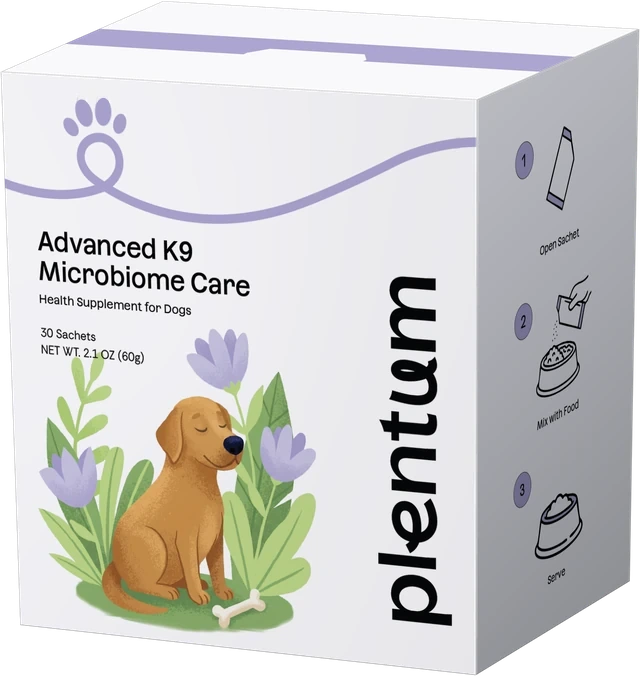

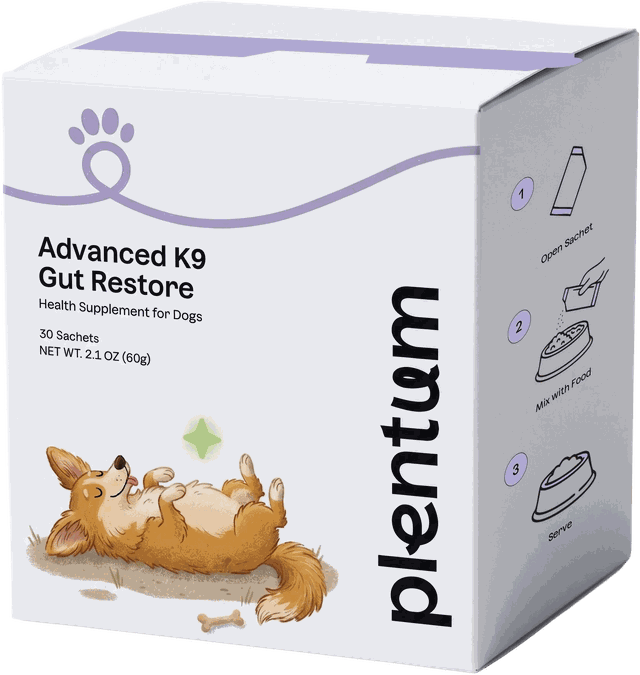

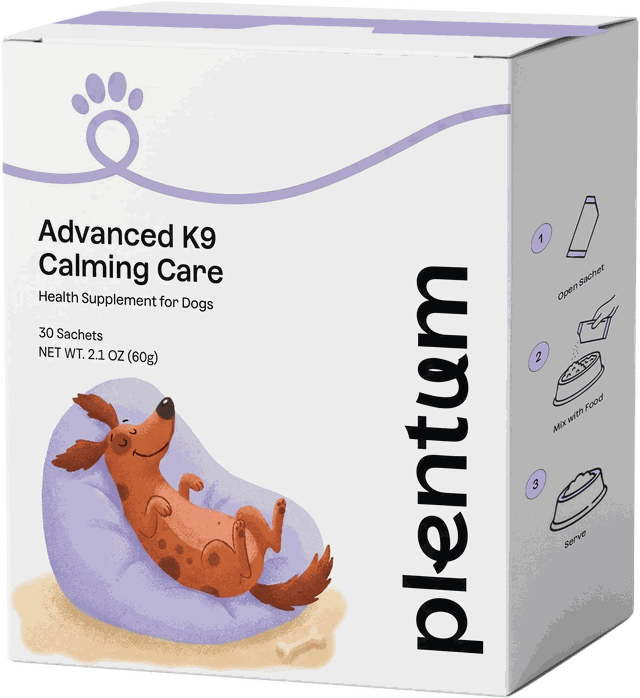

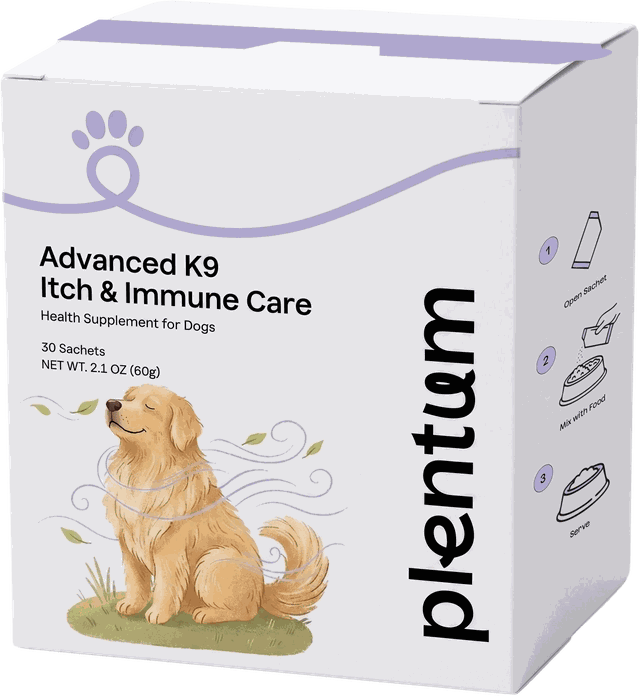

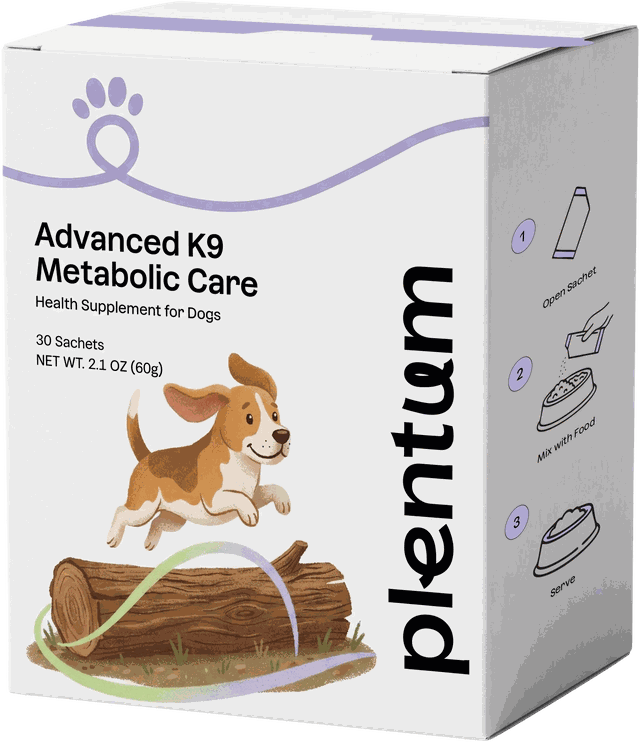


You have two dog supplement boxes open on the counter. The front panels promise daily support, the prices are ten dollars apart, and the back panels use different layouts and units.
A label can tell you what is in the supplement, how much each serving delivers, how many live organisms it holds and when they are counted, and where to ask for a lab report.
What a dog supplement label should tell you
| Label item | What it shows |
|---|---|
| Amount per serving | The weight of each active, or the total for a blend |
| Serving size and directions | What one serving is and how many a day your dog gets |
| Strain names and live count | The organisms in a live-culture supplement and how many |
| Other ingredients | The rest of what is in each serving |
| Maker contact | Where to ask for a lab report |
Look for the amount of each active ingredient per serving
Check the serving size first, then read the amount next to each active ingredient in milligrams (mg) or micrograms (mcg) per serving. For a blend, the label shows the blend's total amount.
The Association of American Feed Control Officials (AAFCO) says in its pet food label guide that:
- A guaranteed analysis lists the amount of specific nutrients
- Vitamin or mineral supplements must guarantee the amounts they supply
- Ingredients are listed in descending order of predominance by weight, heaviest first
Look for named strains and a live count
The International Scientific Association for Probiotics and Prebiotics (ISAPP) and the Consumer Healthcare Products Association (CHPA) both describe what a probiotic label should show. CHPA's guidance covers probiotic products for people. For live cultures, the label should give:
- The genus, species, and strain of each live organism
- The live count in colony forming units (CFU), for each strain or as a total for a blend
Some labels also say when the count was taken, at manufacture or at the end of shelf life.
If a supplement uses a non-living postbiotic rather than live cultures, look for the weight in mg per serving.
Look for a certificate of analysis
A certificate of analysis (CoA) is a lab report for one production lot. It covers what was tested in that lot's sample and says nothing about whether a supplement suits your dog. Ask the maker for the CoA that covers your supplement, then check three things:
- The product name matches your package
- The report names the testing lab
- Each tested item lists a specification, a result, and units
A one-minute label check
- Match your dog's weight to the daily serving amount.
- Check the mg or mcg amount for each active and each blend.
- For live cultures, find the strain names and the live count. For a postbiotic, find the weight per serving.
- Ask the maker for the CoA that covers your supplement.
Talk to your vet before adding a supplement
AAFCO advises pet owners to talk to their veterinarian before introducing supplements, use the vet-prescribed dosage, and follow the directions on the supplement label.
The World Small Animal Veterinary Association (WSAVA) lists dietary supplements among the history items in a dog's nutritional screening, so mention everything your dog takes.
See your vet right away, instead of giving a supplement, if your dog has blood in the stool, stops eating or drinking, seems lethargic, or vomits repeatedly.
Frequently asked questions
How do I calculate how long a box lasts?
Divide the number of servings in the box by the number your dog gets each day. A dog who gets 2 servings a day empties a 30-serving box in 15 days.
Do pet supplements follow the same rules as human supplements?
No. In 1996, the Food and Drug Administration (FDA) determined that the human Dietary Supplement Health and Education Act (DSHEA) does not apply to products for animals. The agency regulates them as animal food or animal drugs, depending on their ingredients and intended use.
Federal law still requires animal food to be safe to eat, produced under sanitary conditions, free of harmful substances, and truthfully labeled.
How do I know an online order is authentic?
Buy from the maker or a seller the maker lists. If a package looks wrong to you, send the maker a photo of it and ask them to confirm.
What should I bring to my vet?
Bring a photo of the supplement facts panel, the ingredient list, and the directions, along with your dog's diet and medications.
How should I store a supplement?
Follow the storage line on the package, and keep it out of your dog's reach.
Sources
- FDA, "FDA's Regulation of Pet Food": fda.gov
- AAFCO, "Reading Labels": aafco.org
- AAFCO, "Supplements": aafco.org
- ISAPP, "Decoding a Probiotic Product Label": isappscience.org
- CHPA, "Best Practices Guidelines for Probiotics": chpa.org
- WSAVA, "Nutritional Assessment Guidelines": wsava.org (PDF)