





If your Lab licks the bowl clean, eyes yours the second you sit down and then gets gassy or loose in the stool, you're not imagining things. Many Labs carry a variant in the POMC gene that weakens appetite and fullness signals, so they overeat, gain weight and can end up with an unbalanced gut microbiome. A consistent diet, steady fiber and a postbiotic and prebiotic routine can help keep digestion comfortable and weight healthy over time.
- Many Labradors carry a POMC gene variant that can make them hungrier and more likely to overeat.
- Overweight and fast eating are both linked to a less balanced gut, which can show up as gas or loose stools.
- A controlled diet, measured portions and steady fiber form the foundation of Lab gut care.
Why your Lab is always hungry
In 2016, researchers at the University of Cambridge reported in the journal Cell Metabolism that many Labrador Retrievers carry a deletion in the POMC gene (Raffan et al., 2016). That gene makes pro-opiomelanocortin, a satiety signal in the brain.
Studies suggest the variant may be present in up to a quarter of pet Labradors. It appears even more often in Labradors trained as assistance dogs, who may have been selectively bred for food motivation. In practice, that means a lot of Labs scavenge, beg, eat too fast and take in more than they need whenever food is around.
How overeating shows up in the gut
Gulping food stresses digestion. Swallowed air causes bloating, and undigested starch that reaches the colon can ferment there and feed opportunistic bacteria at the expense of beneficial ones.
Eating more calories than they burn, day after day, leads to obesity. Excess weight is linked to lower microbial diversity and a less balanced microbiome. Research in people and in animals has tied gut microbial diversity to metabolic and immune health, and obese individuals tend to have a less diverse microbiome than lean ones (Turnbaugh et al., Nature, 2006).
It's a loop that's easy to miss. The Lab eats too much, weight goes up, microbiome diversity falls, digestion gets less efficient, and signs of poor gut health appear. Our list of Signs of Poor Gut Health in Dogs shows what to watch for.
What the research says about the Lab microbiome
The canine gut microbiome is a community of bacteria, fungi and other microorganisms, living mainly in the large intestine. It ferments dietary fiber into short-chain fatty acids (SCFAs) such as butyrate, which fuel the cells lining the gut. It helps crowd out harmful bacteria. It also communicates with the immune system through the gut-associated lymphoid tissue (GALT).
Some studies in dogs have linked excess weight with lower levels of certain beneficial bacteria, including Faecalibacterium and Bifidobacterium, which are associated with anti-inflammatory gut function.
Fast eating adds to it. When food leaves the stomach quickly, digestive enzymes and stomach acid have less time to work, and partly digested proteins and starches reach the colon, where less desirable bacteria ferment them fast. You see the result as gas and loose stools, both classic Lab complaints.
Which supplement fits your Labrador?
Pick what you notice most. Each choice goes to the matching Plentum supplement.
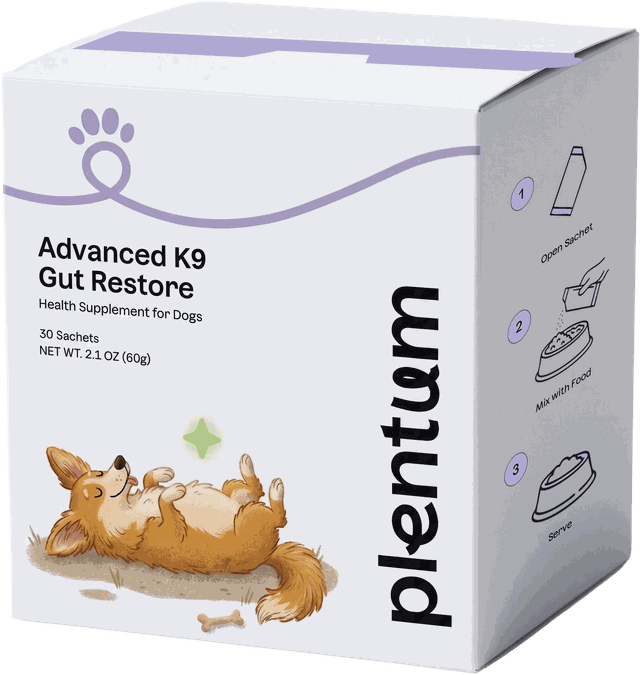
- Loose stool, gas, or a sensitive stomachGut Restore
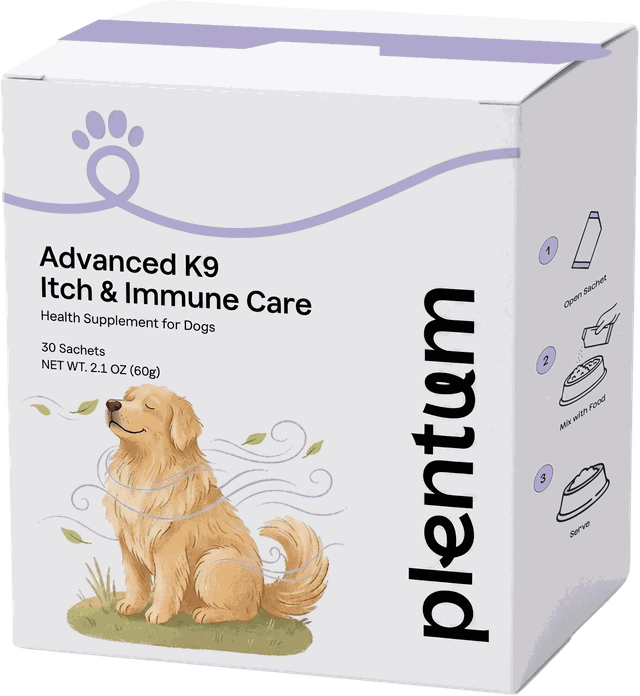
- Itchy skin, paws, or a dull coatItch & Immune Care
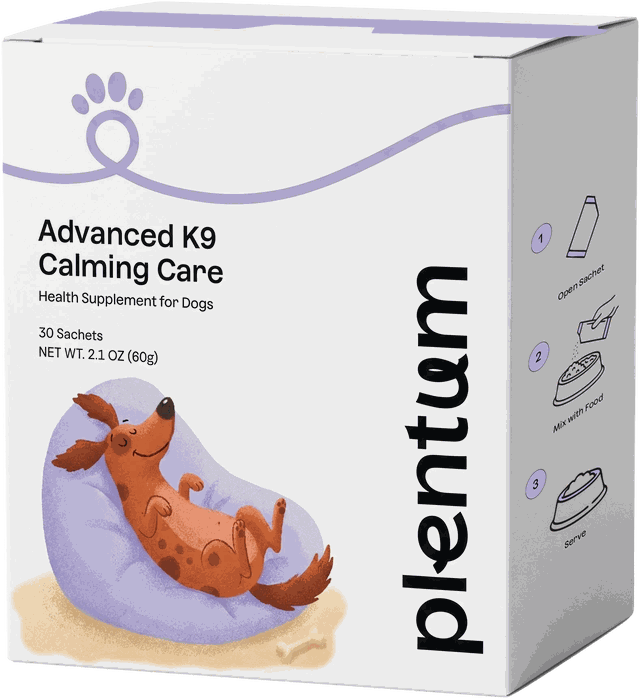
- Nervous in storms, on trips, or at the vetCalming Care
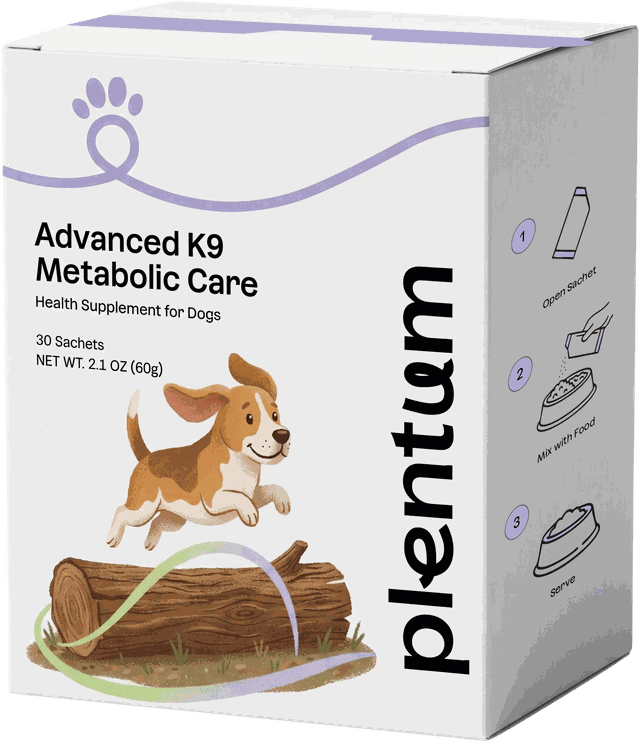
- Extra weight or a big appetiteMetabolic Care
- Just a daily foundationMicrobiome Care
Start with the bowl
No supplement replaces a well-built diet, and for Labs a few habits matter a great deal.
- Measure every meal. Use a kitchen scale or a measuring cup. A Lab's food drive makes free-feeding risky for both weight and gut health.
- Use a slow-feeder bowl. A slower pace means less swallowed air and bloating, and digestive enzymes get more time to do their job.
- Keep fiber moderate and steady. Soluble fiber from ingredients such as chicory root or beet pulp feeds beneficial bacteria and supports stool consistency. Insoluble fiber supports motility. Labs benefit from both, in balance.
- Choose good-quality protein. Complete amino acid profiles support gut-lining repair and immune function. Poorly digested protein can ferment in the colon and upset the microbial balance.
- Feed on a schedule. The gut microbiome is thought to follow daily rhythms, and erratic mealtimes may disturb microbial populations. Two measured meals a day, at the same times, can help regulate gut transit and keep the microbiome steady.
If you're unsure about your Lab's ideal calorie intake or body condition, start with your vet. Body condition scoring charts, such as those from the World Small Animal Veterinary Association (WSAVA), are a simple visual way to check whether your dog is at a healthy weight.
Gut care at each life stage
Puppies (0 to 12 months)
A Lab puppy's microbiome is still forming, and early exposure to varied environments and whole foods helps shape it. Use antibiotics only with your vet's guidance, because they can disrupt the microbiome for a long time.
Adults (1 to 7 years)
This is the stage where the weight and microbiome loop most often takes hold. Adult Labs need steady portion control, plus a measured diet, steady fiber and a routine your vet has approved to maintain microbial diversity and digestive function.
Seniors (7+ years)
Older Labs often digest less efficiently, with slower gut motility, lower enzyme production and a more fragile microbiome. They can also be at higher risk of inflammatory conditions that affect the gut.
Prebiotics, probiotics, and postbiotics
Gut supplements can feel overwhelming. See what each type does and why the mix matters for Labs.
| Supplement type | What it is | Main role in the gut | Relevance to Labs |
|---|---|---|---|
| Prebiotic | Non-digestible fibers, such as inulin or FOS | Feeds beneficial bacteria | Supports microbial diversity that excess weight can reduce |
| Probiotic | Live beneficial bacteria, such as Lactobacillus or Bifidobacterium | Adds microbial diversity and supports barrier function | May help rebalance a microbiome upset by raiding the trash or table scraps |
| Postbiotic | Bioactive compounds made by fermenting bacteria, such as SCFAs and cell wall fragments | Supports gut-lining integrity and immune signaling | Doesn't depend on live bacteria being present in the gut |
Prebiotics and probiotics work well together, because prebiotics feed the beneficial bacteria that probiotics bring in. Postbiotics are a separate category. They're what bacteria leave behind, not the bacteria themselves.
The dog gut health research hub collects the studies on gut ingredients such as probiotics, postbiotics and fiber. Every supplement in the gut and digestion collection is a powder sachet you pour over your dog's usual food.
A daily gut routine for your Lab
The most practical routines are daily, combine more than one kind of support, and get adjusted to how your dog responds.
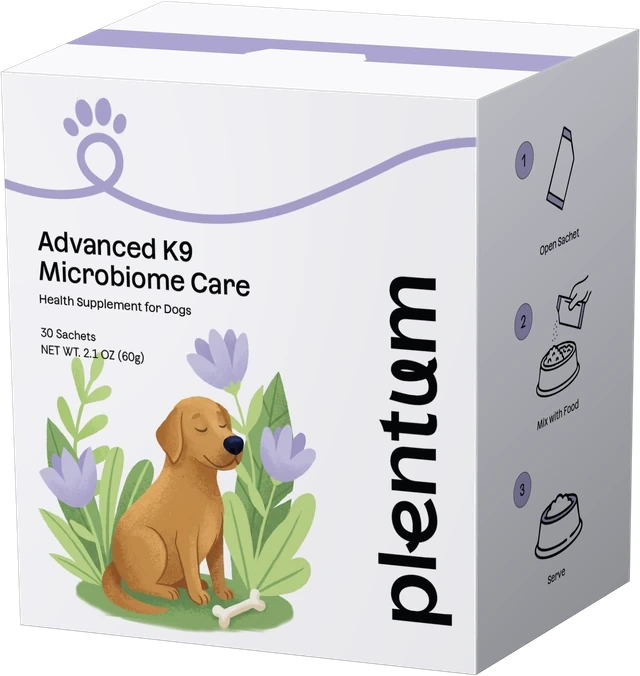
- A daily postbiotic and prebiotic powder: a gut health supplement for Labradors in powder form that mixes into food. Labs eat with enthusiasm, so a powder stirred into the bowl is easy to give. This type of powder is a postbiotic and prebiotic blend, not a live-culture probiotic.
- Prebiotic fiber from food: plain cooked pumpkin, a small amount of plain cooked sweet potato, and commercial foods that contain chicory all give prebiotic fiber naturally.
- Weight management: bringing an overweight Lab down to a healthy body condition is one of the most useful things you can do for the microbiome.
- Fewer gut disruptions: frequent food changes, table scraps and garbage scavenging all unsettle the microbiome. A Lab's scavenging instinct means you have to manage the food environment before trouble starts.
- Stool checks: stool is the most practical daily window into gut health. Bristol Stool Scale adaptations for dogs give you a reference point, with types 3 to 4 generally considered ideal.
Where supplements fit
A supplement can back up the diet and routine described here, but it doesn't replace them. Weight, portions and eating pace still do most of the work for a Lab's gut. Ask your vet which type of gut support suits your dog, especially if your dog has a health condition or takes medication.
Primary veterinary reference
Read this guide alongside the WSAVA Global Nutrition Guidelines and the advice of the vet who looks after your dog.
Frequently asked questions
Why does my Lab act like she's starving right after a meal?
Researchers linked a deletion in the POMC gene, which affects satiety signaling in the brain, to a bigger appetite in many Labradors. That doesn't mean every Lab overeats, but it's why portion control matters so much for the breed.
What can I do about my Lab's gas and loose stools?
Measure meals, use a slow-feeder bowl, keep fiber steady and feed at the same times each day.
Are probiotics and postbiotics the same thing?
No, probiotics are live beneficial bacteria, while postbiotics are the compounds those bacteria produce while they work. Prebiotics are fibers that feed beneficial bacteria. Your vet can help you choose the right one for your dog.
Should my Lab puppy take gut supplements?
Talk to your vet before giving any supplement, especially to a young puppy. Avoid unnecessary antibiotics, and ask your vet about gut support if antibiotics are prescribed.
Sources
Use these resources for general standards and background. Symptoms, diagnoses, medications and treatment decisions need a vet who has examined your dog.