





Your Lab cleaned the bowl before you'd set it down, then went looking for the cat's dish.
Choose a canine-specific, multi-strain supplement.
Look for Lactobacillus acidophilus and Bifidobacterium animalis.
Ideally, it also includes Enterococcus faecium SF68.
Labs are prone to food sensitivities, atopic dermatitis, obesity, and GI upset.
Each has a gut-health side.
- Probiotic strains aren't interchangeable, so look for strains with veterinary evidence in dogs, not only in humans or rodents.
- Labs benefit most during and after antibiotics, around stressful stretches and on a weight-loss plan.
- Always choose a canine-specific product and confirm with your vet before starting.
Best probiotic for Labradors: what to put on your list
Start with the strains. Enterococcus faecium SF68 has strong veterinary evidence.
A good multi-strain supplement pairs it with L. acidophilus and B. animalis.
Labs on weight-loss diets, with skin flares, or coming off antibiotics tend to get the most from probiotic support.
Choose a product made for dogs.
Why Labradors get their own advice
Breeds don't all share the same gut-health profile, and Labs stand out.

They're one of the most popular breeds in the world, and they're food-motivated to a fault.
Part of that is genetic: a gene variant called POMC affects how full they feel.
Labs feature disproportionately in studies of food sensitivities and atopic dermatitis.
They also develop obesity at much higher rates than many breeds.
Each of those traits has a gut-health side.
- Food sensitivity and itchy skin: Research from the Cornell College of Veterinary Medicine and similar institutions on the gut-skin axis suggests the gut microbiome may influence skin health. Labs with long-running skin trouble often have loose stools or gas too, which fits a gut-immune connection.
- Weight: A 2023 review in the Journal of Animal Science found the gut microbiome differs between lean and obese dogs, and that certain probiotic strains may support metabolic health in dogs on calorie-restricted diets.
- Appetite: Labs eat things they shouldn't, and they eat fast, so upset stomachs, acute diarrhea and dietary indiscretion come up more often than in pickier breeds.
Which probiotic strains are best for Labradors?
Strains aren't interchangeable. Each one works differently and has its own evidence, so read the label for names.
These five make the strongest case for a Lab.
Enterococcus faecium SF68
It's the most studied probiotic strain in companion-animal veterinary medicine.
Randomized controlled trials appeared in the Journal of the American Veterinary Medical Association (JAVMA).
The study examined a specific probiotic in dogs with acute diarrhea.
For a breed that's always into something, it's a logical base strain.
Lactobacillus acidophilus
This is one of the most studied probiotic species in any animal.
L. acidophilus supports the gut barrier and crowds out harmful bacteria.
You'll find it in plenty of multi-strain dog probiotics, and it has a strong safety record in dogs.
Bifidobacterium animalis
Some Bifidobacterium strains are made for people.
B. animalis has been studied in dogs with acute diarrhea. Read the specific strain and study design when reviewing the research.
Look for it listed by name.
Lactobacillus rhamnosus
The dog evidence is thinner than the human evidence, but L. rhamnosus does show up in veterinary probiotic research.
Because it helps shape immune responses in other species, it may be worth a look for Labs with atopic skin.
Saccharomyces boulardii
S. boulardii is a beneficial yeast, and antibiotics don't kill it.
For a Lab on antibiotics or with recurrent acute diarrhea, ask your vet about appropriate care.
It works differently from bacterial probiotics, and you can pair the two.
When do Labs benefit most from probiotics?
- During and after antibiotics: Antibiotics can shake up the gut's bacteria a lot. Probiotics, especially S. boulardii plus bacterial strains brought back in after the course, can support recovery. Start 1-2 days into the course and keep going for 7-14 days after it ends.
- Around stressful stretches: Boarding, road trips, changes at home and vet procedures can upset the gut in a stress-sensitive dog. Start 3-5 days ahead.
- On a weight-loss plan: Some evidence suggests probiotics may support metabolic markers in dogs on calorie restriction. The science is early, but it's a reasonable add-on.
What to look for in a probiotic for your Labrador
- Strains studied in dogs: Look for Bifidobacterium animalis, Enterococcus faecium SF68 or other strains with veterinary evidence in dogs. A strain tested only in humans or rodents tells you much less.
- An ingredient list you can read in full, so you can check it against your dog's sensitivities.
- Lot testing you can check: Supplements are less regulated than drugs. Ask for a certificate of analysis for the lot you're buying, and check that the label amounts match the tested amounts.
A typical daily serving for an adult Lab is 1-10 billion CFU, depending on the strain and concentration.
Start at the low end, watch stools for 5-7 days, then adjust.
How to tell if it's working
Keep a short log.
Record the start date, product, and serving.
Note stool, gas, appetite, energy, and any skin or coat changes daily.
Change one thing at a time so you know what made the difference.
If stools become regular and your Lab feels good, stay at the label serving.
Something else may need attention.
Where supplements fit
A probiotic is one piece of a Lab's plan.
Measured portions, a steady diet, slow feeding, and keeping socks off the floor help a scavenger's gut more than any supplement.
Some owners add a daily supplement for Labs with seasonal itchiness or a sensitive stomach.
It supports a normal immune response to seasonal triggers alongside the basics.
Add one new product at a time and keep notes on stools, appetite and coat.
The gut and digestion collection covers daily gut support.
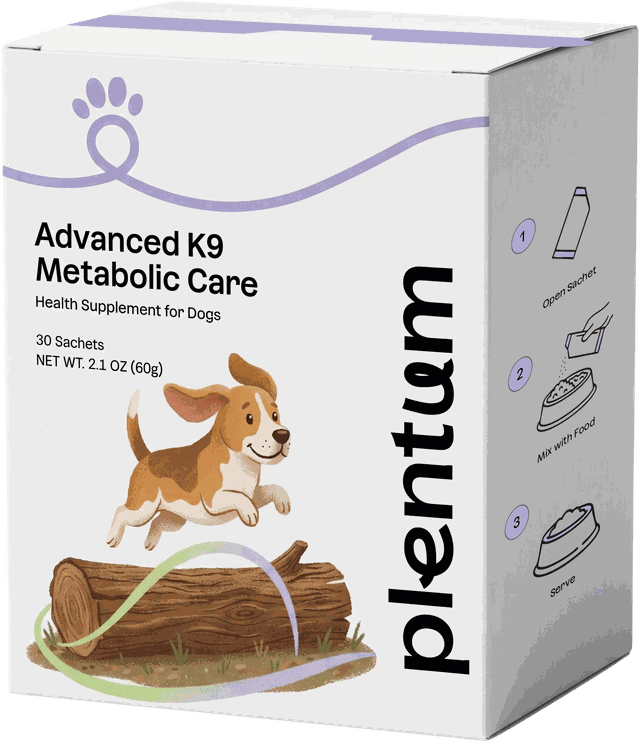
The healthy weight collection includes Metabolic Care, designed to accompany portion control and exercise.
Ask your vet if your dog has a health condition or takes medication.
Primary veterinary reference
Use this guide alongside the WSAVA Global Nutrition Guidelines and the advice of the vet who looks after your dog.
Frequently asked questions
What is the best probiotic for Labradors?
Choose a canine-specific, multi-strain supplement.
Include Lactobacillus acidophilus and Bifidobacterium animalis.
Ideally, it also includes Enterococcus faecium SF68.
Stick with strains that have veterinary evidence in dogs.
What probiotics are good for dogs?
Strains with the most dog research include Enterococcus faecium SF68, Lactobacillus acidophilus, and Bifidobacterium animalis.
The yeast Saccharomyces boulardii also has substantial dog research.
Strains aren't interchangeable, so check which ones a product actually names.
What is the best probiotic for dogs with itchy skin?
There's no single best pick, and the dog evidence is limited.
Get the itch checked by your vet first so you know the cause before you choose a supplement.
Are all-in-one dog supplements with probiotics better than standalone probiotics?
It isn't automatic.
A standalone probiotic gives you named strains at a stated CFU count, while an all-in-one may add other ingredients.
Compare labels for strain names, CFU and extras.
How long does a probiotic take to work in a Lab?
Some strains show effects on stool consistency within 7-14 days.
Start at the low end of the serving, watch stools for 5-7 days and adjust.
Sources
Five supplements, each aimed at a different need
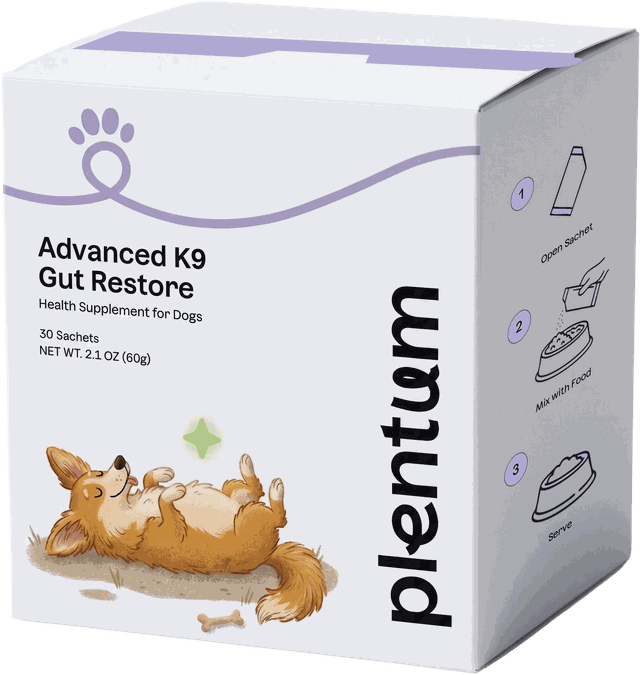
- Gut RestoreFits this guide It supports normal bowel function and healthy stool consistency, and helps maintain a balanced gut. From $1.50/day
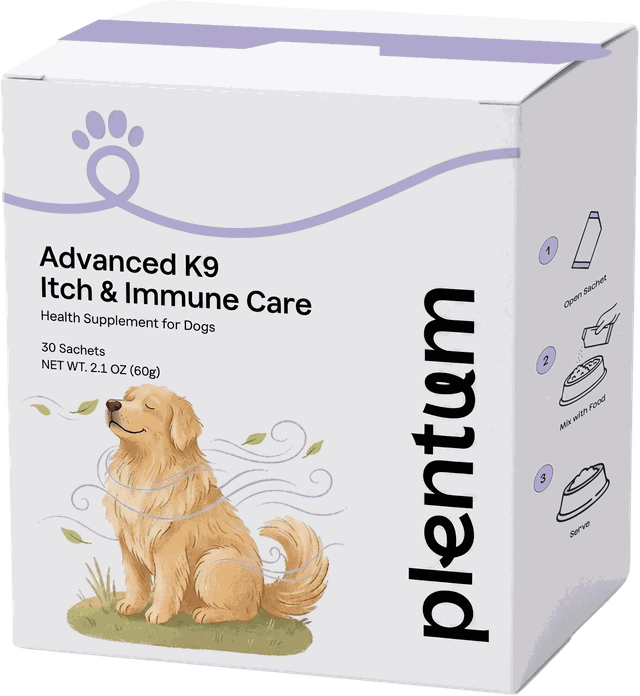
- Itch & Immune Care It supports a normal immune response to environmental and seasonal triggers, and helps maintain a healthy coat. From $1.50/day
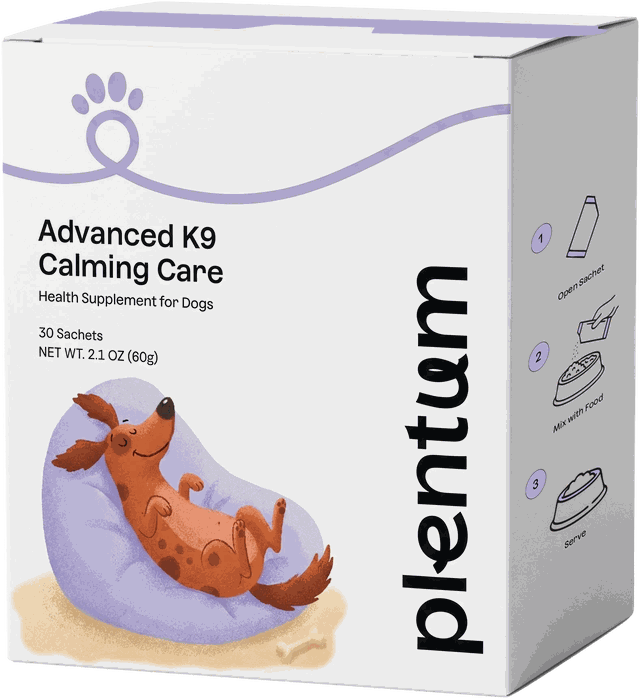
- Calming Care It supports a calm, relaxed demeanor during occasional situational stress such as storms, travel, or vet visits. From $1.50/day
- Metabolic Care It supports healthy weight management alongside measured portions and daily exercise. From $1.50/day
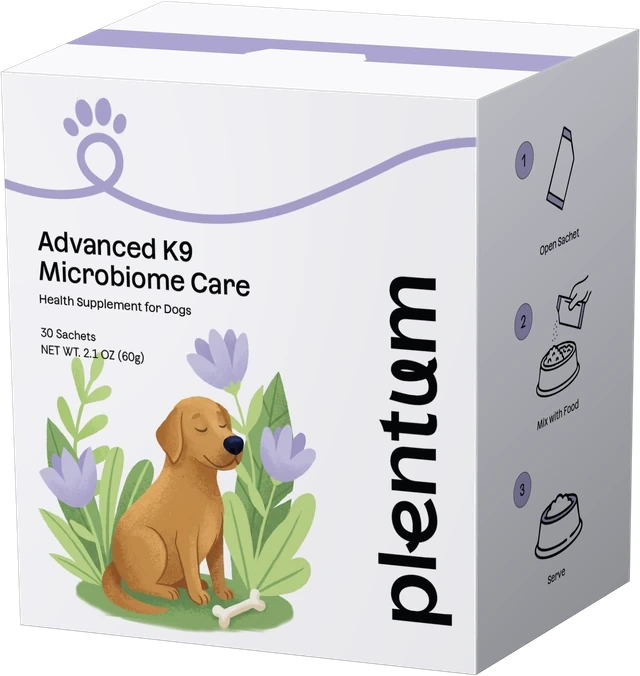
- Microbiome Care It’s a daily powder with a postbiotic and prebiotic foundation, plus colostrum and omega-3, to support gut, oral, skin, and coat health. From $1.17/day