





No single dog probiotic is best for every dog. Compare four things:
- The exact product
- The daily amount for your dog's weight
- What the brand can show you about it
- What you want to spend
At 50 lb, most picks below cost under a dollar a day.
Gut Restore costs about four times as much.
We checked each brand's US website on October 20, 2026.
Prices are regular one-time prices before tax and shipping.
What should you compare on a dog probiotic label?
We set these ten criteria before looking at any product, so every one gets the same test.
- Formulation type: live probiotic, postbiotic, synbiotic, or prebiotic-only.
- Ingredient disclosure: named strains, disclosed doses and a stated CFU count.
- Evidence: check whether a study tested the ingredient or the finished product.
- Format: powder, chew, capsule, or sachet, and whether it fits your morning routine.
- Storage: whether it's shelf-stable or refrigerated.
- Price per serving, worked out per day for your dog's weight instead of per bottle.
- Return policy: whether you get 30 days, 60, or none.
- Best-fit dog: sensitive stomach, senior, post-antibiotic, or everyday wellness.
- Limitations, meaning what the product can't do.
- Veterinary context, meaning when to bring your vet in.
For the science behind a good gut-health supplement, see Do dog gut health supplements work? Our dog probiotic guides cover labels, evidence, and daily use.

How do live probiotics and postbiotics differ?
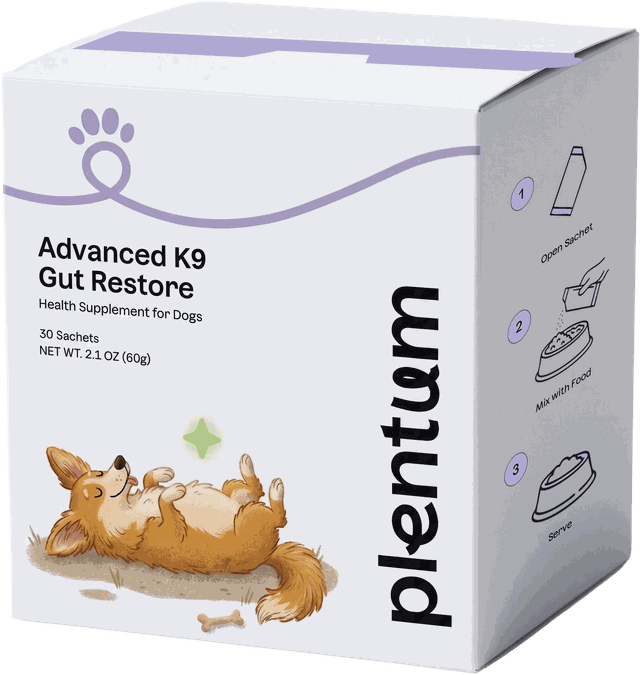
Gut Restore is a live-culture probiotic, so it sits on the same chart as FortiFlora, Native Pet, Zesty Paws, and PetHonesty.
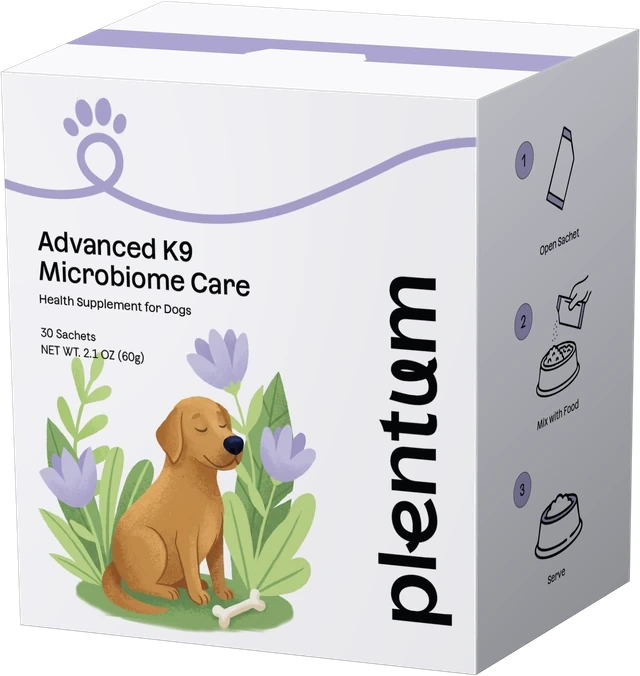
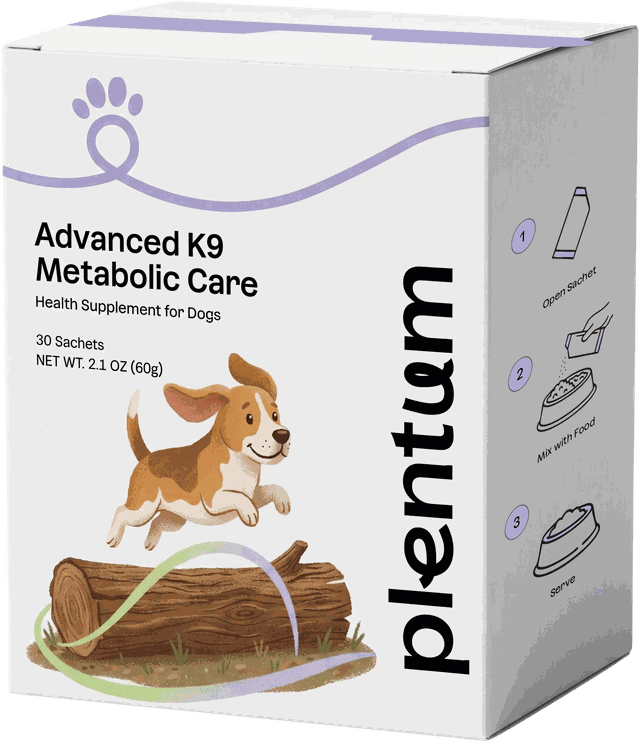
Plentum Advanced K9 Microbiome Care is a postbiotic and prebiotic powder with no CFU.
A probiotic checklist doesn't fit it, so we left it off the chart.
| Product | Daily amount | Pack | Cost a day |
|---|---|---|---|
| Native Pet | 1 scoop of powder | 30 scoops, $19.99 | $0.67 |
| Zesty pumpkin | 2 soft chews | 90 chews, $32.97 | $0.73 |
| Pet Honesty duck | 2 soft chews | 90 chews, $32.99 | $0.73 |
| FortiFlora Original | 1 powder packet | 30 packets, $30.99 | $1.03 |
| Gut Restore | 2 powder sachets | 60 sachets, $85.99 | $2.87 |
| Product | Live cultures on the label | Organisms named |
|---|---|---|
| Native Pet | 6 billion CFU per scoop | 4 |
| Zesty Paws | 6 billion CFU per 2 chews | 3, including S. boulardii |
| Pet Honesty | No CFU count on the product page | 8, plus enzymes and inulin |
| FortiFlora Original | 100 million CFU per 1 g packet | 1, E. faecium SF68 |
| Gut Restore | 10 billion CFU per 2 g sachet | 5, including S. boulardii |
Competitor details checked against their public product pages on October 20, 2026. Labels change, so check the current one.
What the chart shows
A higher count or a longer list doesn't make a product the right one for your dog.
Gut Restore is on pre-order and ships by October 26, 2026.
What each brand does well
At 50 lb, both labels add up to 6 billion CFU a day.
Native Pet is a powder, and Zesty Paws is a chew.
- Native Pet: one scoop up to 50 lb, two above that
- Zesty Paws: one chew up to 25 lb, two from 26 to 75 lb, three above 75 lb
Native Pet's 60-scoop tub ($29.99) brings a 50 lb dog to $0.50 a day.
On subscription, Native Pet takes 40% off the first delivery and 15% after.
Zesty takes 20% off three orders, then 10%.

At 50 lb, the two 90-count packs cost the same per day, because each dog gets two chews.
At 60 lb they split.
Pet Honesty's three chews cost $1.10 a day, while Zesty stays at two chews.
Pet Honesty's repeat-delivery price is $26.39 for the first order and every one after it.
What the research says and doesn't say
Keep two questions apart: what was studied, and which product was in the study. Here's a third-party example.
That study compared a synbiotic with metronidazole. It does not rank the products in this chart.
The same goes for what each brand publishes about its finished product.
Plentum's Microbiome Care postbiotic ingredient has been studied in dogs (DOI 10.3390/ani15111596).
Microbiome Care is a daily postbiotic and prebiotic supplement with no live cultures.
- 1 sachet for dogs under 20 lb
- 2 sachets for dogs from 20 to 50 lb
- 3 sachets for dogs above 50 lb
Gut Restore testing is on our quality testing page, with each test’s limit and result. To learn to read lab results yourself, see how to read a certificate of analysis for a dog supplement.

Plentum Advanced K9 Microbiome Care
It's built for owners who want a non-live daily routine in pre-measured daily sachets dosed by weight.
Microbiome Care doesn't use live probiotic bacteria.
It's vet formulated, comes with a 30-day guarantee, and starts at $1.17 a day for a dog under 20 lb.
Save this checklist for your next probiotic choice
Run every product through the same ten criteria, read the source behind each cell, and read the small print.
Microbiome Care is a non-live option, so it gets judged on a different checklist.
Call your vet for persistent digestive signs, weight loss, blood, or lethargy.
Primary veterinary reference
Use this guide alongside the WSAVA Global Nutrition Guidelines and the advice of the vet who knows your dog.
Frequently asked questions
What is the main takeaway from this guide to the dog probiotic comparison chart?
Compare the exact product, daily amount, evidence, and cost.
A higher count or a longer list doesn't make a product the right one for your dog.
What should dog owners know about the 10 criteria that actually matter?
Check ingredient disclosure, evidence, format, storage, and daily cost.
Also check return terms, suitability, limitations, and veterinary context.
What should I compare before changing my dog's probiotic?
Check the exact product, your goal, and your dog’s baseline.
Consider health conditions, medications, and the evidence behind the change.
What should I track while my dog tries a new probiotic?
Record your dog’s baseline and the change you made.
Track appetite, stool, comfort, energy, and any side effects.
Sources
- Plentum Gut Restore, checked October 2026
- Plentum Microbiome Care, checked October 2026
- FortiFlora Original price and packet count, checked October 20, 2026
- Native Pet Probiotic, checked October 20, 2026
- Native Pet refund policy, checked October 20, 2026
- Zesty Paws Probiotic Bites, checked October 20, 2026
- PetHonesty Probiotics Gut + Immune Health, checked October 20, 2026
- PetHonesty refund policy, checked October 20, 2026
- Sordillo et al., Animals 2025;15(11):1596 (postbiotic ingredient study)
A 2024 randomized trial enrolled 27 dogs with acute diarrhea.
Use these sources for background. Medical decisions need a vet who has examined your dog.
Five supplements, each aimed at a different need
- Gut RestoreFits this guide It supports normal bowel function and healthy stool consistency, and helps maintain a balanced gut. From $1.50/day
- Itch & Immune Care It supports a normal immune response to environmental and seasonal triggers, and helps maintain a healthy coat. From $1.50/day
- Calming Care It supports a calm, relaxed demeanor during occasional situational stress such as storms, travel, or vet visits. From $1.50/day
- Metabolic Care It supports healthy weight management alongside measured portions and daily exercise. From $1.50/day
- Microbiome Care It’s a daily powder with a postbiotic and prebiotic foundation, plus colostrum and omega-3, to support gut, oral, skin, and coat health. From $1.17/day