





Your dog can share some plain cooked meats, vegetables, and fruits in small portions.
Check each food first. Preparation and portion size matter.
To look up a food that isn't listed here, search our free Can my dog eat this? checker.
Some foods are dangerous even in small amounts.
- Many plain whole foods are safe in small amounts, but preparation and portion size matter.
- Chocolate, xylitol, grapes, raisins, onions, garlic, alcohol and cooked bones are dangerous for dogs.
- Remove seeds, pits, cores, and rinds before sharing fruit.
Which human foods should dogs never eat?
| Compare | What to check |
|---|---|
| Ingredient | Check for toxic ingredients |
| Preparation | Plain, suitable texture, and no bones |
| Portion | A small extra alongside complete food |
Start here, because this is the part that can't wait.

- Chocolate contains theobromine, which is toxic to dogs, and dark and baking chocolate are the worst. There's a full rundown in Can Dogs Eat Chocolate?.
- Xylitol, also called birch sugar, turns up in sugar-free gum and some peanut butters. Even a tiny amount can drop blood sugar dangerously low and cause liver failure, so check every label. The peanut butter xylitol warning is worth a read.
- Grapes and raisins risk acute kidney failure, and no safe amount is known.
- Onions and garlic risk hemolytic anemia and are toxic in every form.
- Macadamia nuts can cause weakness, vomiting and tremors.
- Alcohol hits dogs much harder than people, and even a little can be dangerous.
- Caffeine from coffee, tea and energy drinks is harmful to dogs.
- Avocado contains persin, which can upset the stomach.
- Cooked bones can splinter and injure the digestive tract.
Which fruits can dogs eat?
Prepare fruit carefully by removing relevant seeds, pits, cores, and rinds.
Check safety for each fruit.
Blueberries are the easy win, with antioxidants, fiber and vitamins C and K.
Serve watermelon without seeds or rind. Remove the core and seeds before sharing apple slices.
Bananas are fine in small amounts, though they're high in sugar, so think dessert.
Strawberries have some fiber and vitamin C and suit small, occasional portions.
Grapes and raisins can cause acute kidney failure. There is no known safe amount.
Cherry pits, stems and leaves contain cyanide, so keep cherries away from dogs.
Avocado contains persin and can upset the stomach; the avocado guide has the details.
Which vegetables can dogs eat?

Vegetables give fiber, vitamins and minerals for very few calories, which makes them handy when your dog needs lighter treats.
Carrots are the classic crunchy snack, and cucumbers are mostly water, so they work as a light, hydrating one.
Sweet potatoes are rich in fiber and vitamins A, B6 and C, and you should serve them cooked.
Broccoli is fine in small amounts, under about 10% of daily intake.
Green peas, snow peas and sugar snap peas are all fine too.
Pumpkin is a common, fiber-rich choice, but use plain cooked pumpkin and leave the pie filling in the pantry.
Tomatoes have safe and toxic parts, so read up before sharing any.
Onions and garlic are toxic in every form, raw, cooked or powdered, because they can damage red blood cells.
Skip mushrooms too, since it's hard to tell safe species from toxic ones.
Which proteins can dogs eat?
Chicken is fine plain and cooked, with no skin, bones or seasoning, and turkey follows the same rules.
Salmon is a great omega-3 source if you cook it all the way through.
Eggs are fine cooked, with no added butter or salt, and shrimp is fine fully cooked with the shells off.
Raw meat can carry bacteria, and cooked bones can splinter.
Check processed meats for high sodium, garlic, or onion.
Can dogs have dairy products?
Cheese is generally fine in small amounts, and hard cheeses are lower in lactose.
Skip blue cheese and anything with garlic or chives.
Cottage cheese is bland, high in protein and low in lactose, which makes it gentle for many dogs.
Choose plain yogurt without xylitol. Our yogurt and probiotics guide explains its limits.
Ice cream has sugar, fat and sometimes xylitol.
Milk is a poor choice for many adult dogs because lactose intolerance is common; this guide has better options.
Which grains and starches can dogs eat?
White rice is often used for digestive upset. Our rice guide covers portions and varieties.
Oatmeal gives soluble fiber, so cook it plain, with water.
Popcorn works only plain and air-popped, with no butter or salt, which rules out most movie nights.
Bread is best in small amounts, and some types are better than others.
How can new foods affect your dog’s gut?
Any new food, even a safe one, makes your dog's gut microbiome adjust.
Bacterial populations shift, which can briefly mean gas, soft stools or mild discomfort. That's normal.
It usually settles in a few days after treats, or one to two weeks after a full diet change.
A healthy, varied gut microbiome handles changes more easily than one that's already out of balance.
Introduce new foods slowly, and watch stool and appetite.
When should you call your vet?
If your dog eats something toxic, don't wait, even if they seem fine.
Which signs need urgent veterinary care?
- Repeated vomiting or bloody diarrhea.
- Lethargy, loss of coordination, seizures, or trouble breathing.
- Heavy drooling, or signs of belly pain.
Where can supplements fit?
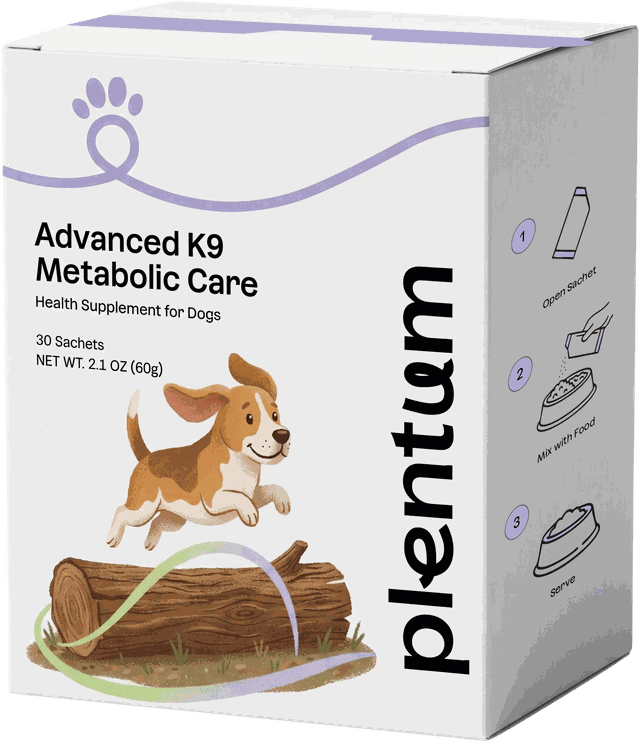
Plentum's daily sachet contains prebiotic fiber and a postbiotic.
It supports a healthy gut environment alongside a suitable diet.
It won't fix a new food that upsets the stomach, so the food advice above still matters most.
If your dog has a health condition or takes medication, check with your vet first.
The free Plentum Dog Food Checker Chrome extension helps you review dog food ingredient lists.
Frequently asked questions
What can dogs eat?
Small amounts of plain cooked chicken or pumpkin can suit dogs. Safety depends on the food and preparation.
Is plain yogurt safe for dogs?
Small amounts of plain, xylitol-free yogurt may suit some dogs. Watch for loose stool from dairy.
Can dogs have popcorn?
Yes, but only plain, air-popped popcorn with no butter or salt.
Is white rice okay when my dog has an upset stomach?
Plain white rice is easy to digest. The rice guide above explains portions and when to use it.
Sources
These sources provide background. A vet who has examined your dog should guide diagnosis, medications, and care.
Related reading

- Can Dogs Eat Cucumbers? Serving Guide by Weight (2026)
- Halloween Safety for Dogs
- Can dogs eat turkey?
- Can dogs eat ham?
- Can dogs eat pork?
- Can dogs eat tuna?
- What to do if your dog eats a chicken bone
We explain how kefir, yogurt and other fermented foods compare for dogs in our fermented food guide.
For more on seven steps to keep a homemade diet balanced, see our homemade food balance guide.