





Your dog is eyeing the sweet potato on your cutting board, and you're wondering if she can have a bite. Yes, most dogs can, as long as it's cooked and plain (you may also see it called kumara). Never serve it raw, and skip the butter, salt, sugar and seasoning. Peel it after cooking, which is the simplest way to serve it.
- Always cook it, because raw sweet potato can block the intestines.
- Skip the syrup, fries and casserole, and serve plain cooked sweet potato only.
- Peel the skin off before serving, as the prep steps below show.
Cook it first
Raw sweet potato contains compounds called trypsin inhibitors that block protein digestion and can cause intestinal blockage, especially in smaller dogs. Cooking breaks them down and can make beta-carotene noticeably easier for a dog to absorb.
Bake, boil, steam or microwave it with no butter, salt, sugar, marshmallows or cinnamon. Let it cool fully before you serve it.
For any other vegetable you plan to cook for your dog, search our free Can my dog eat this? checker.
Three easy ways to prep it
- Baked cubes: wash, pierce with a fork and bake at 400°F for 45 minutes. Cool, peel, and cube. Store in the fridge for up to 5 days.
- Mashed: boil peeled cubes for 15 minutes until soft. Mash with a fork. Skip the butter.
- Dehydrated chews: slice thin and bake at 250°F for 3 hours. They last through a longer chewing session. Always supervise.
The versions to skip
- Canned sweet potatoes in syrup: added sugar, not safe.
- Sweet potato fries: fried, heavily salted and often seasoned with garlic or onion powder. Off-limits.
- Sweet potato casserole: contains sugar, marshmallows, and butter. Never share it.
- Sweet potato jerky made for people: often coated in spices or smoke flavoring. Skip it.
Plain canned sweet potato with no added ingredients is fine in a pinch, but fresh cooked is better. Check the label for added sugar, salt or spices before you open the can.
How much is safe
Sweet potato is naturally sweet and calorie-dense, and too much can spike blood sugar or cause loose stools. Start with one small serving and watch your dog's stool over the next day or two.
- Giant dogs (over 90 lbs): up to ¼ cup per day is the usual upper guide.
The right amount depends on size, weight and the rest of what your dog eats.
Why it's worth feeding
Sweet potato turns up in commercial dog foods and limited-ingredient diets for a reason. Dogs digest it well, and most of them like the taste.
Cornell's College of Veterinary Medicine lists sweet potato as a recommended complex carbohydrate for dogs with sensitive stomachs, because it has low allergenic potential and gentle fiber. A 2019 review in the Journal of Animal Physiology and Animal Nutrition reported that dogs fed diets containing sweet potato showed improved stool quality and better gut microbial diversity than dogs on grain-heavy formulas. That's useful background, but it's a single review, so it doesn't replace advice from your own vet.
- Dietary fiber: the soluble fiber, including pectin, feeds beneficial gut bacteria as a prebiotic. Insoluble fiber helps keep bowel movements regular.
- Vitamin C supports antioxidant activity and cellular repair.
- Potassium supports heart function and muscle contractions.
- Manganese supports bone formation and enzyme function.
- Vitamin B6 supports brain function and protein metabolism.
Those nutrients come packaged with the fiber, which is the main reason many owners add it to their dog's diet regularly. For more whole foods that support digestion, read Gut-Healthy Foods for Dogs: 12 Evidence-Informed Picks (2026).
When sweet potato isn't enough
A change in food alone may not solve what's behind those signs.
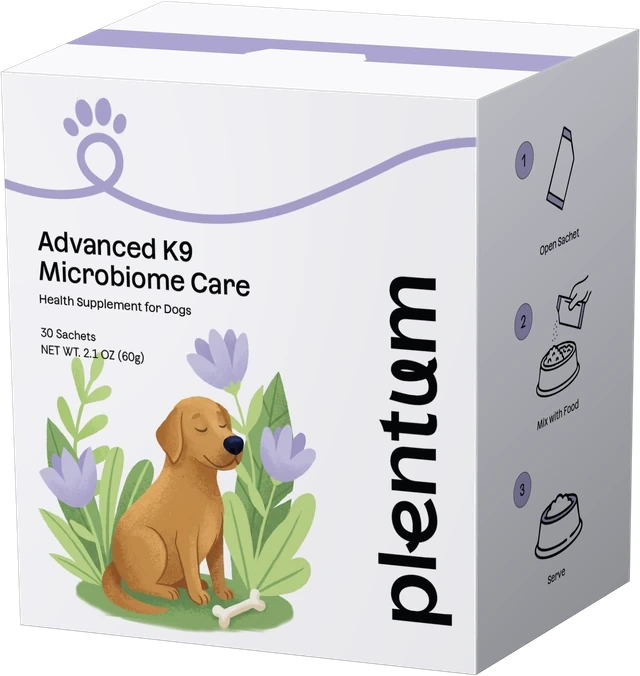
A daily postbiotic supplement like Plentum Advanced K9 Microbiome Care works alongside whole foods like sweet potato to support the gut from a different angle. It delivers beneficial bacterial metabolites, prebiotic FOS fiber, digestive enzymes and L-glutamine in daily sachets you mix into food once a day, at 1 sachet for dogs under 20 lb, 2 sachets for dogs from 20 to 50 lb, and 3 sachets for dogs above 50 lb.
Where supplements fit
Supplements never replace good food, fresh water or a regular vet check. Whole foods like sweet potato are the base, and a supplement is a separate choice for owners who want an extra daily routine for the gut. Introduce any supplement on an ordinary day, not a busy or stressful one, so you can see how your dog responds.
For more on which everyday foods are safe for dogs and which to keep off the plate, see our A-to-Z of what dogs can eat.
Frequently asked questions
Can dogs eat kumara skin?
Kumara is another name for sweet potato, and most dogs can eat it plain and cooked in small portions. The prep steps in this guide peel the skin off before serving, which is the simplest way to follow our advice. Check with your vet first if your dog has a sensitive stomach or a health condition.
Can dogs eat raw sweet potato?
Raw sweet potato isn't recommended. It contains compounds called trypsin inhibitors that block protein digestion and can cause an intestinal blockage, especially in smaller dogs. Cook it plain and let it cool before serving.
How much sweet potato can I give my dog?
The right portion depends on your dog's size and the rest of her diet. For giant dogs over 90 lbs, the usual upper guide is up to ¼ cup per day. Introduce it slowly and watch the stool.
Is canned sweet potato safe for dogs?
Plain canned sweet potato with nothing added is fine in a pinch. Avoid canned sweet potato in syrup, because the added sugar isn't safe for dogs. Fresh cooked is the better choice.