







You've got five tabs open comparing digestive supplements, and every one of them says it's the best.
Close a few and ask a better question: what, exactly, do you want to change for your dog?
Do you want steadier stools or an easier switch to a new food?
Once you've named that goal, comparing products gets a lot simpler, because you're only judging them against it.
Keep these three points in mind:
- Pick one specific goal before you compare any products.
- No single product is the right answer for every dog or every goal.
- Record a baseline first, so that a later change can be judged fairly.
How do you compare digestive supplements by goal?
"Which product is best?" has no answer, since nothing is right for every dog.
"Which product fits this goal?" does, and you can settle it with a label, a routine and a review date.
Keep the question narrow for another reason, too.
Possible causes include food, infection, parasites, medication, anatomy, and inflammation.
Illness elsewhere in the body can also cause digestive trouble.
A supplement can't tell you which, and it shouldn't push back a checkup.
Seven goals worth comparing against
Owners' goals range from broad to specific.
For each goal below, check the relevant label details.
Pick one, not all seven.
| Goal | What to compare |
|---|---|
| Everyday routine support, with nothing in particular going wrong | Serving directions, ingredient amounts, and a usable format |
| Stool consistency while diet stays steady | Fiber amounts and named strains with counts |
| Steadier stools during the first two weeks of a new food | Fiber, gut-support ingredients, and starting directions |
| Less gas | Amount and type of prebiotic fiber |
| Your dog reliably eating a new food | Mixing directions and ingredients |
| Willingness to eat the supplement | Powder versus chew |
| No bad reaction during a set routine | A short ingredient list, allergens called out, and an expiration date |
A clear serving size by weight, every ingredient amount listed, and a format you'll actually use daily
More consistent stool, including fewer messy episodes while the diet stays the same
Fiber or prebiotic amounts, and named strains with counts if it's a probiotic
Gentle fiber and gut-support ingredients, plus directions for starting at a lower serving
How much prebiotic fiber it adds, since some fibers cause a little gas at first
Whether it can be mixed into food easily, and what the flavor is made from
Your dog happily taking a new supplement at breakfast (palatability matters more than people think)
Notice that "better digestion" isn't on the list.
It's too fuzzy to test, so keep rewording it until it names one thing you can actually see.
A product suited to palatability may be wrong for stool support, however good its label looks.
Write the goal down first
Put it first in your dog's care note. Everyone who feeds or walks your dog can start from the same goal.
That also stops a product from quietly becoming the goal.
A good test: can you explain why it matters without naming a brand or assuming a diagnosis?
If not, the goal has drifted.
While you're at it, note the food, meds, other supplements, recent events and routine around it.
Those often explain more than any product will.
Broad supplements and narrow goals
An all-in-one supplement can be a tidy fit for the first goal, everyday routine support.
For a narrower goal, check that it actually covers that one thing, and judge it on that alone.
A new product may mask pain, illness, or intolerance.
It may also become a routine nobody maintains.
Before you buy, answer three questions: what's the goal, how will you know it's met, and when will you check?
That keeps the decision tied to your actual dog, not a marketing category or someone else's story.
What should you record before starting a supplement?
A baseline is a snapshot of your dog before anything changes.
Without it, you can't tell whether something helped, did nothing or made things worse.
Jot down what's normal right now: appetite, stool, energy and any signs that come and go.
A few lines a day is plenty.
A quick note you actually write beats a color-coded system you abandon by Thursday.
Then make one change and set a date
Choose one goal, record a baseline, and change one thing.
Set a review date before a rough week makes decisions harder.
When the date comes, put your notes next to the baseline. Was the goal met?
Did anything else change? Is it worth continuing?
If you can't tell, extend once and keep logging the same way.
Keep it in proportion
A supplement is one optional tool for one specific goal.
Food, fresh water, regular walks, and steady mealtimes often matter just as much.
Add one when there's a clear reason and you can check it against your baseline.
Frequently asked questions
How do I choose digestive supplements for dogs?
Start with one specific goal, like stool consistency or palatability.
Write a baseline, make one change and set a review date, then compare labels against that goal only.
Which digestive supplement is the best for dogs?
There isn't one best for every dog.
It depends on your goal, your dog's history, diet, and health conditions.
Compare each product against your written goal.
How long should I wait before judging a digestive supplement?
Until the review date you set at the start. Some changes show quickly and others take longer.
Can a broad all-in-one supplement replace a clear goal?
No, but the two work fine together.
Pick the goal first, then judge any supplement, broad or narrow, against it.
That keeps the result easy to read.
Sources
Five supplements, each aimed at a different need
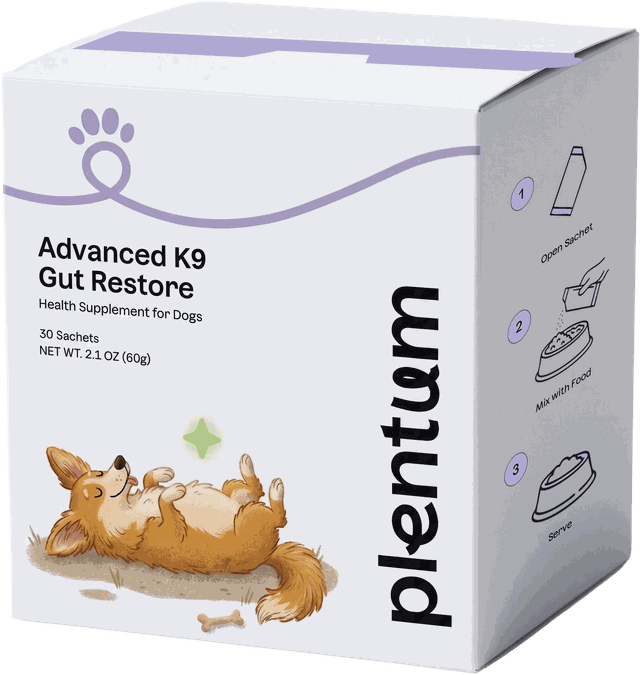
- Gut RestoreFits this guide It supports normal bowel function and healthy stool consistency, and helps maintain a balanced gut. From $1.50/day
- Itch & Immune Care It supports a normal immune response to environmental and seasonal triggers, and helps maintain a healthy coat. From $1.50/day
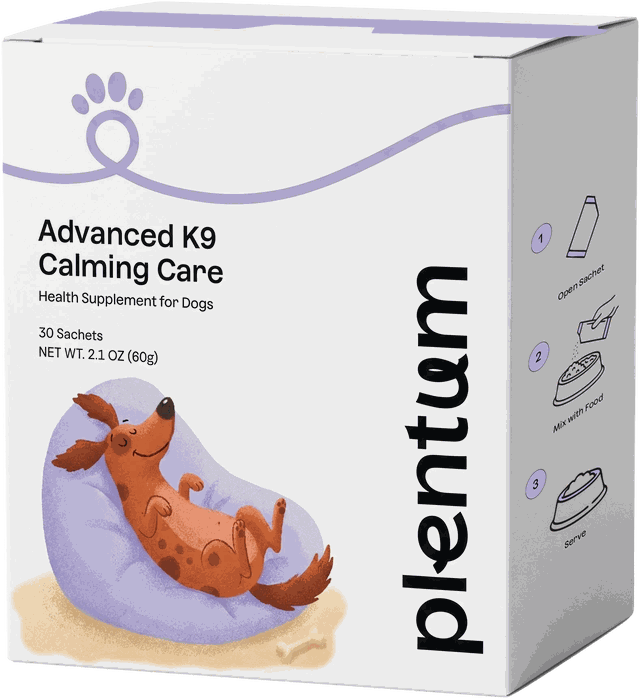
- Calming Care It supports a calm, relaxed demeanor during occasional situational stress such as storms, travel, or vet visits. From $1.50/day
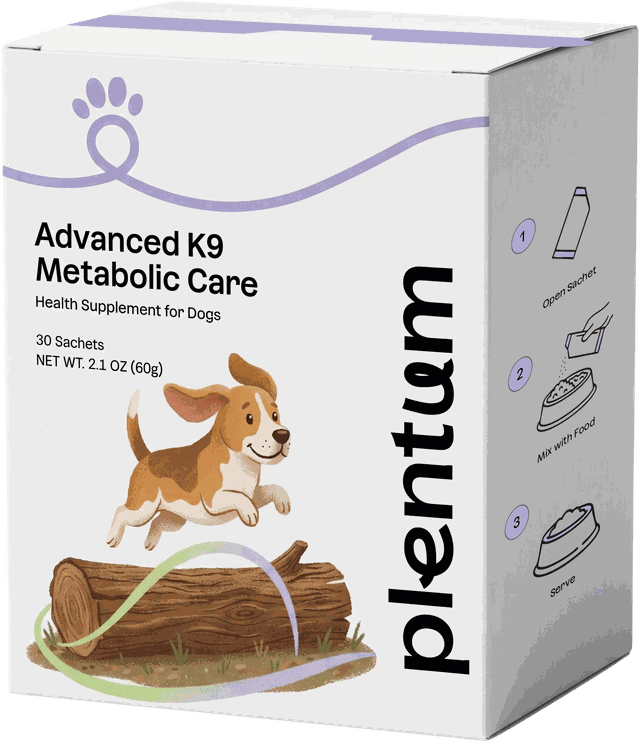
- Metabolic Care It supports healthy weight management alongside measured portions and daily exercise. From $1.50/day
- Microbiome Care It’s a daily powder with a postbiotic and prebiotic foundation, plus colostrum and omega-3, to support gut, oral, skin, and coat health. From $1.17/day