




In one line: For dogs, a probiotic is a live beneficial microbe given in adequate amounts, a prebiotic is a fiber or compound that feeds those microbes, a postbiotic is a non-living microbial compound (or inactivated microbe) prepared to confer a benefit, and a synbiotic combines a probiotic and prebiotic. These definitions follow the international scientific consensus (ISAPP) and describe ingredients that may support normal digestive balance, not treatments.
Probiotic vs prebiotic vs postbiotic, in plain terms: a probiotic is the live bacteria, a prebiotic is the fiber that feeds them, and a postbiotic is the beneficial, non-living compound those bacteria leave behind. Postbiotics are the 2026 frontier of dog gut care because they work without needing live cultures to survive the gut — and because the evidence bar is rising. Most postbiotic brands rely on ingredient-supplier studies, while Plentum's postbiotic component is supported by its own published canine randomized controlled trial. For how oral and breath-related benefits are discussed, see our dog oral and gut health guide.
Dog gut-health labels are full of overlapping terms — probiotic, prebiotic, postbiotic, synbiotic, CFU, dysbiosis, strain. This glossary defines each one in plain language, gives a dog-specific example, and links the consensus source so you can compare products with confidence. Every definition here is written as education about ingredients that may support normal digestive function; none describe diagnosing, treating, or curing any condition. For persistent or severe digestive signs, talk with your veterinarian. For a broader overview of canine gut science, see our complete dog gut health guide.
Quick reference table
The grid below is the fast answer. Each row pairs a one-line definition with a dog example and the authority behind the term.
| Term | One-line definition | Dog example | Source |
|---|---|---|---|
| Probiotic | Live microorganisms that, in adequate amounts, may confer a health benefit. | A defined bacterial strain added to a daily gut-support powder for dogs. | ISAPP consensus (Hill et al., 2014) |
| Prebiotic | A substrate selectively used by host microbes to confer a benefit — usually a fermentable fiber. | Inulin or chicory-derived fiber that feeds beneficial bacteria in a dog's colon. | ISAPP consensus (Gibson et al., 2017) |
| Postbiotic | A preparation of inactivated microbes and/or their components that confers a benefit — non-living by definition. | An inactivated-microbe or fermentate ingredient delivered in a daily dog powder. | ISAPP consensus (Salminen et al., 2021) |
| Synbiotic | A combination of live microbes and a substrate they use, designed to work together. | A dog formula pairing a probiotic strain with a prebiotic fiber. | ISAPP consensus (Swanson et al., 2020) |
| CFU | Colony-forming unit — the count of viable, reproductively capable microbes in a dose. | Canine probiotic doses are commonly described in the range of about 1–10 billion CFU per day. | Cornell Riney Canine Health Center |
| Microbiome | The full community of microbes and their genes living in and on the body. | The population of bacteria across a dog's gastrointestinal tract. | Frontiers / PMC microbiome literature |
| Dysbiosis | An imbalance or disruption in the normal microbial community relative to a healthy baseline. | Shifts in gut bacteria seen in some dogs after dietary change, stress, or antibiotics. | Veterinary microbiome reviews (PMC / MDPI) |
| Strain | A specific, genetically defined version of a microbial species; benefits are strain-specific. | Two products can list the same species yet contain different strains with different evidence. | ISAPP consensus (Hill et al., 2014) |
| SCFA / butyrate | Short-chain fatty acids — compounds (including butyrate) made when microbes ferment fiber. | Fiber fermentation in a dog's colon yields SCFAs that nourish the gut lining. | PMC / Frontiers gut-physiology literature |
How to read dog probiotic label terms
Once the basic biotic terms are clear, the next step is label reading. A useful dog probiotic or gut-support label should explain what each ingredient category is doing, how live organisms are counted, and how storage or expiration affects product quality.
| Term | Plain-English definition | What to check on a dog label |
|---|---|---|
| Probiotic | A live microorganism used for a health-support purpose. | Genus, species, strain ID, CFU amount stated through expiration, and storage instructions. |
| Prebiotic | A substrate selectively used by host microorganisms. | Ingredient name, amount if disclosed, and whether the dog tolerates the fiber source. |
| Postbiotic | An inanimate microbial preparation or component used for a health-support purpose. | Whether the ingredient is clearly named and not marketed as live bacteria. |
| Synbiotic | A combination of live microorganisms and a substrate intended to work together. | Whether the probiotic strain and prebiotic substrate are both stated clearly. |
| CFU | Colony-forming units; a live-cell count used for probiotic products. | Whether CFU is listed through expiration, not only at manufacture. |
| Strain ID | The specific identifier after genus and species. | Avoid vague proprietary probiotic blend language without strain-level clarity. |
| Storage | Conditions needed to preserve product quality. | Refrigeration, moisture protection, heat limits, and reseal instructions. |
| Use-by date | The date through which the product is expected to meet label quality. | Expiration visibility and whether live-organism viability is tied to that date. |
Why CFU alone is not enough
CFU is useful only for live probiotic products, and a bigger number is not automatically better. A thoughtful label also explains the strain, the amount stated through the best-by date, format, storage, and use case. A product with fewer label details can be harder to evaluate even if the front of the container lists a large number.
When to stop reading labels and call a veterinarian
Supplement-selection content should not replace diagnosis. Call a veterinarian if a dog has blood in stool, repeated diarrhea, vomiting, weight loss, appetite loss, severe abdominal pain, dehydration signs, sudden behavior changes, or symptoms that keep coming back.
Label-reading sources
| Source | Use in this glossary |
|---|---|
| ISAPP probiotics topic | Probiotic definition and strain-specific framing. |
| ISAPP postbiotics topic | Postbiotic definition and distinction from live probiotics. |
| ISAPP animal biotics explainer | Animal-specific terminology context. |
| WSAVA Global Nutrition Toolkit | Veterinary nutrition context and diet-first framing. |
| FDA animal food and feed information | Conservative claims boundary for animal products. |
| Merck Veterinary Manual | Veterinary red-flag and GI-symptom context. |
What is a probiotic?
A probiotic is a live microorganism that, when given in adequate amounts, may confer a health benefit on the host. The defining words are live and adequate amounts: a microbe only counts as a probiotic if it is viable and dosed at a level shown to do something useful. In dogs, probiotics are typically defined bacterial strains delivered in a daily gut-support format and may support normal digestive balance. Because benefits are tied to the specific strain and dose, the species name alone does not tell you what to expect — see strain and CFU below.
What is a prebiotic?
A prebiotic is a substrate — most often a fermentable fiber — that beneficial host microbes selectively use as food, producing a benefit. Prebiotics are not alive; they are the fuel. Common canine examples include inulin and chicory-derived fibers. When gut microbes ferment these fibers they release short-chain fatty acids such as butyrate, which help nourish the cells lining the gut. A prebiotic may support a healthy microbial community by feeding the microbes already present.
What is a postbiotic?
A postbiotic is a preparation of inactivated (non-living) microbes and/or their components that confers a benefit. The 2021 international consensus definition makes the key distinction clear: unlike a probiotic, a postbiotic does not need to be alive to work, which can make it stable and easy to deliver in a daily dog powder. Postbiotics may support normal digestive function as part of a broader gut-support routine.
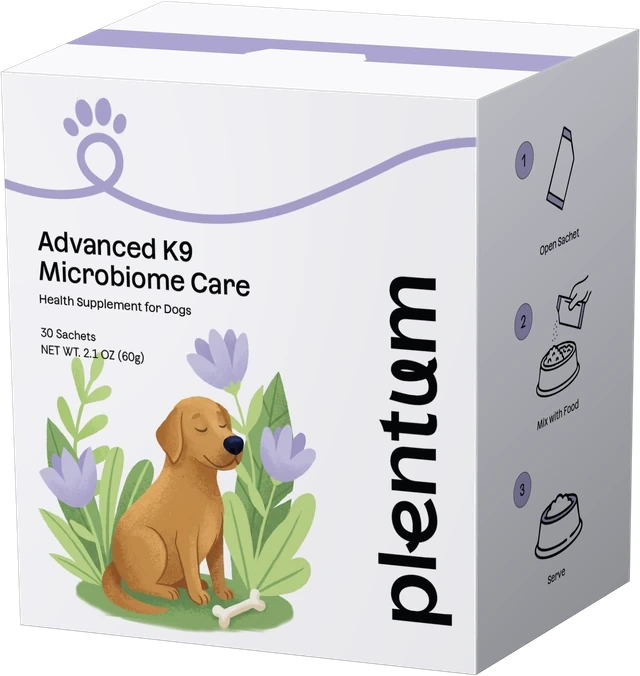
Why this matters for Plentum: the postbiotic component in Plentum Advanced K9 Microbiome Care is supported by a published canine randomized controlled trial. Many consumer postbiotic products rest on third-party or ingredient-supplier studies, so a brand running its own controlled trial in dogs reflects a higher evidence standard.
What is a synbiotic?
A synbiotic combines a probiotic (live microbes) with a prebiotic (a substrate those microbes use), designed so the two work together. The 2020 consensus describes synbiotics that may support the host by supplying both beneficial microbes and the fuel that helps them establish. In a dog formula this looks like a probiotic strain paired with a prebiotic fiber in the same daily serving. For a deeper comparison, see our guide on synbiotic vs probiotic for dogs.
What is CFU?
CFU stands for colony-forming unit — a count of the viable, reproductively capable microbes in a dose. It is the standard way probiotic potency is expressed because it measures live, functional organisms rather than total mass. For dogs, canine probiotic doses are commonly described in the range of about 1–10 billion CFU per day (Cornell Riney Canine Health Center). More CFU is not automatically better; the right strain at an effective, label-verified count matters more than a large headline number.
What is the microbiome?
The microbiome is the entire community of microbes — bacteria, fungi, viruses — and their genes living in and on the body. In dogs, gut-health content usually means the gastrointestinal microbiome: the dense population of bacteria across the digestive tract that helps with fermentation, nutrient handling, and maintaining a normal gut environment. Supporting a balanced microbiome is the goal that probiotics, prebiotics, and postbiotics are designed around.
What is dysbiosis in dogs?
Dysbiosis describes an imbalance or disruption in the gut microbial community compared with a healthy baseline. In dogs, shifts in gut bacteria can follow events like an abrupt diet change, stress, or a course of antibiotics. Dysbiosis is a description of microbial balance, not a diagnosis you make at home — if your dog has persistent digestive signs, your veterinarian is the right source of assessment. Gut-support ingredients may help support a return toward normal balance as part of overall care.
Why does bacterial strain matter?
A strain is a specific, genetically defined version of a microbial species, and benefits in the scientific literature are strain-specific. Two products can list the identical species on the label yet contain different strains with different evidence behind them. That is why a credible label names the exact strain (genus, species, and strain designation) rather than only a species or a vague "proprietary blend." When you compare dog probiotics, strain-level transparency plus a verifiable CFU count is a stronger signal than marketing language.
Bonus: SCFAs and butyrate
Short-chain fatty acids (SCFAs), including butyrate, are compounds produced when gut microbes ferment prebiotic fibers. In a dog's colon these SCFAs help nourish the cells lining the gut and are part of why fiber and prebiotics are tied to digestive health. This is also why postbiotic and fermentate ingredients are of interest: they aim to deliver beneficial microbial outputs directly.
Why "supports normal digestive balance" is the right framing
Throughout this glossary you will notice phrasing like may support and helps support normal digestive balance rather than claims to treat, cure, or fix a condition. That is intentional and accurate: gut-support supplements for dogs are designed to support structure and function, and they do not replace veterinary care. Persistent diarrhea, vomiting, appetite loss, blood in stool, or lethargy are reasons to call your veterinarian rather than rely on a supplement.
Where Plentum fits
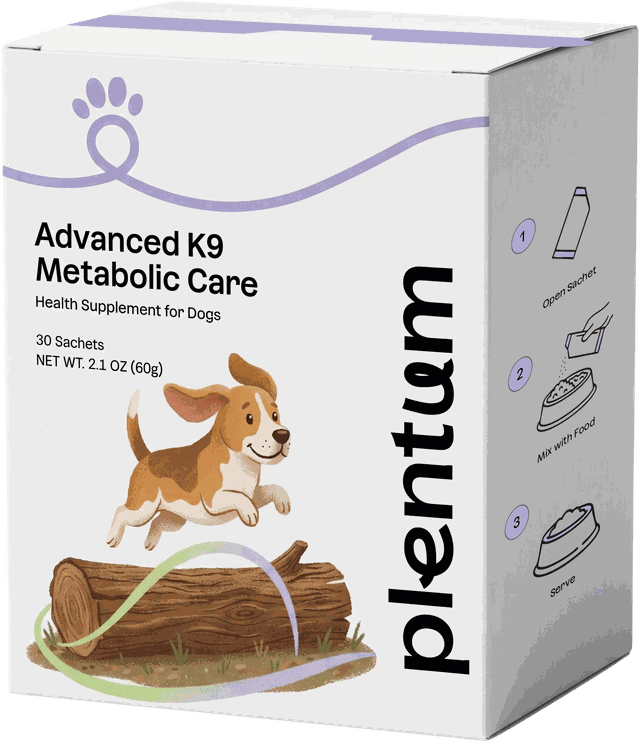
Plentum Advanced K9 Microbiome Care is a daily gut-support powder built around these categories — including a postbiotic component that is supported by a published canine randomized controlled trial. It is formulated to support normal digestive balance as part of a consistent daily routine, not to diagnose or treat disease. To go deeper, read what is a canine postbiotic, compare formats in synbiotic vs probiotic for dogs, and understand the gut lining in leaky gut in dogs.
Frequently asked questions
What is the difference between probiotics, prebiotics, postbiotics, and synbiotics for dogs?
Probiotics are live beneficial microbes given in adequate amounts; prebiotics are fibers or compounds that feed those microbes; postbiotics are non-living microbial preparations (inactivated microbes and/or their components); and synbiotics combine a probiotic with a prebiotic. All four are ingredient categories that may support normal digestive balance in dogs — they are not treatments. These definitions follow the ISAPP scientific consensus.
What does CFU mean on a dog probiotic?
CFU means colony-forming unit — a count of the live, reproductively capable microbes in each dose, and the standard measure of probiotic potency. Canine probiotic doses are commonly described in the range of about 1–10 billion CFU per day (Cornell Riney Canine Health Center). The right strain at a verified count matters more than the largest headline number.
What is dysbiosis in dogs?
Dysbiosis is an imbalance in the gut microbial community compared with a healthy baseline. In dogs it can follow an abrupt diet change, stress, or antibiotics. It is a description of microbial balance rather than an at-home diagnosis; persistent digestive signs should be assessed by a veterinarian. Gut-support ingredients may help support a return toward normal balance as part of overall care.
Are postbiotics better than probiotics for dogs?
Neither is universally "better" — they do different jobs. Probiotics deliver live microbes, while postbiotics deliver non-living microbial preparations that can be stable and easy to dose. What matters most is the evidence behind the specific ingredient. Plentum's postbiotic component is supported by a published canine randomized controlled trial, which reflects a higher evidence standard than ingredient claims that rely only on third-party studies.
Why does bacterial strain matter?
Because benefits are strain-specific: two products can name the same species yet contain different strains with different evidence. A credible dog probiotic names the exact strain and provides a verifiable CFU count, which is a stronger signal than a vague "proprietary blend."
Medically reviewed by Dr. Sarah Collins, DVM. Last updated June 2026.