




Quick answer: Dog leaky gut syndrome — more precisely called increased intestinal permeability — is a condition where the gut lining becomes more permeable than normal, potentially allowing substances to pass into the bloodstream that would not under healthy conditions. It is an emerging area of veterinary science. Signs can include chronic digestive upset, skin issues, and low energy. Supporting the gut barrier through diet, stress reduction, and a daily gut-support routine may help, but any persistent symptoms deserve a veterinary evaluation.
The phrase "leaky gut" gets a lot of attention in human wellness circles, and dog owners are right to wonder whether it applies to their pets. The science is still developing — intestinal permeability is a real, measurable phenomenon, but the clinical picture in dogs is nuanced. This article breaks down what we actually know, what factors can compromise the gut barrier, and practical ways to help maintain it.
As always, information here is for educational purposes. If your dog is showing concerning symptoms, please talk to your veterinarian before making changes to their care plan.
What is intestinal permeability, and what does "leaky gut" actually mean in dogs?
The dog's gut lining is one of the body's most sophisticated structures. A single layer of epithelial cells lines the intestinal wall, held together by tight junction proteins that act like molecular clasps. Their job: let nutrients through while keeping undigested food particles, bacteria, and toxins out of the bloodstream.
Intestinal permeability refers to how easily substances pass through this barrier. Some permeability is normal and necessary — it is how nutrients are absorbed in the first place. "Increased intestinal permeability," or what the popular press calls "leaky gut," describes a state where those tight junctions become looser than they should be, potentially allowing larger molecules to slip through.
In veterinary medicine, increased intestinal permeability is associated with several well-documented conditions, including inflammatory bowel disease (IBD) and protein-losing enteropathy. IBD in dogs is a good example of a condition where the gut barrier is genuinely compromised. Whether a milder, subclinical form of increased permeability is widespread in otherwise healthy dogs — the version often described in wellness content — remains an area of active research rather than settled science.
Signs that may be linked to a compromised gut barrier
No single symptom confirms increased intestinal permeability. Rather, a cluster of signs can suggest the gut is under stress. These overlap with many other conditions, which is exactly why a veterinary diagnosis is so important.
- Chronic loose stools or intermittent diarrhea — recurring digestive upset not explained by a single dietary indiscretion
- Excessive gas or bloating — more than the occasional rumble after dinner
- Nausea or reduced appetite — a dog who is routinely reluctant to eat
- Skin changes — itchiness, redness, or a dull coat; the gut-skin connection is well documented and emerging research in dogs mirrors findings in humans
- Low energy or lethargy — when a dog seems "off" without a clear cause
- Food sensitivities — reactions to foods that were previously well tolerated
For a broader guide to reading your dog's gut signals, see our article on signs of poor gut health in dogs. And if you notice skin issues alongside digestive trouble, the relationship between probiotics, skin health, and allergies is worth exploring further.
What contributes to a leaky gut in dogs?
Several factors are known to stress the intestinal barrier in dogs. Most are not inevitable — they are modifiable, which is the encouraging part.
Diet quality and composition
Highly processed foods, excessive fillers, and diets low in fiber can reduce the diversity and resilience of the gut microbiome. The microbiome is not just a passenger — it actively produces short-chain fatty acids (SCFAs) like butyrate that nourish the epithelial cells and support tight-junction integrity. A diet that starves beneficial bacteria of fermentable fiber can reduce SCFA production and, over time, compromise the barrier those SCFAs help maintain.
Antibiotics and other medications
Antibiotics are sometimes life-saving, but they are not selective — they reduce pathogenic bacteria and beneficial ones alike. Post-antibiotic dysbiosis (a shift in the microbial community toward less diverse, less protective populations) is well documented in dogs. The good news is that targeted nutritional support during and after antibiotic treatment can help. Our guide on rebuilding gut health after antibiotics covers this in detail.
Chronic stress
The gut-brain axis is bidirectional: stress hormones affect gut motility and can alter the composition of the microbiome. Dogs experiencing chronic anxiety — separation distress, environmental unpredictability, or persistent fear — may be more prone to gastrointestinal symptoms. Addressing the root cause of stress is part of a complete gut-health picture.
Pathogens and parasites
Certain bacteria (like Clostridium perfringens or Campylobacter), viruses, and intestinal parasites can directly damage the gut lining. These are medical situations requiring veterinary diagnosis and treatment — not something to manage with supplements alone.
Breed and genetic predisposition
Some breeds are more prone to gastrointestinal issues due to anatomy or genetics. Brachycephalic breeds like French Bulldogs, for instance, have specific gut-health considerations — we cover those in our guide to probiotics for French Bulldogs.
The gut microbiome: the barrier's closest ally
You cannot talk about intestinal permeability without talking about the microbiome. The trillions of microorganisms living in your dog's gut do far more than help digest food. They:
- Produce SCFAs that fuel gut-lining cells
- Compete with pathogens for space and nutrients (colonisation resistance)
- Modulate local immune responses in the gut
- Communicate with the enteric nervous system (the "gut brain")
A diverse, balanced microbiome is one of the best defenses against a compromised gut barrier. Conversely, dysbiosis — a state of microbial imbalance — is frequently observed alongside increased intestinal permeability in research settings.
For a deeper look at the science, our overview of dog gut health covers the microbiome's role in immune function, digestion, and beyond.
Probiotics, prebiotics, and postbiotics: what the evidence says
Three categories of nutritional support are most relevant to gut-barrier maintenance in dogs.
Probiotics
Live beneficial bacteria that, when administered in adequate amounts, may help restore or maintain a healthy microbial community. Strain specificity matters — not all probiotics do the same things. Look for canine-specific, well-characterised strains with published research. Our 2026 comparison of the best dog probiotics evaluates the top options against real data.
Prebiotics
Non-digestible fibers and compounds that selectively feed beneficial bacteria, helping them thrive and produce the SCFAs that support the gut lining. Prebiotics work best when paired with the right microbial community. For a clear breakdown of how they differ from probiotics, see our guide on prebiotics vs. probiotics for dogs.
Postbiotics
Postbiotics are the next frontier. These are the beneficial compounds produced by or derived from microorganisms — including SCFAs, peptides, and heat-inactivated bacterial cell components — that appear to exert health effects independent of live bacteria. Because postbiotics are stable, they do not carry the viability concerns associated with live cultures.
Notably, a peer-reviewed randomised controlled trial (Sordillo et al., 2025, Animals, PMC12153626) found that a specific postbiotic formulation produced approximately a 27% reduction in volatile sulfur compounds — markers of gut fermentation — at 14 days in a sample of 24 dogs, suggesting a measurable effect on gut environment. This is early-stage but rigorous data. For more on the science, read our piece on the gentle power of canine postbiotics.
The most comprehensive approach combines all three. A synbiotic formulation (prebiotics + probiotics together) is one step; adding postbiotics creates a daily powder that supports the gut environment on multiple levels simultaneously. You can read more about postbiotics for dogs and how they fit into a complete gut-support routine.
A practical comparison: gut-support strategies
| Strategy | How it may help the gut barrier | Evidence level in dogs |
|---|---|---|
| High-quality, minimally processed diet | Supports microbiome diversity; provides fermentable fiber | Strong observational support |
| Strain-specific probiotics | Restores microbial balance; competes with pathogens | Moderate; strain-dependent |
| Prebiotic fiber (e.g., inulin, FOS) | Feeds beneficial bacteria; increases SCFA production | Moderate; type-dependent |
| Postbiotics | Direct gut-environment support; stable and bioavailable | Emerging; early RCT data promising |
| Stress reduction | Reduces cortisol-driven gut-motility changes | Strong (gut-brain axis well documented) |
| Probiotic support post-antibiotics | Helps restore diversity following antibiotic-related dysbiosis | Moderate; timing and strain matter |
When to call your veterinarian
Gut-support nutrition is a complement to veterinary care, not a replacement for it. Talk to your vet if your dog is experiencing:
- Diarrhea or vomiting lasting more than 48 hours
- Blood in stool or vomit
- Significant weight loss
- Sudden loss of appetite combined with lethargy
- Symptoms that seem to be worsening despite dietary changes
Your veterinarian may recommend diagnostic workup — blood panels, fecal testing, or imaging — to rule out conditions like IBD, parasites, or food allergy. A diagnosis gives you a clear path forward, including whether specific nutritional support is appropriate and how to use it safely alongside any prescribed treatment.
Support your dog's gut health every day
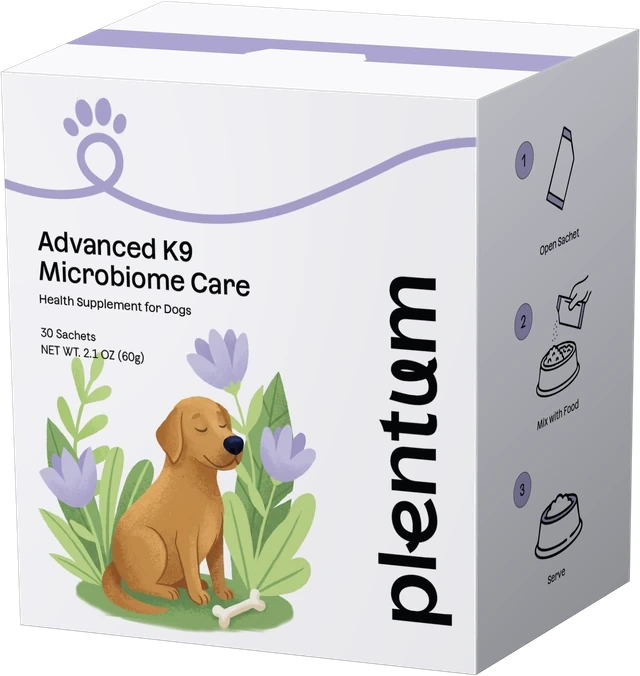
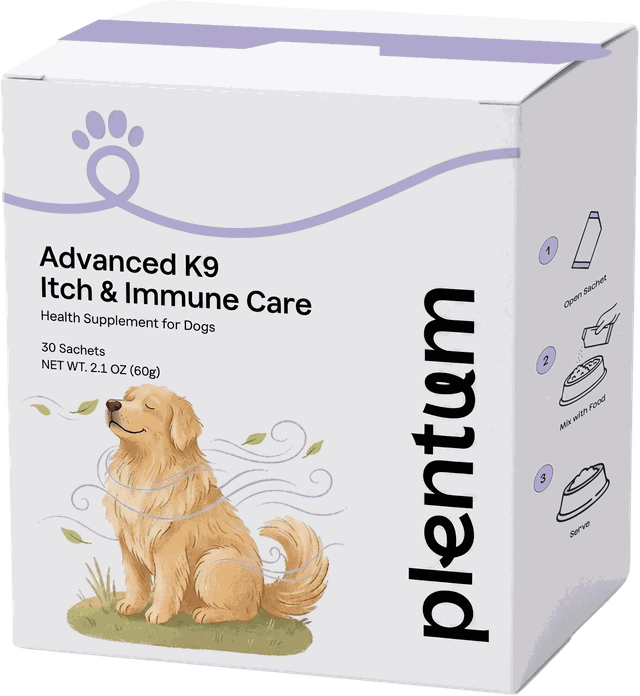
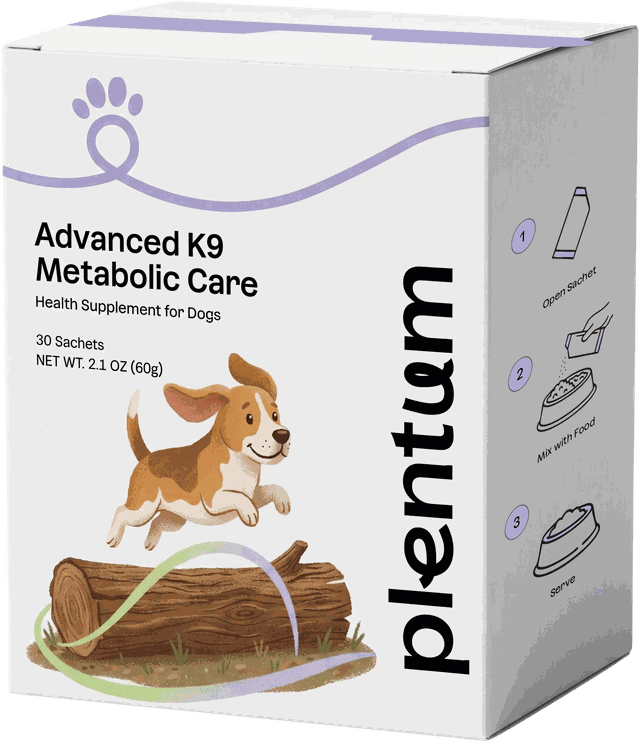
Plentum Advanced K9 Microbiome Care combines prebiotics, probiotics, and postbiotics in one veterinarian-formulated daily sachet — just add it to your dog's food.
Explore Plentum →Frequently asked questions
Is leaky gut syndrome in dogs a real, diagnosed condition?
Increased intestinal permeability is a measurable, biologically real phenomenon that has been studied in dogs with conditions like IBD and protein-losing enteropathy. "Leaky gut syndrome" as a broader label for subclinical permeability in otherwise healthy dogs is an emerging — and sometimes debated — concept. The underlying mechanisms are real; the clinical definition and prevalence in the general dog population are still being refined by researchers. If you suspect your dog has a gut-health issue, a veterinary evaluation is the right starting point.
What foods are hardest on the gut barrier?
Highly processed diets, foods with excess saturated fat, and diets very low in fermentable fiber are most consistently associated with reduced microbiome diversity in dogs. Sudden diet changes can also temporarily disrupt the microbial community. Introducing new foods gradually and ensuring the diet includes sources of fermentable fiber gives the microbiome the best chance to stay balanced. Your vet or a board-certified veterinary nutritionist can help tailor a diet to your dog's specific needs.
Can probiotics help a leaky gut in dogs?
Probiotics can help support a healthy gut environment by restoring microbial diversity, competing with less beneficial bacteria, and contributing to SCFA production. Whether they directly "heal" increased intestinal permeability in dogs is not established by clinical evidence for most commercially available products. They are, however, a well-supported tool for maintaining gut-microbiome balance — particularly after disruptions like antibiotics or illness. Strain selection matters, and pairing probiotics with prebiotics and postbiotics may offer broader support than any single ingredient alone.
How long does it take to support gut health after antibiotics?
Research in both humans and dogs suggests that microbial diversity can begin recovering within days of completing a course of antibiotics, but full restoration may take weeks to months depending on the antibiotic used, the duration of treatment, and the individual dog's baseline microbiome. Providing nutritional gut support during and after the course — using well-characterised probiotics, prebiotic fiber, and postbiotics — may help shorten that recovery window, though this varies by individual. Your veterinarian can advise on the best timing for your dog's specific situation.
Is Plentum's formula suitable for dogs with sensitive stomachs?
Plentum is formulated as a gentle daily powder designed to support gut-microbiome balance in dogs. The combination of probiotic strains, prebiotic fiber, and postbiotic compounds is chosen to work together without harsh effects. That said, every dog is individual — if your dog has a diagnosed gastrointestinal condition or is on medication, talk to your veterinarian before introducing any new supplement to make sure it fits their care plan.