





Bathe itchy dogs with a mild dog shampoo, rinse thoroughly, and dry ears, paws, and skin folds.
Persistent itching needs veterinary assessment because grooming cannot address every cause.
Start with a mild, fragrance-free shampoo made for dogs, with a gentle base such as colloidal oatmeal or ceramides.
Use lukewarm water, rinse well, and dry the ears, paws and skin folds completely.
Skip human shampoo and don't over-bathe.
Grooming alone won't stop itching caused by allergies, parasites or infection, so have a vet check any constant itch.
For paw care, read our guide to what to put on your dog’s dry paws.
- A gentle, dog-specific shampoo and careful rinsing do more for an itchy dog than harsh products.
- Moisture left in the ears, paws and skin folds can invite yeast and bacteria.
- Grooming supports care but does not replace it, so constant itching, sores or a new odor need a veterinary examination.
Why dogs itch in the first place
Before you change your routine, find out what's driving the scratching.
Chronic itch in dogs most often traces back to one or more of these:
- Environmental allergens: pollen, mold spores, dust mites and grasses that land on skin and fur.
- Food sensitivities: reactions to proteins or additives that show up on the skin.
- Dry or irritated skin, often made worse by over-bathing, harsh shampoos or low humidity.
- Parasites: fleas, mites and lice, which need veterinary treatment.
- Yeast or bacterial overgrowth, often a secondary problem that follows another skin issue.
Grooming deals with the surface.
It removes allergens, supports the skin barrier and keeps the coat and ears clean.
It works best alongside diet, environment and, when needed, veterinary care.
Our gut and skin guide discusses the possible connection between gut health and skin symptoms.

How often to bathe
Plenty of owners of itchy dogs bathe too little because they worry about stripping the coat.
For dogs reacting to environmental allergens, more frequent bathing often helps, as long as the products and technique are right.
General frequency guidelines
- Mild seasonal itch (pollen season): every 1 to 2 weeks.
- Moderate to severe environmental allergies: weekly, or even twice weekly during flares.Many veterinary dermatologists recommend this.
- Dry or sensitive skin and no allergen load: every 3 to 4 weeks.
- Short-coated breeds (Bulldogs, Boxers, Dalmatians): every 2 to 3 weeks.
- Double-coated breeds (Huskies, Goldens, Labs): every 4 to 6 weeks for full baths, with rinses in between.
A thorough rinse, even without shampoo, physically removes pollen and other allergens from the coat.
On high-pollen days, a quick rinse after time outside can cut allergen contact a great deal.
Signs you're bathing too often, or with the wrong product
- The coat looks dull or feels straw-like after bathing.
- The skin looks flaky within days of a bath.
- Itching gets temporarily worse within 24 hours of bathing.
If you see these signs, the product is often the problem, not the frequency.
Consider a gentler shampoo and record each bath. Note how the skin looks afterward.
What to put in the tub
The pet store shampoo aisle is overwhelming. See how to narrow it down.
Ingredients worth looking for
- Colloidal oatmeal forms a soothing film on the skin and is widely used in topical skin care for itchy skin.
- Aloe vera supports hydration and is mildly soothing.It's generally well tolerated.
- Ceramides or phytosphingosine are lipid-based ingredients that help restore and maintain the skin barrier.They're often found in veterinary-formula shampoos.
- Glycerin or hyaluronic acid are humectants that help skin hold moisture after bathing.
- Chlorhexidine (2%) suits secondary bacterial or yeast overgrowth.Best used under your vet's guidance.
Ingredients to avoid
- Artificial fragrances and dyes are common skin irritants.Choose unscented or fragrance-free.
- Sodium lauryl sulfate (SLS) is a detergent that strips natural oils.It matters less in leave-on products, but it's worth avoiding in rinse-off shampoos for sensitive dogs.
- High-concentration alcohol dries the skin.
- Tea tree oil can be toxic to dogs in concentrated amounts.Small amounts in diluted rinse-off products may be tolerable, but many vets advise avoiding it.
- Human shampoo is made for human skin pH of about 5.5.Dog skin runs closer to pH 7.5, so human products are too acidic and disrupt the skin barrier.
Medicated or gentle?
Medicated shampoos address specific diagnosed conditions.
Your vet should choose antifungal, antibacterial, or itch-focused products for your dog.
For routine bathing, consider a gentle moisturizing dog shampoo with colloidal oatmeal.
Persistent itching needs a diagnosis.
Medicated shampoos without a diagnosis risk disrupting the skin microbiome or masking symptoms that need investigating.
Quick comparison: shampoo types for itchy dogs
| Shampoo type | Best for | What to know |
|---|---|---|
| Colloidal oatmeal / moisturizing | Routine sensitive-skin maintenance | Gentle enough for frequent use |
| Ceramide / barrier-repair | Dry, flaky, or damaged skin | Often veterinary-grade, and worth the cost |
| Chlorhexidine (2–4%) | Bacterial or yeast-complicated itch | Use under vet guidance, and contact time matters |
| Antipruritic (pramoxine, hydrocortisone) | Acute flares with intense scratching | Short-term use only |
| Human shampoo (any) | Not recommended for dogs | Wrong pH, and it can worsen skin barrier damage |
Giving the bath
How you bathe matters almost as much as what you use.
Start with lukewarm water, not hot, since hot water dilates blood vessels and can increase inflammation in irritated skin.
Think baby-bath temperature. Wet the coat thoroughly before applying shampoo.
If the label permits dilution, use a squeeze bottle to spread it evenly.
Work shampoo in gently with your fingertips.
Pay attention to the underarms, groin, paw pads, and belly, where allergens can collect.
Then leave it alone. Most therapeutic shampoos need 5 to 10 minutes of contact time.
Use a timer and follow the product directions. Rinse, then rinse again.
Leftover shampoo can irritate skin. Rinse thoroughly until the water runs clear.
A dog conditioner or leave-in spray may help dry or thick coats retain moisture.
Follow its directions.
Bath day in four steps
- Lukewarm waterWet the coat all the way through
- Lather and waitLeave the shampoo on for 5 to 10 minutes
- Rinse until clearThen rinse once more
- Dry the damp spotsEars, paws, folds, groin, and underarms
Dry everything, every time
Incomplete drying can contribute to skin fold irritation, yeast overgrowth, and musty smells.
Dry your dog thoroughly after bathing.
Towel drying
Use a highly absorbent microfiber towel, and press or blot rather than rub.
Rubbing irritates sensitive skin and can mat longer coats.
Get as much moisture out as you can before using any heat.
Blow drying
- Use a pet dryer, or a human hair dryer on cool or low heat only.
- Keep the dryer moving.Holding it still concentrates heat and can cause hot spots and burns, especially on thin-skinned areas.
- Dry in the direction of hair growth for double-coated breeds.
- If your dog is nervous about dryers, build up slowly.Pair the sound with high-value rewards while you gradually bring the dryer closer.
Spots that must be completely dry
- Skin folds, especially in Bulldogs, Shar-Peis, and Pugs.
- Ear canals.Moisture in the ears is a main driver of recurring ear infections.
- Paw pads and the spaces between the toes.Moisture here encourages yeast, which is one reason dogs lick their paws.
- Groin and underarm areas.
Brushing by coat type
Regular brushing does more than control shedding.
Brushing distributes natural oils and removes allergens and debris.
It also improves airflow and helps you notice skin changes.
The right brush and technique depend on coat type.
-
Short, smooth coats (Beagles, Boxers, Vizslas, Greyhounds)
Use a rubber curry brush or soft-bristle brush once or twice weekly.
These coats shed constantly but are low maintenance.
Work the curry brush in circles to lift loose hair.
Between baths, a damp cloth wipe-down removes surface allergens without a full bath.
-
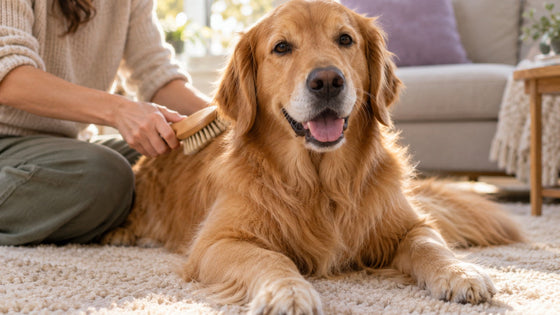
Medium, double coats (Golden Retrievers, Labs, Corgis)
Brush two to three times weekly, and daily during shedding season.
Choose a slicker brush, undercoat rake, or deshedding tool.
A neglected undercoat mats, and mats trap moisture and allergens against the skin.
Brush the undercoat thoroughly before the bath and again once the coat is fully dry.
Don't shave these dogs, because the double coat insulates against heat and UV.
-
Long, silky coats (Yorkies, Maltese, Afghan Hounds)
Use a pin brush and fine-tooth comb daily.
Long coats mat quickly, and mats trap moisture, debris and allergens against the skin.
Detangle from the ends upward, using a detangling spray if needed.
Never brush a dry matted coat.
Dampen it first.
Regular trimming around the paws, ears and sanitary areas cuts down contamination from outdoor surfaces.
-
Curly and wavy coats (Poodles, Doodles, Portuguese Water Dogs)
Use a slicker brush and wide-tooth comb every 1 to 2 days.
Curly coats don't shed the way other coats do.
Shed hair stays trapped in the curl and mats densely if you don't deal with it.
Professional grooming every 6 to 8 weeks is usually needed.
Daily brushing at home keeps mats from forming in between.
These coats also hold moisture close to the skin, so thorough drying matters even more.
-
Wire and harsh coats (Terriers, Schnauzers)
Use a slicker brush and stripping comb (for show dogs), or clippers, weekly.
Working and show dogs keep their wire texture through hand stripping.
For pet dogs, clipping is usually more practical.
These coats are somewhat water resistant, which makes thorough bathing harder.
Use a diluted shampoo and work it all the way through the coat.
Ears often get missed
Ear trouble and whole-body itch often go together in allergy-prone dogs.
Dogs with environmental or food sensitivities may have recurring ear infections.
The inflammation affecting skin can also affect the ear canal. Check the ears weekly.
Healthy ears are pink and odor-free, with only a little light-colored wax.
Trouble looks like redness, dark or heavy discharge, a yeasty or foul smell, head shaking and pawing at the ears.
Clean ears when they are dirty.
Over-cleaning can remove protective wax and irritate the ear canal.
Most dogs need cleaning every 2 to 4 weeks, and some after every swim.
Use an appropriate ear cleaning solution according to its directions.
Massage the ear base, then let your dog shake.
The solution brings debris up, so wipe the visible part of the canal with a cotton ball.
Never put cotton swabs into the canal.
After bathing or swimming, blot moisture from the outer ear opening with a soft cloth.
Ask your vet about a drying solution for recurring infections.
If ear problems keep coming back alongside whole-body itch, read Dog Ear Infections and the Gut Connection.
Recurring infections in allergy-prone dogs often share an underlying driver.
Paws take the first hit
Every walk leaves pollen, mold spores, grass particles and chemical residues on the pads and between the toes.
For an itchy dog, paw care is one of the most useful habits you can build.
After-walk routine
- Rinse or wipe the paws after every outdoor trip in high-pollen seasons.A shallow bowl of lukewarm water for a quick foot soak, or a damp cloth, removes most surface allergens.
- Dry between the toes completely.Moisture there creates the warm, damp spot where yeast thrives.
- Check the paws regularly for redness, swelling or interdigital cysts.These are common in allergic dogs and need veterinary attention.
Nails and fur
- Keep the nails trimmed.Overgrown nails change gait and cause pressure-point irritation.
- Trim the fur between the paw pads.Extra fur collects debris and holds moisture.A short trim with blunt-tip scissors or a small clipper reduces allergen buildup.
When it's time to call the vet
Grooming helps manage itch, but it isn't medical treatment.
- Hot spots: moist, red, fast-spreading skin lesions that often appear overnight.
- Chewing or scratching to the point of hair loss, bleeding or open sores.
- Thickened or darkened skin, a sign of chronic inflammation called lichenification.
- Symmetrical hair loss, which may point to hormonal causes such as hypothyroidism or Cushing's disease.
- Recurring ear infections.More than two a year is a red flag for an underlying allergy.
- Itch that doesn't respond to environmental change, which suggests a food allergy or a diagnosed skin condition that needs prescription management.
- Sudden itch in a dog who was comfortable before.Rule out parasites, contact reactions or new food ingredients.
Repeated licking may point to an underlying problem.
Record when it happens, especially if hot spots recur.
Dry the coat fully after baths or swimming.
Keep fur trimmed around recurring problem spots, and record when licking worsens.
The pattern may point to fleas, allergies, sore ears or paws, or boredom.
Your vet can help identify the cause.
Moving to professional care is nothing to feel bad about.
Veterinary management can help many dogs with moderate to severe allergies live comfortably.
Grooming supports the main care plan.
Our seasonal and food sensitivity guide can help you discuss possible triggers with your vet.
What diet adds
Skin condition reflects both external care and internal factors.
Diet and digestive health can play a part. Grooming deals with the outside.
Nutrition supports what the skin is built on.
Omega-3 fatty acids
Omega-3 fatty acids, particularly EPA and DHA from marine sources, are among the most discussed nutrients for canine skin.
Results vary by dog.
It typically takes 8 to 12 weeks of steady intake to judge the effect.
The gut-skin link
Gut microbiome and skin health is an area of active veterinary interest.
A large share of the immune system is associated with the gut.
Researchers are studying how gut microbes may influence the skin barrier.
Researchers are studying probiotics and prebiotics in relation to skin health. Individual responses vary.
A nutrition checklist for itchy dogs
- Feed a complete and balanced diet suited to your dog's life stage.
- Consider marine-sourced omega-3s, with your vet's guidance on the dose.
- Limit unnecessary diet changes.Steady feeding lowers the chance of food-sensitivity reactions.
- Make sure your dog drinks enough water, since skin barrier function depends partly on hydration.
Where a supplement fits
A supplement is one option to discuss with your vet when diet and grooming aren't enough.
It doesn't replace a veterinary diagnosis or the bathing and drying steps in this guide.
Choose a clearly labeled supplement and compare it with your dog’s diet.
Tell your vet what you use.
Ask your vet if your dog has a health condition or takes medication.
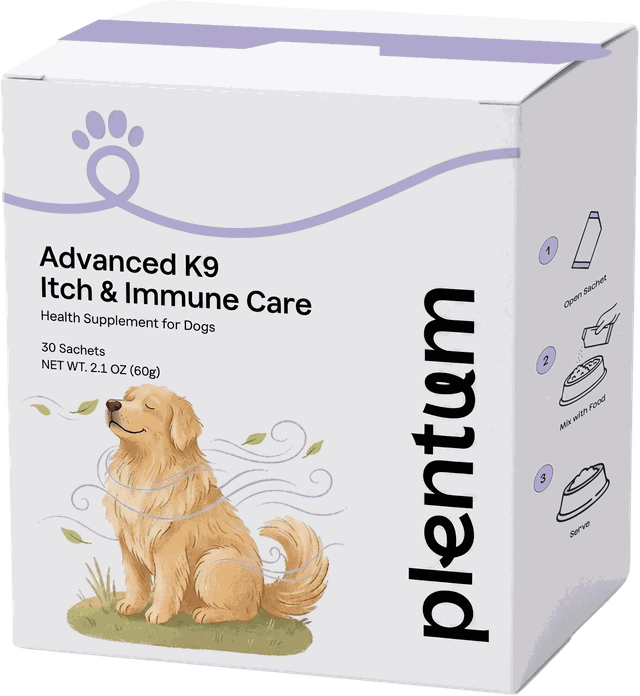
Advanced K9 Itch & Immune Care supports a normal immune response to seasonal triggers.
It also supports healthy skin and coat.
Follow the weight-based serving directions: 1 to 4 sachets daily.
This page on how Itch & Immune Care is built covers what each ingredient is there to do.
Primary veterinary reference
Read this guide alongside the WSAVA Global Nutrition Guidelines and the advice of the vet who looks after your dog.
Bathing, a supplement or a vet visit
Each one works on a different layer of the itch.
| Option | How it works | Best fit |
|---|---|---|
| Bathing and drying | Removes allergens and supports the skin barrier from outside | Every itchy dog, on a steady schedule |
| Daily supplement | Supports skin and coat from inside through diet and the gut | Seasonal itch alongside grooming |
| Vet visit | Diagnosis and prescription care for parasites, infection or allergy | Hot spots, sores, ear infections, or constant scratching |
What if my dog is afraid of the bath?
A dog can fear the slippery tub, the sound of the tap, or being lifted and held.
Start below the level that causes fear, and pair each manageable step with a reward.
The American Kennel Club recommends a gradual approach that starts with the leash.
- Put on the leash and walk your dog around the house, then reward.
- Bring your dog into the bathroom with only a collar, play, then leave.
- Reward voluntary approaches to a stable, nonslip tub surface.
- Introduce water sound at low intensity while your dog stays relaxed.
Move to the next step only when your dog stays relaxed at the current one.
This practice can happen between full baths, without wetting the coat.
If a bath is medically necessary, arrange a handling plan with the clinic.
Do not force a frightened dog through it.
Call your vet if your dog limps, shows pain when touched, or growls or snaps.
A certified dog trainer can help if your dog panics during practice.
Sources: AKC and VCA Animal Hospitals.
How do you give a medicated bath your vet prescribed?
Use the product your vet chose. VCA Animal Hospitals lays out this routine.
- Rinse the whole coat with lukewarm water.
- Work the medicated shampoo in, starting with the paws, armpits, and groin.
- Leave it on for 10 minutes, or the time your vet prescribes.
- Rinse every area until no shampoo is left on the skin.
- Apply any leave-in conditioner your vet prescribed.
- Towel dry, then keep your dog warm until completely dry.
VCA says medicated baths are often recommended weekly.
Your vet may recommend bathing more or less often, based on the skin.
Call your vet if you notice any of these.
- Itch that is severe or wakes your dog at night.
- Pus on the skin.
- Redness that spreads.
- Itch that returns after each bath.
Source: VCA Animal Hospitals, how to bathe dogs with medicated shampoo.
Frequently asked questions
What can I bathe my dog in to stop itching?
Choose a mild, fragrance-free shampoo made for dogs, with a gentle base such as colloidal oatmeal or ceramides.
Rinse well and dry completely.
A shampoo can make your dog more comfortable, but it can't treat parasites or infection, so have a vet check constant itching.
Why does my dog itch more after a bath?
Shampoo residue, incomplete drying, or a product that doesn't suit your dog's skin can all cause itching after a bath.
Rinse until the water runs clear, dry the ears, paws and folds fully, and try a gentler formula if the itch continues.
How often should an itchy dog be bathed?
It depends on the cause.
Dogs with pollen allergies may need weekly baths or rinses during flares, while dogs with dry skin often do better with fewer baths.
Watch the skin after each bath and adjust with your vet if needed.
Can a grooming routine replace a vet visit?
No, grooming keeps skin comfortable, but it doesn't diagnose or treat allergies, parasites or infection.
Hot spots, open sores, recurring ear infections and constant itching need a vet exam.
Can I bathe a puppy with itchy skin?
Yes, you can bathe a puppy with itchy skin using a mild shampoo made for puppies, short baths and thorough drying.
Before you start, note when the itch began, what the skin looks like, and whether it follows walks, seasons or meals.
Sources
- WSAVA Global Nutrition Guidelines
- Olivry T, et al. Treatment of canine atopic dermatitis: 2015 updated guidelines from the International Committee on Allergic Diseases of Animals. BMC Vet Res. 2015. PubMed 26276051
- Merck Veterinary Manual (pet owner edition): Itching (pruritus) in dogs. Merck Veterinary Manual