




Can Dogs Eat Bread?

|March 03, 2026
Plain baked bread may be tolerated in tiny amounts, but raw yeast dough and breads with raisins, xylitol, garlic, onion, chocolate, nutmeg, macadamia nuts, or high salt can be dangerous.
Boxer dog looking at a loaf of bread and raw dough on a kitchen counter


Quick Answer: A tiny amount of plain, fully baked bread is not usually toxic to dogs, but it offers little nutritional value. Raw bread dough is genuinely dangerous — it ferments in a dog's stomach, creating an emergency risk for bloating and alcohol intoxication. Many breads also contain ingredients that are toxic to dogs.

Sources for bread safety, dough, and toxic ingredients

This source snapshot separates a tiny bite of plain baked bread from the real hazards: raw yeast dough, raisin bread, xylitol, garlic/onion, chocolate, nutmeg, high salt, and large accidental binges.

Question Evidence-based takeaway Source
Can dogs eat plain baked bread? PetMD says most plain breads are not toxic in small amounts, but bread is not nutritionally valuable and some breads contain dangerous ingredients. PetMD: Can dogs eat bread?
Why is raw dough an emergency? Merck Veterinary Manual explains that yeast dough can expand in the stomach and produce ethanol, causing gastric distention and alcohol intoxication. Merck Veterinary Manual: Bread dough toxicosis
Which bread ingredients are red flags? AKC flags raisin bread, garlic bread, xylitol, and bread dough as hazards that should not be treated like ordinary bread. AKC: Can dogs eat bread?
What does poison control say about dough? ASPCA notes that raw bread dough can keep fermenting in the stomach, producing carbon dioxide and ethanol; suspected exposure should be handled quickly. ASPCA: Dangers of dough

Plentum interpretation: Bread is not a gut-health tool. Plentum can support daily digestive routine, but it does not make bread, raw dough, raisins, xylitol, garlic, onion, chocolate, nutmeg, macadamia nuts, or high-salt foods safer.

Boxer dog looking at a loaf of bread and raw dough on a kitchen counter

Is Bread Safe for Dogs?

Supporting visual for Can Dogs Eat Bread?

Plain, fully baked bread is not usually toxic to dogs in tiny amounts. If your dog swiped a corner of plain bread, it may not be an emergency, but the ingredient list and amount matter.

But "not toxic" and "good for your dog" are very different. Plain bread offers minimal nutritional benefit — it is largely refined carbohydrate and can add calories quickly without adding much protein, fiber, or micronutrient value. Dogs with diabetes, pancreatitis history, obesity, prescription diets, or sensitive stomachs need extra caution.

Bread Ingredients to Actively Avoid

Raisins — raisin bread is one of the most dangerous foods you can share with a dog. Raisins are toxic to dogs and raisin bread should never be shared. If a dog eats raisin bread, call a veterinarian or poison-control service rather than waiting for symptoms.

Xylitol — some commercial breads or baked goods may contain xylitol, also listed as birch sugar or wood sugar. Xylitol is dangerous for dogs and needs urgent veterinary advice. Check labels for xylitol, birch sugar, or wood sugar.

Garlic bread — garlic and onion are toxic to dogs in all forms. Any bread with garlic, onion, chives, or similar seasoning should be kept away from dogs.

Macadamia nuts — toxic to dogs. Any nut-containing bread should be approached with caution.

High salt content — some artisan breads and pretzels contain very high sodium. High-salt bread or pretzels can be a poor fit, especially for small dogs or dogs with heart, kidney, or blood-pressure concerns.

Raw Bread Dough: A Genuine Emergency

Supporting visual for Can Dogs Eat Bread?
If your dog eats raw bread dough, contact your vet immediately.

When a dog eats raw yeast bread dough, two dangerous things happen: the yeast continues fermenting in the warm, moist stomach, causing the dough to expand (potentially causing dangerous gastric distention), and the fermentation produces ethanol — alcohol — which the dog absorbs directly into the bloodstream, causing alcohol poisoning.

Possible warning signs include a bloated abdomen, unproductive retching, disorientation, weakness, poor coordination, collapse, or signs that resemble alcohol exposure. Contact your veterinarian or a poison-control service immediately for raw yeast dough ingestion.

How Much Plain Bread Can Dogs Eat?

If sharing plain bread (no dangerous ingredients confirmed), keep amounts very small. A fingertip-sized piece for small dogs; a small cube for medium dogs; a small slice for large dogs. Bread should not be a regular treat. If you use it to hide medication, use the smallest practical amount and ask your veterinarian whether that food is appropriate for the medication.

Better Alternatives

Plain cooked sweet potato, apple slices without seeds, carrot pieces, or small pieces of plain cooked chicken breast are often better snack options for many dogs. For hiding pills, commercial pill pockets formulated for dogs may be easier to use consistently; still follow your veterinarian's medication instructions.

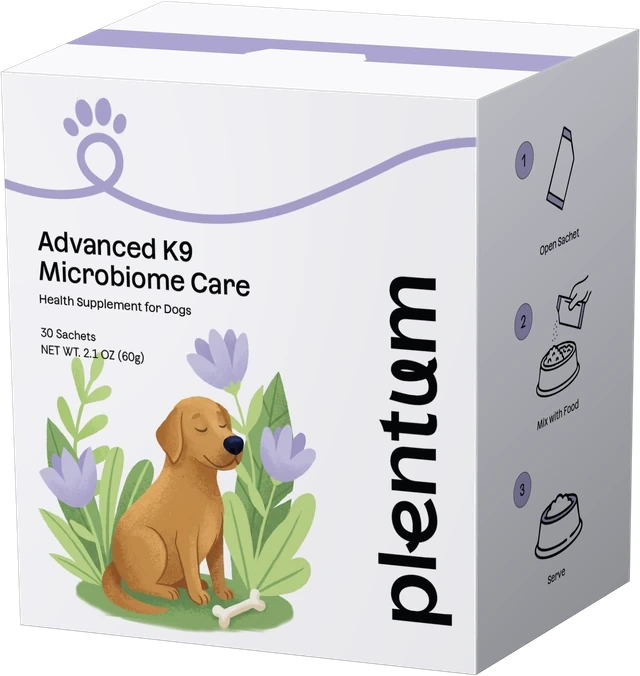
If your dog already uses Plentum's Advanced K9 Microbiome Care, keep that routine steady and keep bread treats rare. A supplement routine does not make risky bread ingredients safer.

Frequently Asked Questions

Can dogs eat white bread?

Plain white bread in very small amounts is not toxic, but offers minimal nutritional value and is high in refined carbohydrates. An occasional tiny piece is unlikely to be a problem for many dogs. Never give bread with raisins, xylitol, garlic, or seeds.

Is bread dough dangerous for dogs?

Yes — raw bread dough is significantly more dangerous than baked bread. Yeast continues to ferment in a dog's warm stomach, expanding the dough and producing ethanol (alcohol). This can cause bloat, GI obstruction, and alcohol poisoning. This is a veterinary emergency.

Can dogs eat whole grain bread?

Plain whole grain bread without added ingredients may be tolerated in small amounts and may contain more fiber than white bread. However, many multigrain breads contain seeds, sweeteners, or other additives. Always check the full ingredient list.

My dog ate half a loaf of bread. What should I do?

A large amount of bread can cause stomach upset, discomfort, or bloating. Watch closely and call your veterinarian if symptoms appear or if ingredients are uncertain. If the bread contained any concerning ingredients (raisins, xylitol, garlic), contact your vet immediately.

What bread ingredients are toxic to dogs?

Raisins, xylitol, garlic, onion, chocolate, nutmeg, macadamia nuts, and high salt levels are all red flags. Always verify all ingredients before sharing any bread product with your dog.

This article is for educational purposes only. If your dog has eaten raw bread dough or bread containing toxic ingredients, contact your veterinarian immediately.

Support your dog's daily digestive routine with Advanced K9 Microbiome Care — use according to the current label and keep risky human foods out of reach.

Ready to support your dog's digestive wellness?

Plentum Advanced K9 Microbiome Care is a veterinarian-formulated daily postbiotic + prebiotic sachet — combines oral-health postbiotic complex, prebiotic inulin, colostrum, and omega-3. Simply add one sachet to your dog's food.

Try Plentum Advanced K9 Microbiome Care →

Share this with your vet at your next visit — they'll appreciate you came prepared.

Share this with your vet at your next visit — they'll appreciate you came prepared.

Save this for the next time you're standing in the supplement aisle confused.

Save this for the next time you're standing in the supplement aisle confused.

Save this for the next time you're standing in the supplement aisle confused.

Tag someone whose dog could use this.

Tag someone whose dog could use this.

For brand-by-brand context, use the dog probiotic comparison chart.

For the broader digestive-support overview, compare this with the best probiotic for dogs guide.

For food and routine context, see gut-healthy foods for dogs.

These statements have not been evaluated by the Food and Drug Administration. This product is not intended to diagnose, treat, cure, or prevent any disease.

Regulatory Notice These statements have not been evaluated by the Food and Drug Administration. This product is not intended to diagnose, treat, cure, or prevent any disease.

Leave a comment

Please note, comments need to be approved before they are published.

Read Plentum in Google more often

If Plentum is one of the dog wellness sources you trust, you can add us as a Google Preferred Source. Google may then highlight Plentum in your own Search, AI Overviews, and AI Mode results when our content is relevant.

Add Plentum as a preferred source

More on Guidance

Plentum dog wellness image Plentum dog wellness image

One Sachet,

Endless Health Benefits

shop now