





Pediococcus acidilactici is one of the lactic acid bacteria, which produce lactic acid in fermented foods and in the gut.
Some dog research has tested it as a live probiotic.
A postbiotic is a different form, made of inanimate microorganisms or their parts.
Dog studies so far have looked at stool, gut microbes, and oral health.
What is Pediococcus acidilactici?
Pediococcus acidilactici is a bacterium in the lactic acid group.
It is one of many microbes that live in fermented foods and in the gut.
The name identifies the genus and species.
A full label should also identify the strain, because studies test specific strains.
What does postbiotic mean?
ISAPP describes postbiotics as preparations of inanimate microorganisms or their components.
A demonstrated health benefit is part of the definition.
The key difference from a probiotic is that a postbiotic does not need to be alive to be used.
That makes the term useful for labels, but it also means each product needs its own evidence.
What has dog research looked at?
The dog studies below tested live cultures rather than postbiotic preparations.
The table below summarizes what the studies measured.
| Study focus | What was tested | What it does not show |
|---|---|---|
| Gut microbes in adult beagles | Live P. acidilactici GLP06 supplementation | Results for other strains |
| Periodontal health in dogs | A live combination with another strain | Results for one strain alone |
These studies measured stool scores, gut bacteria, and oral plaque.
Each study tested a particular strain and form.
Compare these details on the label before applying a study to a product.
When should you call the vet?
- Blood in the stool or black, tarry stool
- Diarrhea that lasts beyond 24 to 48 hours
- Vomiting or repeated retching
- Sudden weight loss or a drop in appetite
Weight changes in a dog need a medical check first, since many causes sit outside diet and supplements.
How does Plentum fit?
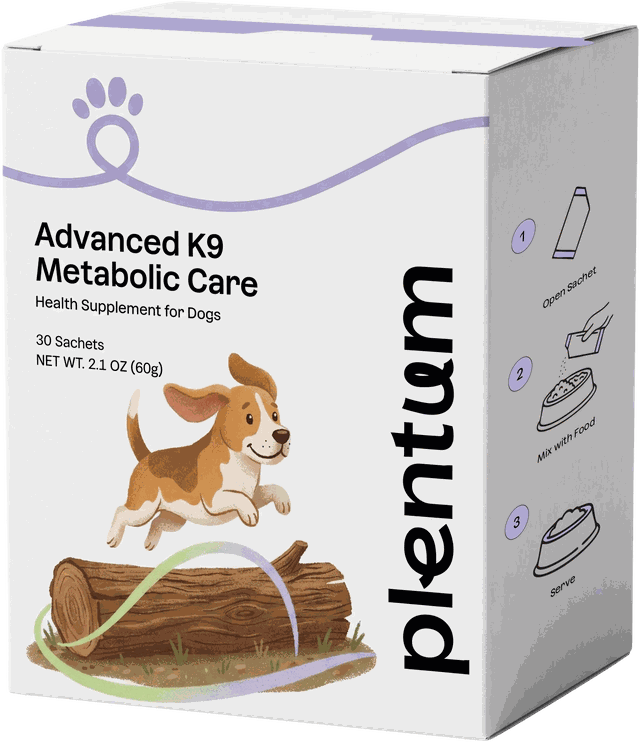
Plentum Advanced K9 Metabolic Care supports healthy weight management.
Use it alongside measured portions and daily exercise.
Its postbiotic is Pediococcus acidilactici.
It also contains chitosan, which comes from shellfish, so skip it for dogs with a shellfish allergy.
For the broader picture, read prebiotics, probiotics, and postbiotics for dogs.
You can also browse the dog probiotics and supplements guide.
Sources
- Zhao M, et al. Impact of Pediococcus acidilactici GLP06 supplementation on gut microbes and metabolites in adult beagles. Front Microbiol, 2024
- Hu W, et al. Dual probiotic intervention with Lactiplantibacillus plantarum Kmiate-6 and Pediococcus acidilactici Kmiate-15 improves periodontal health and oral microbiota balance in dogs. Anim Microbiome, 2026
- Salminen S, et al. The ISAPP consensus statement on the definition and scope of postbiotics. Nat Rev Gastroenterol Hepatol, 2021
Frequently asked questions
Is Pediococcus acidilactici a probiotic or a postbiotic?
It names a bacterial species.
A probiotic is a live preparation with a demonstrated benefit.
An inactivated preparation needs separate evidence to qualify as a postbiotic.
What have dog studies measured?
The dog studies listed here looked at stool, gut bacteria, and oral health.
Each tested a specific strain and form.
Can I give this with other supplements?
Check the full label and tell your vet about every product your dog takes.
Your vet can confirm whether the combination makes sense for your dog.
Photo credit
Photo: Mike Burke studio57mm.
CC0. Cropped to 16:9. Illustrative photograph.