








Quick answer: 7 quiet signs of anxiety in dogs are easy to miss. They include whale eye, shaking off, a tucked tail and a dog that freezes instead of moving. Watch for changes in posture, behavior and recovery time, not only pacing or panting. If signs are sudden, strong or lasting, see your vet first to rule out medical causes, including pain and cognitive decline.
Key takeaways
- Anxiety in dogs is common and often subtle. It almost always has a cause worth investigating.
- Physical signs include lip licking, yawning, whale eye, shaking off and a tucked posture, not only panting and pacing.
- Behavioral signs include chewing near exits, vocalizing when alone, house-soiling and excessive clinginess.
- Senior dogs can develop canine cognitive dysfunction syndrome (CCDS), which can mimic anxiety but needs a different approach.
- Rule out medical causes with your vet first, and never give your dog human medications without veterinary guidance.

Why Anxiety Shows Up in the First Place
That is the gut-brain axis in real life. The gut and the brain are in constant conversation, and when one is off, the other tends to notice.
If your dog is also showing physical changes, such as unexplained weight loss or gain, check their Dog Body Condition Score: How to Check at Home. It is a smart first step.
Genetics, early socialization, past trauma and learned associations all play a role. The gut connection surprises most people, though, and it is worth knowing about.
Age is another big factor. Senior dogs can develop canine cognitive dysfunction syndrome (CCDS), which can mimic anxiety in many ways. Disorientation, altered sleep cycles and new house-soiling can all look like anxiety when the real cause is cognitive decline. That is one reason a vet check matters.
The Physical Signs Most Owners Miss
The most obvious anxiety signs are pacing, panting and hiding, and most people catch those. The quieter ones are easy to overlook. Watch for these:
- Whale eye. You can see the whites of the eyes because the dog has turned the head away from you.
- Shaking off after a non-stressful event, such as a vet placing a stethoscope on them.
- Lip licking and yawning at moments when the dog is not tired or hungry.
Body posture matters too. A tucked tail, lowered head, pinned-back ears and a hunched body are textbook fear responses.
Here is the nuance. Some anxious dogs freeze. They do not move, do not blink and do not react. A frozen dog can look calm from across the room, so check the rest of the body and the situation.
Behavioral Signs That Show Up in Daily Life
Beyond shaking and hiding, anxiety changes how a dog interacts with the world.
- Destructive behavior. Chewed doors, scratched windowsills and shredded couches, usually near exits. Dogs are not being bad. They are trying to get to you or out of a panic.
- Vocalizing beyond normal alerting: barking, whining or howling that starts the moment you leave and stops when you return.
- House-soiling in a previously house-trained dog, especially alongside other signs.
- Escape attempts that lead to injury, such as broken nails, cut gums or broken teeth.
These are not bad dog moments. They are crisis moments.
Some dogs go the other way. They become very clingy, pant and pace the moment you stand up, shadow you from room to room and cannot settle. This is often called velcro dog behavior. Owners often find it endearing, until they realize the dog cannot relax without them.
Situational Anxiety vs. Generalized Anxiety
Not all anxiety looks the same.
Some dogs are anxious in specific situations, such as thunderstorms, fireworks, vet visits, car rides, strangers and certain types of people, like those in hats, with beards or carrying umbrellas. These situational or phobic responses are usually easier to address, because you can identify the trigger.
Generalized anxiety is tougher. These dogs seem wound tight most of the time. They startle easily, stay on alert, sleep poorly and are thrown off by small changes in routine.
Generalized anxiety often has a genetic component and ties to early socialization windows. It is also the type most connected to the gut-brain axis. The saying "trust your gut" exists for a reason, and it applies to dogs too.
Gut support is one part of the picture. Some owners look into Potential Postbiotic Benefits for Dogs: What Evidence Shows while they plan. Postbiotics are compounds produced by beneficial gut bacteria, and the evidence in dogs is still early. A growing number of veterinarians are looking at them as one piece of a broader plan.
Fermented foods are another gut-supporting option. Fermented Foods for Dogs: Kefir, Bone Broth, and the Gut Microbiome covers the basics.
Just remember: food is one tool, not the whole toolbox.
Where supplements fit
Calming supplements can be one layer of a plan. They work best alongside trigger management, a secure resting space and a vet check. They are not a first step for severe or sudden signs.
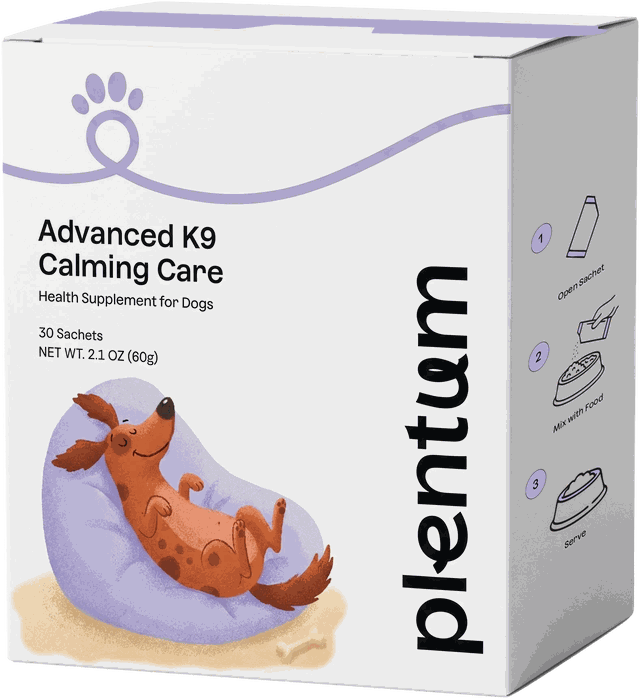
Advanced K9 Calming Care supports a calm, relaxed demeanor during occasional stress. Use it as one part of the plan, and talk to your vet before you start.
Supplement, not a medicine. Ask your vet if your dog has a health condition or takes medication. Check with your vet first if your dog takes an MAOI, SSRI, trazodone or other medication.
For a wider comparison, see our guide to calming supplements for dogs.
When to Worry (and When to Call the Vet)
Any sudden behavior change in an adult dog deserves a vet visit. Behavior changes can have medical causes, including metabolic disease. A review of behavior changes linked to metabolic disease describes this link, so ask your vet to rule out thyroid, adrenal or pancreatic problems.
Do not reach for human medications on your own.
If your vet has ruled out medical issues and the anxiety persists, ask about a referral to a veterinary behaviorist. These are board-certified specialists who look at the whole picture: behavior, environment, physiology and sometimes the gut microbiome. Guidance on diagnosing and monitoring CCDS, from the Canine Cognitive Dysfunction Syndrome Working Group, is also useful when an older dog changes.
Anxiety signs are changes in behavior, posture, and recovery
Watch for panting without heat or exercise, pacing, trembling, hiding, scanning, freezing, clinginess, vocalizing, escape attempts, destructive behavior, altered appetite, loose stool or an inability to settle. Context, intensity, duration and recovery time matter more than one isolated behavior.
Use a dated log and video when it is safe. A log helps you identify triggers and tell apart fear, separation distress, pain, cognitive change, sensory loss, medication effects and other medical causes. Sudden or late-onset behavior change warrants a veterinary check.
Build a safety plan before testing calming products
Reduce exposure to triggers when you can. Provide a secure resting area. Use gradual behavior work, and discuss severe or escalating signs with a veterinarian or a qualified behavior professional.
Do the groundwork before you try any calming product. Write down the signs, the triggers and what seems to help. That record makes it easier to tell whether a change is real, and it gives your vet a clear picture.
Frequently asked questions
What are the quiet signs of anxiety in dogs?
Look at posture, behavior and recovery time, not only pacing or panting. Whale eye, shaking off, lip licking, a tucked tail and freezing are common quiet signs. Context, intensity and duration matter more than any one behavior.
Is whale eye always a sign of anxiety?
Not always, but it is a common fear signal, especially with a tucked tail, pinned ears or freezing. Look at the whole body and the situation. If it appears suddenly, check with your vet.
Can calming supplements replace behavior work?
No. Calming supplements can be one layer of a plan, but they do not replace trigger management, a secure resting space or gradual behavior work. Ask your vet before starting any product, especially if your dog takes medication.
When should I ask about a behaviorist?
If your vet has ruled out medical issues and the anxiety persists, ask for a referral to a veterinary behaviorist. These specialists look at behavior, environment, physiology and sometimes the gut microbiome.
Sources
- The Canine Cognitive Dysfunction Syndrome Working Group guidelines for diagnosis and monitoring of canine cognitive dysfunction syndrome — Journal of the American Veterinary Medical Association (2026)
- SARS-CoV-2 in Namibian Dogs — Vaccines (2022)
- Behavior Changes Associated with Metabolic Disease of Dogs and Cats — Veterinary Clinics of North America: Small Animal Practice (2024)
- Separation anxiety in dogs — Compendium (Yardley, PA) (2008)
Supplement, not a medicine. Ask your vet if your dog has a health condition or takes medication. These statements have not been evaluated by the Food and Drug Administration. This product is not intended to diagnose, treat, cure, or prevent any disease.
Compare the formulas
Five formulas, each built for one job
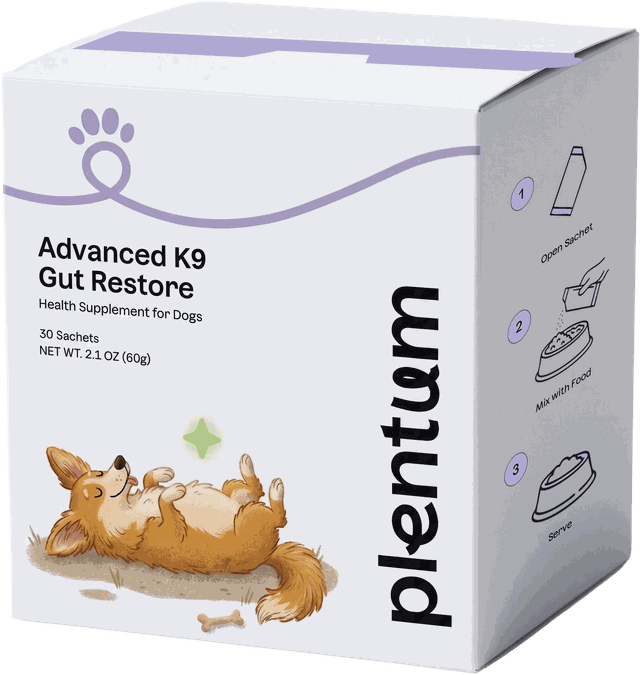
- Gut Restore Supports normal bowel function and healthy stool consistency, and helps maintain a balanced gut. From $1.50/day
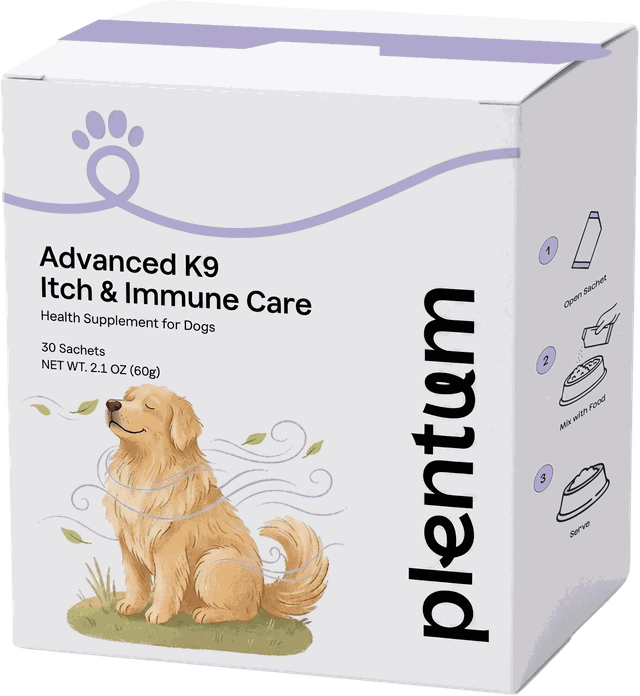
- Itch & Immune Care Supports a normal immune response to environmental and seasonal triggers, and helps maintain a healthy coat. From $1.50/day
- Calming CareFits this guide Supports a calm, relaxed demeanor during occasional situational stress such as storms, travel or vet visits. From $1.50/day
- Metabolic Care Supports proper weight management alongside portion control and exercise. From $1.50/day
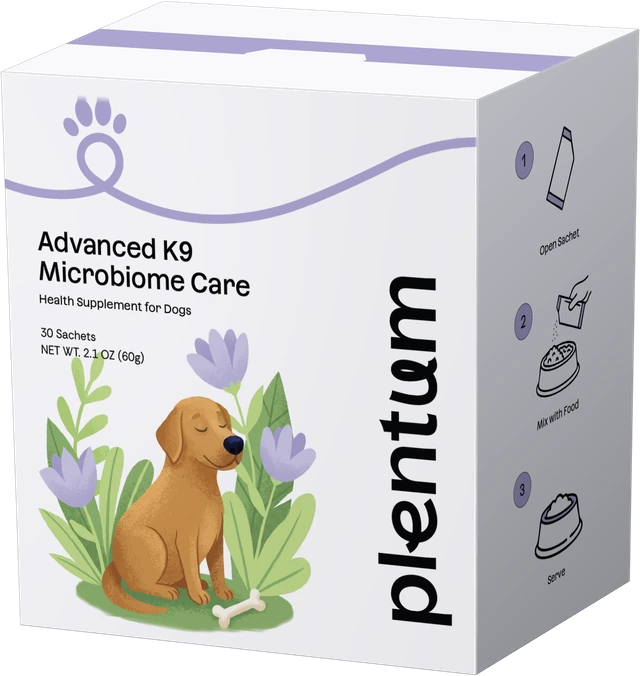
- Microbiome Care A daily powder with a postbiotic and prebiotic foundation, plus colostrum and omega-3, to support gut, oral, skin and coat health. From $1.17/day


