








Quick answer: Is kefir good for a dog's gut, and can dogs drink kefir? Kefir is a fermented milk drink with live bacteria and yeasts, so it may suit dogs who tolerate dairy. Pumpkin is mostly water and fiber with no live cultures, so it works in a different way. Some dogs cannot handle dairy at all, so start with a small amount and ask your vet first.
Key takeaways
- Pumpkin adds fiber and moisture, which can help firm loose stool and keep stool moving.
- Kefir is a fermented dairy drink with live cultures, so it works through microbes rather than fiber alone.
- Laboratory studies suggest some kefir-derived bacteria tolerate harsh conditions, but that does not prove the same result in every dog.
- Dairy can upset some dogs, so kefir is not a good fit for every dog.
- Postbiotics offer some of the benefits of fermentation without live bacteria or dairy.

What Pumpkin Actually Does in a Dog's Gut
Pumpkin is mostly water and fiber. It contains no live cultures and it does not rely on fermentation to help. Its main effect is physical, because soluble and insoluble fiber add bulk and moisture to the stool, which many owners describe as a gentle sweep through the intestines.
Plain cooked pumpkin is the version most owners use. Pie filling is different, because it usually contains sugar and spices, so it is not a good choice for a dog. Always check the ingredient list before you serve anything made from pumpkin.
- Soluble fiber absorbs water and can help firm loose stool.
- Insoluble fiber adds bulk, which can help the gut move things along.
- The high water content helps keep stool hydrated.
- Pumpkin is low in calories, so it can suit dogs who need to manage their weight.
Pumpkin also has an interesting place in the lab. A 2017 food science study published in Food Science and Biotechnology found that pumpkin puree can serve as a useful base for fermentation, which means it can feed beneficial bacteria in the right conditions (Koh et al., 2017, PMID 30263777). That is a lab finding about a fermented drink, not a direct test in dogs.
What Kefir Brings to the Table
Kefir is a fermented milk drink with live bacteria and yeasts, and it has been made and enjoyed by people for a long time. More recently, some dog owners have started adding small amounts to their pets' meals. Because the drink is made from milk, it is not suitable for dogs who react badly to dairy.
The bacteria in kefir vary from one batch to another, and a single drink can contain many different strains. That variety is one reason kefir is often described as a rich source of microbes, but it also makes the product harder to standardize.
A 2018 study in Food Science and Biotechnology isolated a specific Lactobacillus strain, Lactobacillus mali K8, from water kefir grains. In laboratory tests, the strain tolerated a pH of 2.5 and resisted bile salts, pepsin and pancreatin, which are the kinds of conditions the gut can present (Koh et al., 2018, PMID 30319846). A test tube is not a dog, so these results show potential rather than proof.
The same strain was reported to adapt well to pumpkin fruit puree in that work. That suggests pumpkin and kefir may be complementary rather than rival options. Even so, the combination has been tested in the lab, not in a controlled trial in dogs.
Head-to-Head: Pumpkin vs Kefir
Pumpkin suits: short-term digestive comfort, dogs who need more fiber, picky eaters who will not drink fermented foods, and owners who want a simple, low-cost option. Many owners notice a change in stool within a day or two, although results vary from dog to dog.
Kefir suits: longer-term support for gut microbe variety, and dogs who tolerate dairy without trouble. Some owners also ask about kefir during or after a course of antibiotics, but that question is one to discuss with your vet first. Effects tend to build over weeks rather than hours.
The catch with pumpkin: it is not enough on its own if your dog has a deeper imbalance in the gut. Pumpkin feeds bacteria, but if the right bacteria are not present yet, it may simply feed the wrong group.
Where Postbiotics Come In
This is the newer piece that many dog owners have not heard about. Probiotics, Prebiotics, and Postbiotics for Dogs: What Is the Difference? explains that postbiotics are compounds produced by bacteria during fermentation, such as short-chain fatty acids, peptides and enzymes. They do not require live bacteria to be present.
If you want to understand the science behind this more deeply, What Is a Postbiotic for Dogs? breaks it down in plain language. For context on where postbiotics fit into a wider diet plan, the guide to Gut Health Dog Food: A Practical Breakdown (2026) is worth reading too.
A postbiotic can offer some of the benefits of fermentation without live bacteria or dairy. That makes it an option for dogs who do not tolerate milk, although the choice should still be made with your vet.
Compare the formulas
Five formulas, each built for one job
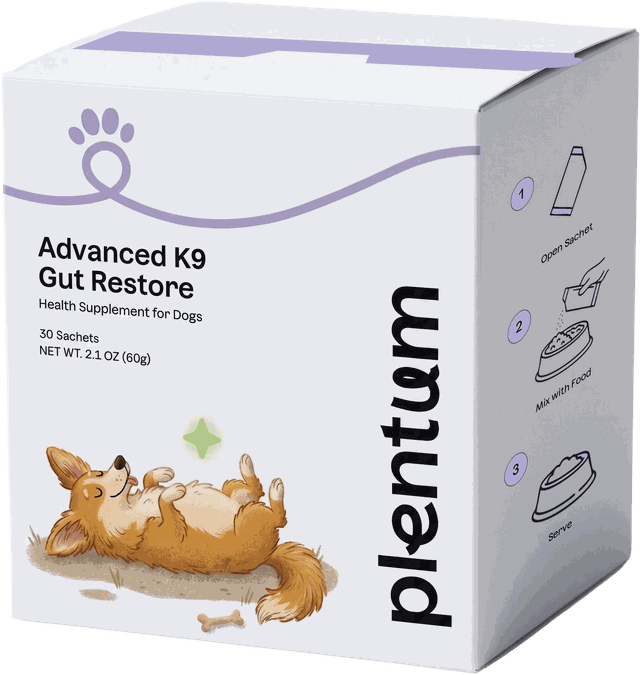
- Gut RestoreFits this guide Supports normal bowel function and healthy stool consistency, and helps maintain a balanced gut. From $1.50/day
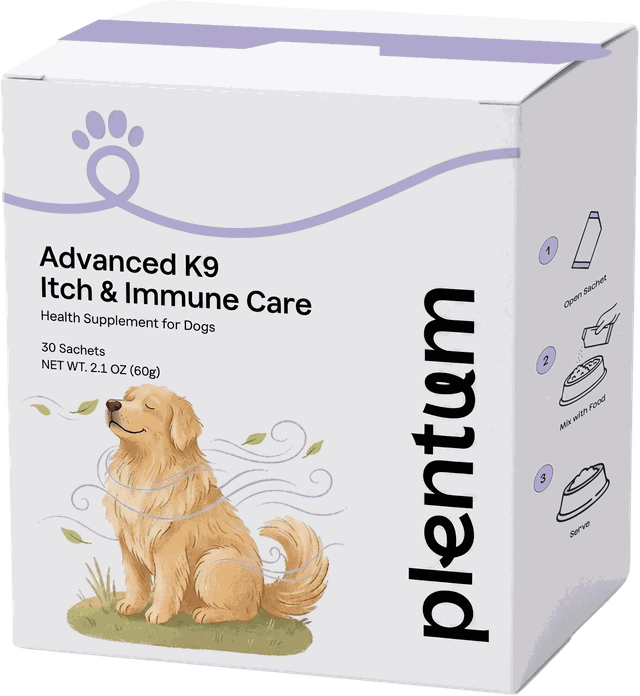
- Itch & Immune Care Supports a normal immune response to environmental and seasonal triggers, and helps maintain a healthy coat. From $1.50/day
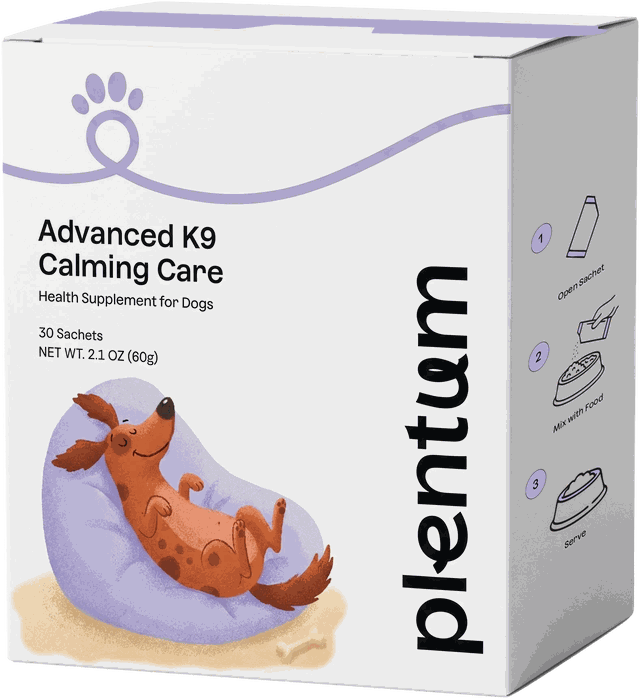
- Calming Care Supports a calm, relaxed demeanor during occasional situational stress such as storms, travel or vet visits. From $1.50/day
- Metabolic Care Supports proper weight management alongside portion control and exercise. From $1.50/day
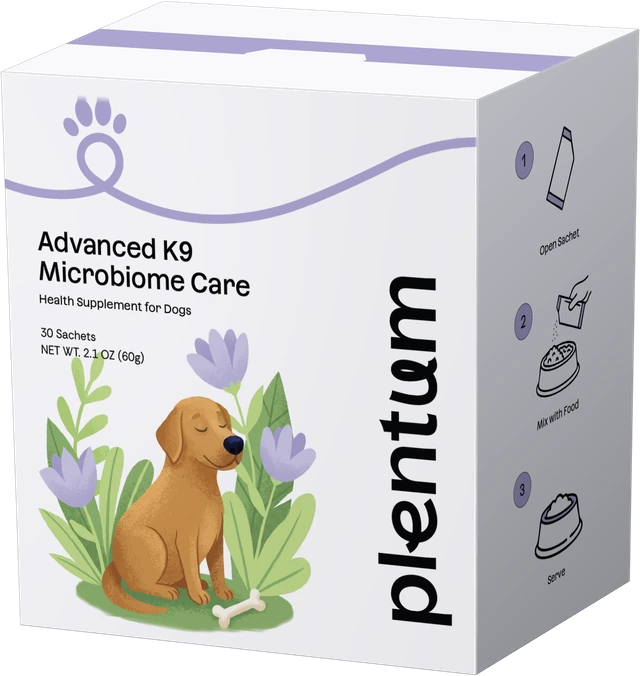
- Microbiome Care A daily powder with a postbiotic and prebiotic foundation, plus colostrum and omega-3, to support gut, oral, skin and coat health. From $1.17/day
Where supplements fit
Pumpkin, kefir and postbiotics are all tools, and none of them replaces the basics. Regular meals, fresh water, steady exercise and a careful approach to changes in diet do most of the everyday work. If you are thinking about a supplement, bring the label to your vet and ask how it fits your dog's age, diet and health history.
Supplement, not a medicine. Ask your vet if your dog has a health condition or takes medication.
Breed-Specific Considerations
Senior dogs present another wrinkle. Older dogs often have slower metabolisms, less microbial variety and weight management challenges. Plain pumpkin is a low-calorie filler that can help with feeling full, which is useful if you are managing an overweight senior. Kefir adds protein and calcium but can also be calorie dense, so the portion matters.
Choosing between them depends on whether your older dog needs bulk or nutrition. The guide to Senior Dog Weight Management: Keeping Older Dogs Lean and Comfortable explains how fiber fits into keeping older dogs lean without leaving them hungry.
Some breeds need a different strategy. Bulldogs and other short-nosed, brachycephalic breeds can have their own digestive and breathing considerations, so the plan for these dogs is best built with a vet who knows the breed.
Wrapping It Up
Pumpkin and kefir are not really competitors. They are different tools. Pumpkin is mechanical support through fiber and moisture. Kefir is microbial support through live cultures. Both have a place, and both have limits that are worth understanding before you start.
The most important thing is to pay attention to your individual dog. Stool consistency, energy, coat quality and itchiness all show you what is working. There is no universal winner here, just the right combination for the dog in front of you.
Introduce one change at a time, keep a short daily note, and stop if the stool worsens, if vomiting appears or if your dog seems unwell. A short conversation with your vet can save a lot of guesswork.
Frequently asked questions
Is kefir good for dogs' gut?
Kefir can suit some dogs because it contains live bacteria and yeasts. It is a dairy product, though, and some dogs react badly to milk. Start with a small amount, watch the stool closely, and ask your vet before making it a regular part of the diet.
Can dogs drink kefir?
Many dogs can have a small amount of plain kefir, provided they tolerate dairy. Avoid flavored or sweetened versions, and never give kefir to a dog with a known milk intolerance. If you are unsure, your vet can help you decide whether it is a good fit.
Is pumpkin a probiotic for dogs?
No. Pumpkin is fiber and water with no live cultures, so it is not a probiotic. It can help with the texture of stool because of its fiber, but it does not add live bacteria to the gut. Plain cooked pumpkin is the version to choose.
Sources
- Koh et al., 2017: fermented pumpkin-based beverage with water kefir grains (laboratory study)
- Koh et al., 2018: probiotic potential of a Lactobacillus strain from water kefir grains (laboratory study)
- Loranskaia et al., 1986: food substances and gastric motor function after stomach surgery in people (not dog-specific)


