





Your dog stayed trim for ten years without much effort. Now, on the same food and the same walks, they're starting to round out. Or maybe it's the reverse, and you can't keep weight on them. Either way, start with steady portions, gentle daily movement, regular hands-on body checks and a vet who looks at the whole picture before you change the bowl.
Older dogs have a slower metabolism, less muscle, achy joints and a gut that works differently than it did at age three. See why weight matters more with age and what you can do at home.
- Weight matters more in senior dogs, because aging joints carry every extra pound directly.
- Muscle is a priority. Lean muscle supports metabolism, mobility and recovery from illness.
- Check body condition by hand, because muscle loss can hide weight changes on the scale.
Why weight matters more as dogs age
Older joints already have natural cartilage wear, so every extra pound lands on them. A dog who's slightly overweight at ten can lose mobility much faster than the same dog at four. Extra weight is also linked to lower heart and lung efficiency, less energy, more trouble with heat and slower recovery from illness or injury.
Being underweight has real risks too. Older dogs with too little muscle get hurt more easily, have less reserve during illness and often feel cold. You're not chasing a number on the scale. You want a body that moves well and has energy.
Most owners notice the change in behavior first. A dog who used to bound up the stairs pauses halfway, or skips the long walk that used to be routine. Compare how your dog moves now with a year or two ago. 10 Senior Dog Changes: Normal Variation vs Warning Signs sorts normal changes from the ones worth raising with your vet.
What a healthy weight looks like in a senior dog
Vets usually score body condition on a 9-point Body Condition Score (BCS) scale, where 4 or 5 is generally ideal. You can check at home with just your hands and eyes. At a healthy weight, you should be able to:
- Feel the ribs easily without pressing hard, without seeing them stand out.
- See a visible waist when you look down at your dog from above.
- See a slight tummy tuck from the side.
- Notice good muscle over the hips and shoulders.
Muscle loss can hide weight changes. A dog can lose muscle and gain fat while the scale stays put, which is why your hands tell you more than the scale does.

Why older dogs gain weight more easily
Dogs need less energy as they age. Part of that is being less active, and part is a real change in how their bodies handle food. Metabolic rate can drop a lot compared with young adults, so the calories that kept your dog trim at five can cause slow gain by nine or ten, and the small daily extras add up.

Hormones play a part too. Shifts in thyroid function, cortisol and insulin sensitivity can change how a senior dog handles calories and stores fat.
Digestion in senior dogs
An aging gut may absorb some nutrients less well, while absorbing others, including certain fats, at the same rate or higher. The gut microbiome also shifts with age, and changes in bacterial diversity can affect digestion, stool quality and even appetite signals.
Muscle is the priority people miss
Dogs naturally lose muscle as they age, a process called sarcopenia. Owners often miss it because the dog looks the same from across the room. Up close, the hips and spine tell the story. The loss speeds up if a dog is less active, eats too little protein or has an underlying health issue.

Muscle burns energy even at rest, so the less a dog has, the slower their metabolism gets. It also protects the joints, since strong muscles around the hips, knees and spine absorb shock and take load off the cartilage.
Protein for senior dogs
For decades, the advice was to cut protein for senior dogs because older kidneys were thought to struggle with it. That thinking has shifted. Many vets now suggest that senior dogs without diagnosed kidney disease keep their protein up, or raise it a little, to protect muscle.
Highly digestible protein from good sources matters most, especially if digestion has slowed, though the right amount depends on your dog's health and weight goals. Bring the food label and your dog's recent weights to the appointment and ask whether the current food has enough.
Sore joints and the weight-pain cycle
Extra weight and joint pain feed each other in older dogs. Arthritis or hip trouble makes moving uncomfortable, so the dog moves less. Less movement burns fewer calories and works the muscles less, so weight goes up. The extra weight presses on sore joints and makes moving even harder.
Breaking the cycle means working on both ends: less weight means less load on the joints, and vet care for sore joints makes movement more comfortable. Even a modest change, enough to show in body condition, can ease the strain on arthritic joints. Small, steady progress is more realistic than a dramatic change, and kinder to your dog.
Why you shouldn't just cut food
It's tempting to shrink portions the minute a senior dog starts gaining. Without guidance, that can leave out nutrients older dogs need more of. Seniors often need higher levels of certain vitamins, minerals and protein even as their calorie needs go down. A sudden cut can also leave you with a hungry dog who begs more, guards the bowl or raids the trash.
A vet can help you:
- Check whether weight gain has a medical cause. Thyroid issues, Cushing's disease and some medications can all drive weight changes.
- Set calorie targets from your dog's ideal body weight, not their current weight.
- Judge whether the current food suits a senior dog.
- Set a safe pace for weight change with your vet.
- Watch for muscle loss during any weight plan.
For the general steps, read How to Fix Weight Management in Dogs: 7 Practical Steps alongside your vet's advice. Your vet matters even more if your dog takes medication, has a diagnosed condition or is carrying a lot of extra weight. Rapid weight loss has its own risks, including hepatic lipidosis in some dogs, so a supervised, gradual plan beats a quick fix.
Choosing a senior food
Senior formulas vary a lot. Some are lower-calorie versions of adult food, and others have more protein, joint-supportive nutrients and added fiber. The name on the bag won't tell you which you're buying, so look for:
- A named protein as the first ingredient.
- Calories that match your dog's activity level.
- Enough fiber for digestion and fullness.
- A full ingredient list with each item named.
Your vet, or a board-certified veterinary nutritionist, can tell you whether a food meets your senior dog's needs. Bring the actual bag or can.
Gentle activity for senior dogs
Jumping, hard running and rough play were fine at four and can be painful, even risky, for a dog with joint disease. Aim for steady, low-impact movement that keeps muscle, supports circulation and holds weight in check, and make it a daily habit.
- Shorter, more frequent walks: two or three 15-minute walks often beat one long outing that leaves the dog stiff and sore.
- Swimming or hydrotherapy: water gives muscles resistance with far less joint impact. Vets often recommend it for dogs with arthritis.
- Gentle play on soft surfaces: carpet or grass is easier on joints than pavement or hardwood.
- Mental enrichment: sniff walks, where your dog sets a slow pace and smells everything, plus puzzle feeders and calm games, keep the mind busy without strain.
- Controlled leash walking: even terrain, no sudden stops and starts, and a pace your dog is comfortable with.
Limping after a walk, not wanting to get up the next morning or unusual stiffness all mean it was too much. Scale back and mention it to your vet.
Gut support for senior dogs
The gut microbiome influences appetite, nutrient absorption and inflammation, and all of those tie back to body condition. As dogs age, gut bacterial diversity often declines. Supporting a healthy gut may help a senior dog absorb nutrients better, have fewer digestive ups and downs and keep steadier energy through the day.

- Consistent feeding schedule: set mealtimes keep digestion on rhythm and make appetite easier to read than free-feeding does.
- Dietary fiber: soluble fiber, from foods like pumpkin or certain kibbles, feeds beneficial gut bacteria and helps your dog feel full.
- Hydration: older dogs sometimes drink less than they should. Enough water supports digestion and kidney function.
- Gradual food transitions: older tummies are often more sensitive. Change food over 10-14 days to avoid upsets.
Researchers are looking at how the gut microbiome relates to weight in mammals, including dogs. The mechanisms are still being studied, so it's too early for strong claims. Food, portion control and movement stay at the core of the plan.
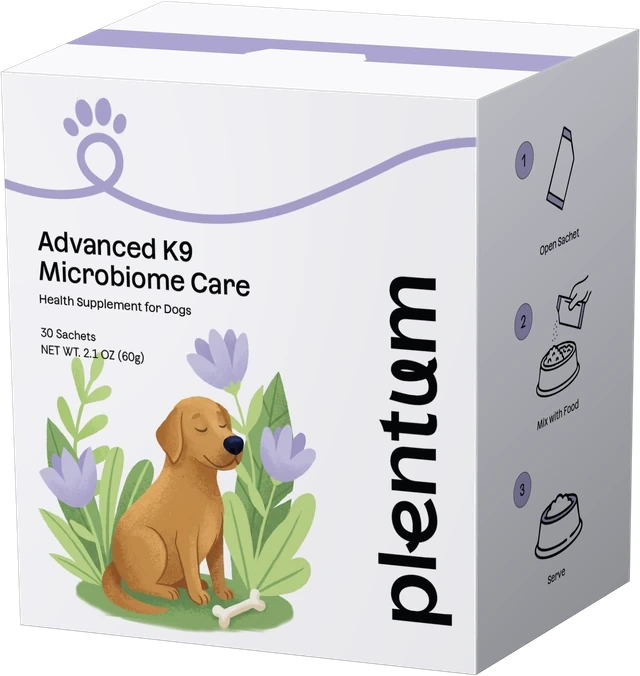
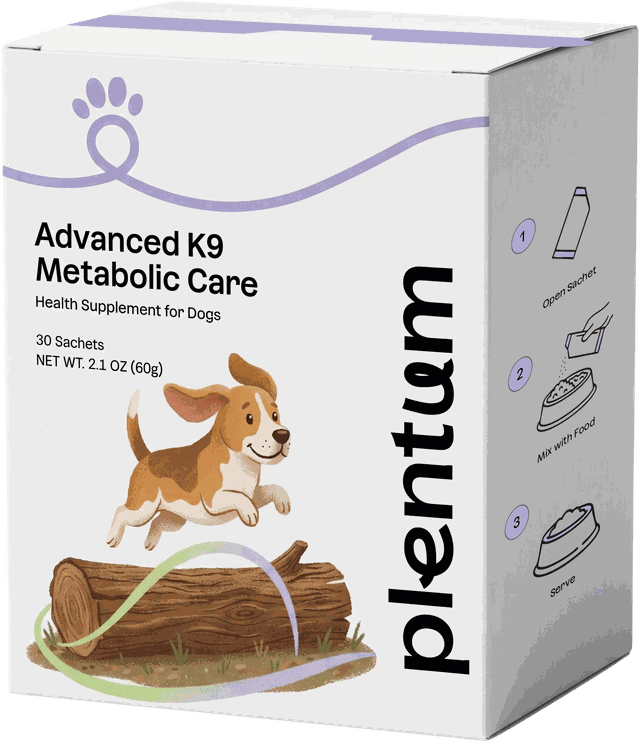
If your vet agrees a supplement fits your dog's routine, pick one made for senior dogs by a brand that is open about how it's made, and talk it over with your vet before you start. Metabolic Care is our weight-support sachet; check with your vet first if your senior dog takes medication.
Where supplements fit
Supplements never replace measured meals, regular movement, hands-on body checks, or a vet review. They can be an extra layer for owners who want one.
A supplement made for use alongside portion control is explained in Metabolic Care, ingredient by ingredient.
It contains chitosan (shellfish).
The studies on weight and metabolic ingredients are in our weight and metabolic research hub, sorted by ingredient. If you want our supplements for this need in one place, the healthy weight collection lists them.
A few habits worth keeping
Book a vet weight and body condition check at least twice a year, and ask about blood work to rule out metabolic or thyroid causes of gain. Count every treat in the daily calories, since most owners underestimate them. Check ribs, waist and tummy tuck by hand once a month between visits, and adjust the plan as your dog ages. What works at nine may need changes at thirteen.
Primary veterinary reference
Use this owner guide alongside the WSAVA Global Nutrition Guidelines and the advice of the veterinarian who manages your dog's care.
Can aging alone explain weight loss?
Possibly, but not without a check.
The AKC lists reduced muscle mass and reduced appetite as possible reasons, along with illness.
A vet should rule out illness before you assume age is the cause.
Which illnesses can cause weight loss?
VCA lists kidney, heart, liver, pancreatic, and gastrointestinal disorders as causes of weight loss.
It also names cancer, parasites, infectious disease, and Addison's disease.
Difficulty chewing and swallowing can reduce how much your dog eats, so the mouth matters as much as the gut.
Sources:
Use the dog calorie calculator to get a starting daily calorie range, then check your dog's shape on the 9-point body condition chart.
Frequently asked questions
What's the best way to keep a senior dog's weight stable?
Keep portions steady, move your dog gently every day, check body condition by hand and have your vet review food and health. Change things gradually so you can see what's working.
Why does weight matter more as dogs age?
Aging joints already have natural cartilage wear, so every extra pound adds load. Extra weight also strains the heart and lungs and slows recovery from illness.
Should I cut my senior dog's food to help them reach a healthy weight?
Don't cut food without guidance, because doing it on your own can leave out nutrients older dogs need and leave a hungry dog uncomfortable.
Can a senior dog gain weight from a medical condition?
Yes, thyroid issues, Cushing's disease and some medications can all drive weight changes.
Sources
What is different for senior dogs?
| Fact | What you do differently | Source |
|---|---|---|
| Maintenance energy needs generally decrease across a dog’s life | Reassess portions instead of repeating an old allowance | AAHA senior guidelines |
| Senior nutritional assessment includes body and muscle condition | Check muscle as well as the number on the scale | AAHA senior guidelines |
| Hypothyroidism can cause weight gain without increased appetite | Report lethargy and coat changes alongside the gain | Merck thyroid disorders |
When does the thyroid become part of the workup?
Hypothyroidism can cause low energy, cold-seeking behavior, coat changes, and weight gain without more appetite. Those signs can overlap with other conditions.
A low thyroid hormone result alone may not settle the diagnosis. Other illnesses and medicines can affect results, so interpretation belongs within the clinical assessment.