





Your older dog takes stairs more slowly, sleeps later, and has a duller coat.
You’re wondering which changes deserve attention.
Some of that is just aging.
Some of it is worth a closer look, and it helps to know which is which before you start buying things.
Discuss persistent changes before starting a supplement.
Medication makes an individual review especially useful.
Three rules for adding a supplement to a senior dog's routine
| Compare | What to check |
|---|---|
| Need | A persistent change or clear goal |
| Fit | Diet, medication, and health context |
| Evidence | The exact ingredient, amount, and purpose |
- Look for patterns that last weeks, not single bad days. Coat, stool, energy and weight changes are the most useful signs to track.
- Add one supplement at a time and give each one several weeks before judging it.
- Tell your vet about every supplement, especially before surgery or alongside any medication.
When is a dog considered senior?
Senior classifications vary by size.
Common guides use over 7 years for smaller dogs and over 5 for large or giant breeds.
Bigger dogs tend to age faster, so the birthday count can mislead you.
A 6-year-old Great Dane may be further along than a 6-year-old Beagle.
A lot shifts under the surface as dogs get older:
- Digestion slows down, so an older dog may absorb less from the same food he's eaten for years.
- The gut microbiome loses diversity, and the range of beneficial bacteria tends to narrow, which can make the gut less resilient.
- The immune system can become less adaptive and more prone to inflammation.
- Kidney, liver and pancreatic function slow gradually and benefit from closer dietary attention.
- Muscle mass drops, and the loss can speed up without enough protein.
None of it happens overnight.
Most owners only notice when they look back and realize their dog has been a little different for a while.

Which changes in your senior dog deserve attention?
These changes recur in older dogs.
Our senior aging signs guide explains them in more detail.
None proves a problem on its own, but a cluster over several weeks is worth a conversation with your vet.
1. A dull coat
The coat often shows what's going on inside.
A dry, brittle coat or increased shedding may prompt a nutrition review.
Absorption is one possible factor.
Coat quality depends on omega fatty acids, zinc, biotin, and protein.
A healthy gut helps absorb these nutrients.
When gut diversity declines with age, absorption can drop, and the coat can be the first place you see it.
2. Looser stools or frequent tummy trouble
Plenty of owners shrug this off as age.
Age-related gut changes can coincide with loose stool, gas, or digestive upset.
Record changes even when the diet stays steady.
If it's more than the odd episode, the gut may need active support.
Keep a dated stool-quality log to share with your vet.
3. Low energy that goes past slowing down
A dog who mellows with age is one thing.
A dog who seems flat or loses interest in his favorite things is another.
Joint pain, thyroid problems, and anemia are among possible causes.
Get an assessment before choosing a supplement.
Some veterinary research connects gut health with energy and mood in dogs, though that evidence is still early.
Poor absorption may reduce the nutrients your dog gets from an unchanged meal.
4. Weight that moves for no reason
Losing weight while eating normally, or gaining with no change in food or exercise, deserves a closer look.
Both can point to digestive changes or a metabolic issue, and your vet can sort out which.
Weight loss is the one to take seriously, because muscle lost in the senior years is hard to regain.
5. Stronger seasonal reactions
New or stronger reactions to familiar triggers deserve review.
Immune and gut changes may be relevant.
As the microbiome ages, it can get less precise at regulating immune responses, and familiar allergens can hit harder.
Gut support is one part of normal immune function.
Continue the allergy-care plan your vet recommends.
6. Slow bounce-back after illness or stress
Does your dog take longer to recover from a stomach bug, a stressful boarding stay or a round of antibiotics?
That can mean gut resilience has dropped.
A younger dog's gut may settle within days, while a senior's can take longer to rebalance.
7. Stiff joints and a sensitive stomach together
When a dog has both stiff joints and a touchy stomach, ask your vet to look at both.
Stiffness needs its own exam, because the cause needs a proper diagnosis.

What's usually not worth buying
The senior supplement aisle is loud.
Labels make big promises, and it's easy to end up with five bottles and no idea which one is doing anything.
A complete and balanced commercial diet usually already contains added vitamins.
A multivitamin needs a clear reason.
Extra vitamins add up, and more isn't always better.
Antioxidant blends, herbal supplements and many "senior supplements" have limited research behind them too.
Some may be fine, but they shouldn't crowd out the basics.
Spend your budget where the options are best understood: gut support and omega-3s for dogs who show relevant signs.
Put the rest toward a good vet check, dental care, and steady portions.

The options that come up most
Omega-3 fatty acids (fish oil)
EPA and DHA are discussed in veterinary nutrition for cognitive function and coat quality.
For a senior with a dull coat, fish oil is often one of the first things vets bring up.
Look for third-party purity testing. Fish oil can carry contaminants and go rancid, so quality varies a lot.
Store it cold and check the expiration date before each refill.
Digestive enzymes
Pancreatic enzyme production can decline with age, which can make it harder to break down fats, proteins and carbohydrates.
Enzyme supplements require an individual assessment.
Weight loss despite normal appetite needs a veterinary workup.
Gut support: prebiotics and postbiotics
The microbiome is a common focus in senior nutrition.
As its diversity and function decline, other systems can feel it, including immune regulation and nutrient absorption.
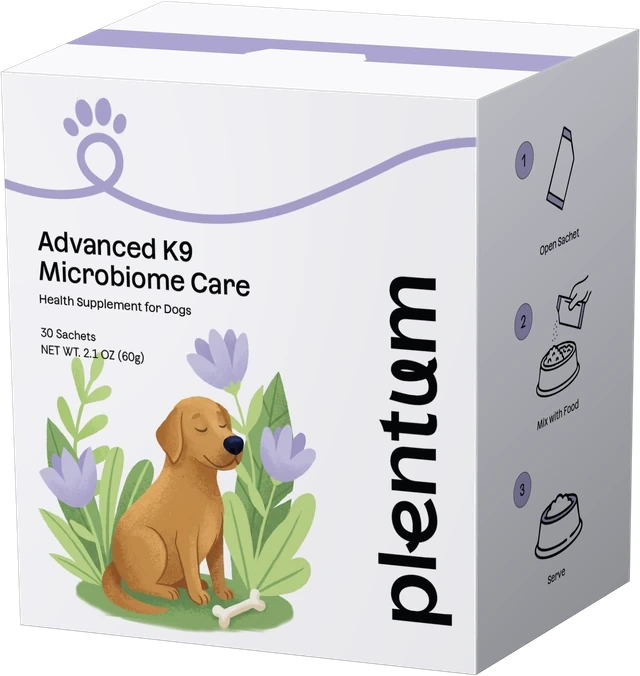
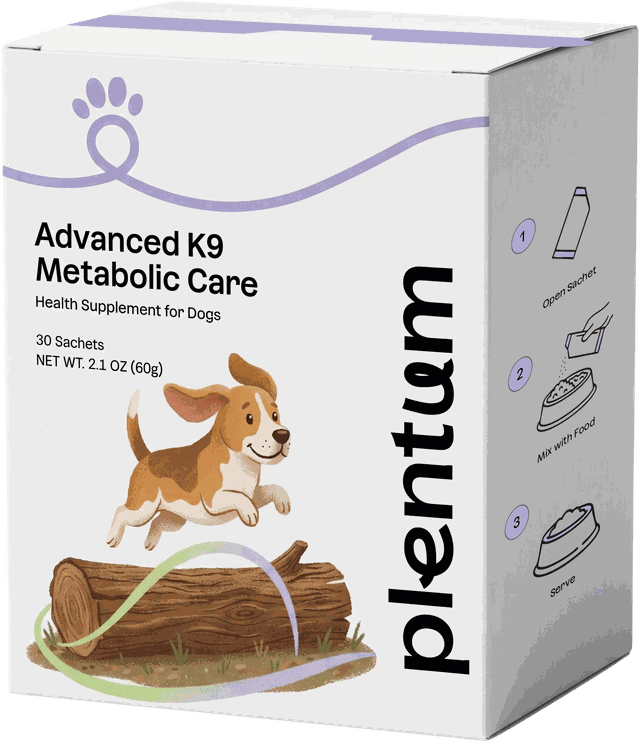
Plentum Advanced K9 Microbiome Care is a daily sachet of prebiotics and postbiotics that mixes into food.
Think of it as a daily foundation that needs time, and track what you notice.

Starting a routine
- Add one supplement at a time. If you start three at once and your dog reacts or improves, you won't know which one did it. Give a new one 4 to 6 weeks before you add another.
- Stir it into food. Older dogs can get pickier, and most sachets mix easily into wet or dry food. A splash of low-sodium broth can help if your dog turns up his nose, as long as your vet agrees it suits him.
- Give it daily. Supplements are judged over weeks of steady use, so a dose every few days makes it hard to tell what's working.
- Tell your vet. Some supplements interact with medications, and omega-3s can affect clotting, which matters before surgery.
Write down the start date, the product, the dose and anything you notice in the first few weeks.
A simple record beats memory at the next vet visit.
Senior care also includes measured portions, weigh-ins, dental care, gentle exercise, and vet checks.
Primary veterinary reference
Use this owner guide alongside the WSAVA Global Nutrition Guidelines and the advice of the vet who manages your dog.
Frequently asked questions
What should I check before buying a supplement for my senior dog?
Read the ingredients, the dose and whether the label lists third-party testing.
Make sure it suits your dog's age and health conditions.
Buy one product at a time so you can judge the results.
Do senior dogs need a multi-vitamin?
Most don't, as long as they eat a complete and balanced diet.
Most commercial dog foods are already fortified with the vitamins and minerals a dog needs.
How long should I give a supplement before deciding if it helps?
Give most supplements several weeks of steady daily use, and keep your routine and portions the same during the trial.