







Quick answer
When guests arrive, your dog needs a plan too.
Set up a familiar quiet room and keep meals and walks predictable. Let your dog choose whether to approach visitors.
Assign an adult to check in and offer breaks throughout the gathering.
Why a full house is hard for dogs
Guest days can change meal times, walks, and the number of people moving through the house.
Prepare for those changes rather than expecting your dog to enjoy every greeting.
Door traffic can be difficult for some dogs. Our doorbell settle plan helps you practice before visitors arrive.
Watch your dog's body language.
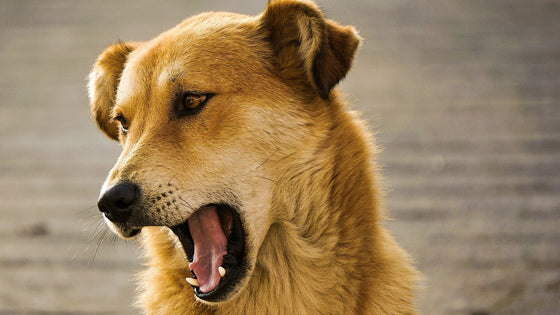
Leaving the room, refusing food, or becoming still can signal discomfort, especially alongside other changes in body language.
The Cornell Riney Center recommends routine and a plan for unsettling situations.
Set up the house before anyone arrives
Do it while the house is calm.
- Pick a room your dog already uses, away from the front door and the kitchen traffic.
- Stock it with a bed, water, a chew, a worn T-shirt, and a fan or radio.
- Put a gate or a door sign on it so nobody opens it looking for the dog.
- Move the trash cans and food bowls out of hallway traffic.
- Set up a coat and bag drop by the door, so luggage does not become a new object every hour.
- Keep the dog's normal feeding and walk times written somewhere the whole house can see.
Three rules for holiday guests
Tell visitors the rules clearly when they arrive:
- Ask before you touch, and let the dog come to you, with no reaching over the head, no hugging, and no kissing on the face.
- No food from the table or counter; keep plates and food scraps out of reach.
- Leave your dog alone in their quiet space.
Skip introductions if your dog is uncomfortable or has a bite history.
The day itself, hour by hour
| When | What you do | Why it works |
|---|---|---|
| Morning | Long walk with sniffing, then breakfast | A familiar routine before the gathering |
| One hour before arrivals | Prepare the room, gate, and a familiar chew. | Preparation before arrivals |
| Arrivals | Secure your dog; tell guests the rules. | Door traffic is the hardest part of the day |
| Dinner | Offer quiet space with regular check-ins. | No dropped food, no begging, no children reaching |
| After dinner | Short leash walk outside, then a choice of room or couch | A change of scene resets the evening |
| Departures | Dog up, gate closed, hugs in the hallway | Keep the entry secure during goodbyes. |
The first is the default. The other two are options for a dog who cannot cope with the evening.
| Option | How it works | Best fit |
|---|---|---|
| Her own room at home | Bed, water, sound, closed door, one person assigned to her | A dog already comfortable in that room |
| A familiar sitter or day care | Booked weeks ahead, quiet house, her own blanket | A dog comfortable with that familiar caregiver |
| Traveling with her | Carrier trained at home, breaks every couple of hours | A dog comfortable with the trip and destination |
Where a calming routine fits
Plan a familiar daily routine across the holiday season.
Ask your vet before use with prescription medication, especially a monoamine oxidase inhibitor (MAOI).
Safe use in pregnant or breeding dogs has not been established.
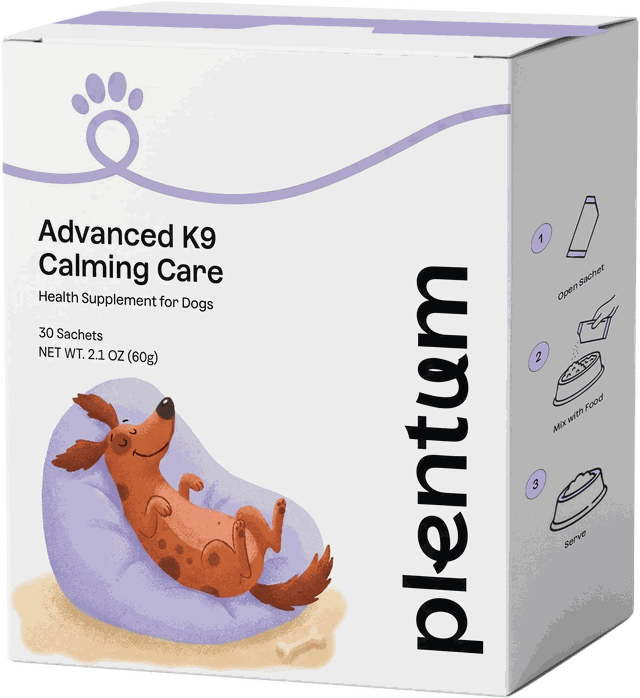
Start with half your dog’s daily dose for 3 days, then the full dose for their weight.
For background, see our guide to the gut and calm behavior.
When to call your vet
A history of snapping at guests or children needs a professional behavior plan before the next gathering.
Ask for help if holiday distress worsens each year.
Whichever arrangement you choose for your dog, write the schedule down and put it on the fridge.
See the supplement comparison if you are also deciding which supplement to use daily through the season.
Frequently asked questions
Can my dog stay in another room during the gathering?
Yes, your dog can stay in another room if it is familiar and comfortable.
Have an adult check in, offer walks and toilet breaks, and avoid isolating a dog who becomes distressed alone.
How should guests greet my dog?
Let your dog choose whether to approach. Avoid reaching, crowding, or hugging, and allow an easy retreat.
How should children meet my dog?
Keep an adult actively supervising, give the dog room to leave, and skip contact if either seems unsure.
Use separation whenever you cannot supervise.
What if my dog becomes more fearful each holiday?
Ask your vet or a qualified behavior professional for a plan before the next event.
A quiet space helps with management, but repeated distress deserves individual care.
Sources
- Cornell University College of Veterinary Medicine, Riney Canine Health Center. Anxious behavior: how to help your dog cope with unsettling situations. Cornell Vet
- VCA Animal Hospitals. Dog behavior problems: barking and jumping at the door. VCA
- Cornell University College of Veterinary Medicine, Riney Canine Health Center. Managing reactive behavior. Cornell Vet