





If diarrhea returns after each antibiotic course, call your vet before adding treatment or supplements.
Contact a veterinarian immediately for blood or black stool, repeated vomiting, weakness, pain, or trouble keeping water down.
Use an emergency clinic if your regular clinic cannot see your dog promptly.
Why can diarrhea return after antibiotics?
Our antibiotic gut-support guide explains questions to bring to the prescriber.
A temporary improvement does not identify the underlying cause.
Food-related problems, parasites, medication effects, and other conditions can have similar signs.
Your dog’s history and examination guide the next step.
A controlled study in healthy dogs found that metronidazole changed fecal microbes and metabolites beyond the treatment period.
It does not explain every dog’s recurring diarrhea or show that another antibiotic course is the right choice.
What should I ask at the recheck?
- What causes have been considered, and what has been ruled out?
- Would repeat fecal testing or bloodwork help?
- Is a supervised diet trial appropriate?
- What should trigger urgent care or referral?
- TimelineRecord when diarrhea starts, improves, and returns.
- FoodList meals, treats, chews, and recent changes.
- MedicationInclude each product, dose, and start date.
Which tests are useful?
| Test or step | Purpose |
|---|---|
| Fecal tests | Check for parasites or selected infectious causes. |
| Bloodwork | Assess overall health and selected underlying problems. |
| Diet trial | Investigate a food-related cause under veterinary supervision. |
| Imaging or referral | Explore unresolved signs when the veterinarian recommends it. |
Results need interpretation alongside the dog’s symptoms.
A single test rarely answers every question.
Let your veterinarian choose the order rather than following a fixed shopping list.
What about food-allergy tests?
VCA’s elimination-diet guidance explains why a supervised elimination-and-challenge trial is used to investigate food allergy.
Blood, saliva, and hair food-allergy panels do not reliably replace that process.
Could a new medication be involved?
Record the timing and call the prescriber if symptoms follow a new medicine or monthly preventive.
Food instructions differ by product.
Do not assume a reaction will settle within a set number of days.
Do not repeat, stop, or change prescriptions without instructions.

What should I do while the workup continues?
- Follow the food and medication plan your vet gives you.
- Keep water available unless the clinic gives different instructions.
- Record stool appearance, appetite, energy, and vomiting.
- Ask which changes would make the plan harder to assess.
If an elimination trial is underway, have every supplement cleared for the trial.
Keeping the diagnostic plan consistent does not mean ordinary ingredients are undesirable.
Where does daily gut support fit?
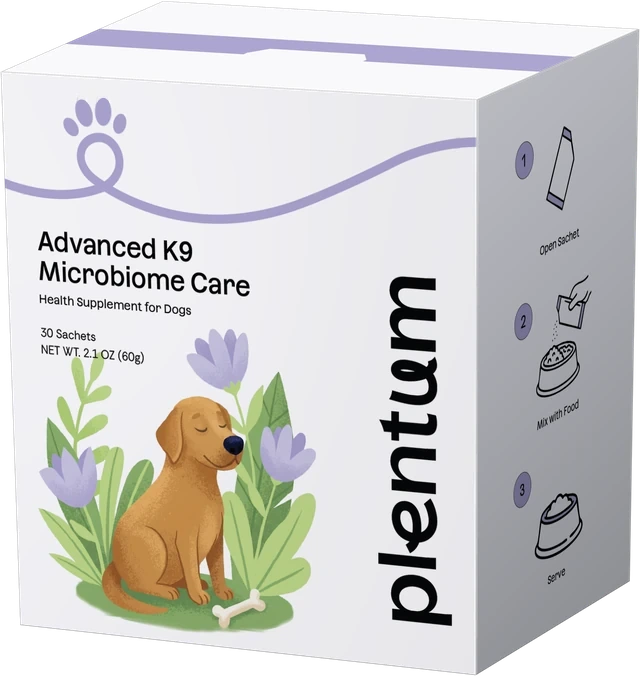
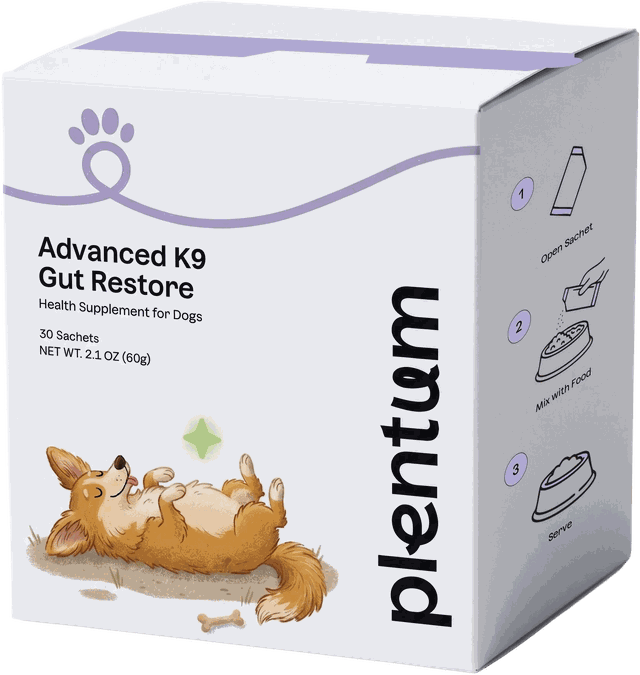
Use the supplement comparison to share complete labels with the clinician overseeing your dog’s care.
Gut Restore's place in a recurring-diarrhea plan should be decided after the cause and current treatment are reviewed.
A supplement does not replace that assessment.
Frequently asked questions
Should my dog have another antibiotic course if diarrhea returns?
The prescriber should decide after reviewing the response and possible causes.
Do not restart leftovers or repeat a course yourself.
What if diarrhea starts after a heartworm preventive?
Call the prescribing clinic with the product, dose, and timing.
Do not assume the medicine is the cause or change parasite protection on your own.
Can I add a supplement during an elimination diet trial?
Ask the veterinarian running the trial before adding anything.
The full intake needs to follow the trial plan so results remain interpretable.
What should I bring to the recheck?
Bring a symptom timeline, food history, medication list, and any samples the clinic requests.
Sources
- VCA Animal Hospitals. Diarrhea in dogs. VCA Animal Hospitals
- VCA Animal Hospitals. Metronidazole. VCA Animal Hospitals
- VCA Animal Hospitals. Heartworm disease in dogs. VCA Animal Hospitals
- VCA Animal Hospitals. Food allergies in dogs. VCA Animal Hospitals
- Pilla R, et al. Effects of metronidazole on the fecal microbiome and metabolome in healthy dogs. J Vet Intern Med. 2020. PubMed 32856349
- Meineri G, et al. Effects of Saccharomyces boulardii supplementation on nutritional status, fecal parameters, microbiota and mycobiota in breeding adult dogs. Vet Sci. 2022. PubMed 36006304