





Your dog starts scratching around the time the trees bloom, and by the second week she's chewing her paws on the couch at 10 p.m. You're not imagining the pattern. Many dogs get noticeably itchier in high-pollen months, especially spring and early fall, and it can run from mild, occasional scratching to constant licking and rubbing that costs everyone sleep.
Why some dogs react more than others is complicated, and that part is a conversation for your vet. There's still plenty you can do at home: rinse paws, wash bedding, brush out pollen, keep the air from drying out, make the vet visit count, and decide whether gut support belongs in the mix. None of it replaces vet care, but done every day it cuts the pollen your dog carries around.
Three steps for a seasonal itch routine:
- Rinse paws after every walk. Paws are the main collection surface for pollen during outdoor time.
- Keep bedding and the sleeping area clean. Pollen settles on beds, blankets and soft furniture.
- Groom to remove pollen before it sits against the skin. The goal is less contact, not a neater coat.
Why dogs catch more pollen than we do
We mostly breathe pollen in. Dogs wear it. They're low to the ground and push through grass and brush, so pollen lands right on their skin, coat and paws, and settles in the folds around their eyes and ears.

You'll usually see it as redness, paw chewing, ear scratching or face rubbing. Jot those down with the date so you can spot the pattern from one year to the next.
Pollen timing depends on where you live. Tree pollen peaks in spring, grass pollen in early summer, and weed pollen, ragweed especially, from late summer through fall. Weather apps and the American Academy of Allergy, Asthma & Immunology's pollen count maps will tell you what's coming, so you can step up the routine before your dog's worst weeks.

Step 1: Rinse paws after every walk
Paws pick up more pollen than anything else. Every step through grass, over sidewalks covered in fallen blossoms or along a dusty trail leaves some behind, between the toes, on the pads and around the nail beds. Dogs lick their paws as part of normal grooming, so they swallow whatever's there. A quick rinse cuts that down.
How to rinse paws properly
- Set up a rinse station by the door. A shallow basin, a paw-washing cup or a clean bucket of lukewarm water lets you rinse as soon as you walk in, before pollen gets tracked through the house.
- Plain lukewarm water does the job most days. If your vet has recommended a specific rinse, use it as directed.
- Don't just dip. Hold each paw in the water and use your fingers to spread the toes and loosen pollen from the skin folds, at least 20–30 seconds per paw.
- Pat the paws dry with a clean, soft towel instead of rubbing. Damp skin between the toes stays warm and gets uncomfortable.
- Look for redness or swelling once a week. If you keep seeing it, or your dog pulls away during the rinse, tell your vet. It can point to something beyond everyday pollen.
How often to rinse
| Situation | Recommended frequency | Notes |
|---|---|---|
| Walk in grassy area, moderate pollen day | After every walk | Plain lukewarm water is enough |
| Walk on paved paths, low pollen day | After every walk | Even paved surfaces collect pollen from wind |
| High-pollen day (count above 500) | After every walk + mid-walk wipe | Carry pet-safe paw wipes for mid-walk use |
| Dog with history of paw chewing | After every walk, more thorough soak | Dry between the toes; persistent chewing, redness, or broken skin calls for a vet exam |
Step 2: Wash the bed more than you think you need to

Pollen drifts onto every flat surface, including your dog's bed, blankets and the couch. Your dog comes in with pollen on the coat, curls up, and it rubs off. After 24 hours the bed is loaded with it, and your dog lies there for eight or more hours of rest.
- Wash bedding covers weekly in hot water, at least 130°F / 54°C where the fabric allows. Heat breaks down pollen proteins.
- Use a fragrance-free, hypoallergenic detergent so you don't add new irritants.
- Let the bed dry completely before your dog uses it again. A damp bed can collect mold spores, which only add to the itch.
- If the bed doesn't have a removable, machine-washable cover, get one that does. Weekly washing gets much easier.
- Vacuum around the bed twice a week with a HEPA-filter vacuum to pick up pollen that's settled on the floor nearby.
A washable slipcover on the couch can go in the same weekly load.
Step 3: Groom out the pollen
In pollen season, you're brushing to get pollen off before it sits against the skin. A neat coat is a bonus.
Brushing
Brush three to four times a week in peak season to knock pollen out of the outer coat. Do it outside when you can so it doesn't resettle indoors. Use a slicker brush for longer coats or a rubber curry brush for short ones, then go over the coat with a damp grooming mitt to catch what's left.
Bathing
A bath every one to two weeks with a gentle, moisturizing shampoo is the usual advice in high-pollen months. Bathing more often can strip the skin's natural oils and weaken its barrier, which is the opposite of what you want. Medicated shampoos, such as those with colloidal oatmeal or chlorhexidine, may suit some dogs, but use them only as your vet directs.
Trimming
Short fur around the paws, belly, groin and armpits gives pollen less to cling to. Many groomers offer a "sanitary trim" or "paw trim" between full appointments. It's faster and cheaper, and it keeps those high-contact spots short all season.
Wipes for between-bath days
Pet-safe grooming wipes are handy after short trips outside, when a bath isn't practical. Wipe the underside, paws, muzzle, and ears. Pick wipes that are fragrance-free and alcohol-free.
Step 4: Keep indoor air from drying out
Indoor air gets very dry in cold months and in air-conditioned homes. Dry air dries out the skin and the lining of the nose, and dogs with already-sensitive skin may feel it more.
- Aim for 40–50% relative humidity indoors. An inexpensive hygrometer tells you where you are. That range is comfortable for pets and people and discourages dust mites and mold.
- Run a cool-mist humidifier where your dog sleeps during dry stretches. Skip warm-mist models in homes with pets, since hot surfaces can burn.
- Keep windows closed during peak pollen hours, usually early morning, and let the air conditioning or a HEPA air purifier filter the air instead.
- Replace HVAC filters monthly in pollen season. Standard 1-inch filters should be MERV 11 or higher to catch fine pollen.
Step 5: Get the most out of a vet visit
A home routine lowers the daily pollen load. It doesn't replace an exam. If the scratching keeps your dog up at night, breaks the skin, or hasn't improved after two weeks of steady home care, book an appointment.
What to bring
- Your symptom notes: dates and times of the worst scratching, paw chewing or rubbing, matched against walks and local pollen counts.
- Photos or short videos of the trouble spots, such as between the toes, the belly, the ears and around the eyes. Dogs often look different in the exam room than at home.
- A list of everything you've tried, including shampoos, rinses, supplements and diet changes, and whether each one seemed to help.
- A few questions written down, so the visit stays focused.
Questions worth asking
- From what you see, does this look like a reaction to something in the environment, or could food be part of it?
- Would a gut-health or digestive support supplement make sense to add?
Your vet's answers will account for your dog's age, breed, coat type and history, which no article can. It also helps to know the difference between seasonal and food-related sensitivities before you go.
Step 6: Decide whether gut support fits
Vets and nutrition researchers are paying more attention to how the gut and skin are connected. The Gut-Skin Axis in Dogs: How Digestive Health and Skin Connect explains how the gut microbiome, the bacteria, fungi and other microbes living in the gut, influences barrier functions throughout the body, including the skin.

A balanced gut is one factor that may help the body keep skin healthy through a rough stretch. A gut supplement doesn't address seasonal sensitivity, though, and you should be skeptical of any product that says it does. It's an extra, next to the rinsing, washing and brushing above.
Most gut-support routines mean a daily supplement with ingredients that help maintain a balanced digestive environment. Postbiotics are one common type: compounds made when probiotic bacteria ferment fibers in the gut. They're a newer focus in pet nutrition, and they may help support the gut lining.
Give it every day, even when your dog seems fine. Starting in early spring gives the gut time to adjust before the worst weeks, but if you haven't started, now is better than later.
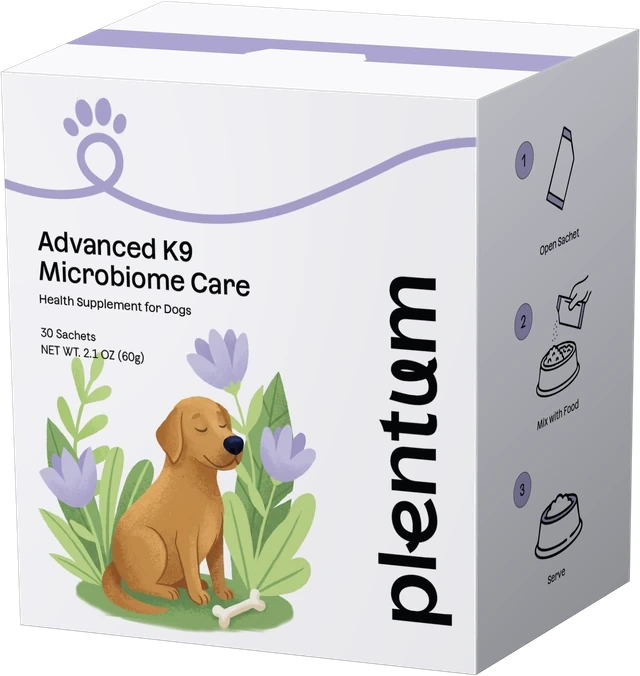
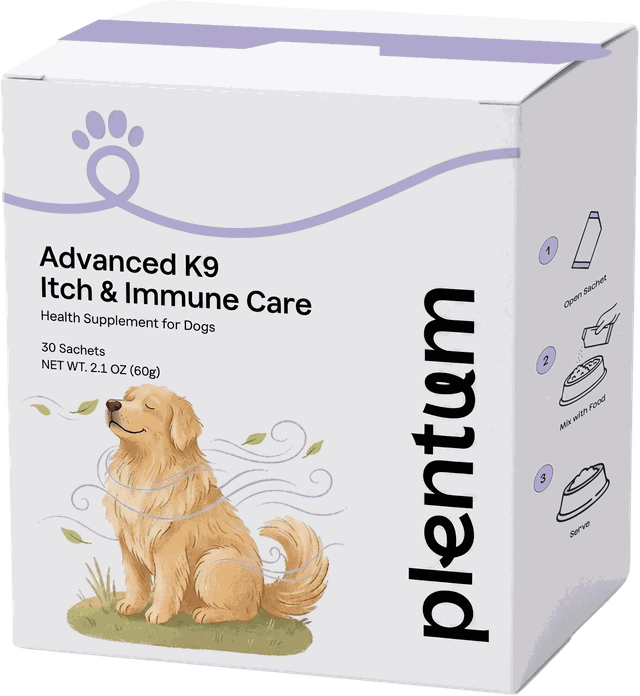
If you'd like a daily option for the season, Plentum Advanced K9 Itch & Immune Care is one choice. It's a daily sachet meant to go alongside the routine above.
Ask your vet if your dog has a health condition or takes medication.
The routine at a glance
Every day
- Rinse paws after every walk, at least 30 seconds per paw, and pat dry between the toes.
- Give the gut-support supplement with meals.
- Check the pollen count and plan walks around it. Counts are often lower in the afternoon after rain.
Two to three times a week
- Brush the coat thoroughly, outside if you can.
- Wipe down the coat with pet-safe grooming wipes on non-bath days.
- Vacuum your dog's sleeping area with a HEPA vacuum.
Weekly
- Wash all bedding in hot water with fragrance-free detergent.
- Bathe with a gentle, moisturizing shampoo every one to two weeks.
- Check the humidity and clean the humidifier tank.
- Read back through your symptom notes and mark any changes.
Monthly
- Replace the HVAC filter.
- Book a groomer for a paw and sanitary trim.
- Check your supplement supply. Running out is a common reason routines slip.
How to size up any seasonal product
Pollen season brings plenty of products with big, sweeping claims. Whatever you're considering, look for:
- Specific, named ingredients with clear amounts
- A recommendation that comes with your vet's input
- Batch testing that confirms the label is accurate
A trustworthy supplement brand talks about supporting your dog's overall wellness. It won't promise to fix a medical problem. Use this guide alongside the WSAVA Global Nutrition Guidelines and the advice of the vet who knows your dog.
Frequently asked questions
How often should I rinse my dog's paws in pollen season?
Rinse after every walk. Plain lukewarm water works on most days, and a pet-safe wipe helps mid-walk on high-pollen days.
Can I bathe my dog every day when pollen is high?
Stick to every one to two weeks with a gentle, moisturizing shampoo. Bathing more often can strip the skin's natural oils and weaken its barrier, so use paw rinses and wipes in between.
When should I start gut support for the season?
Ideally, start in early spring, before peak pollen, so your dog's gut has time to adjust. If you're already in the thick of it, start now. Introduce it gradually over five to seven days.
Do I need to rinse paws after a walk on pavement?
Yes, wind blows pollen onto sidewalks and paved paths too, so a quick rinse after every walk is still worth it, even on low-pollen days.