





Colitis is inflammation of the large intestine.
It usually causes frequent small stools with straining and urgency, and sometimes mucus or blood.
Stress, sudden diet changes, and intestinal parasites are common triggers.
A vet needs to confirm the cause because other conditions look similar.
What are the signs of colitis in dogs?
Colitis mostly shows up as large bowel diarrhea.
Your dog may pass small amounts of stool many times a day, often with strong urgency.
You may also see a clear, jelly-like coating on the stool or a little fresh red blood on the outside.
Merck's guide to colitis in small animals describes this pattern.
It helps separate large bowel signs from stomach or small intestine problems.
| Sign | What it often points to |
|---|---|
| Frequent small stools | Large bowel irritation |
| Straining or urgency | Large bowel irritation |
| Mucus or jelly-like coating | Large bowel inflammation |
| Large, watery volume | Small bowel involvement |
What causes colitis in dogs?
Several things can irritate the lining of the large intestine, and a vet may find more than one.
- Stress from travel, boarding, or a new home
- Sudden food changes or a new brand
- Table scraps, fatty foods, or rich snacks
- Intestinal parasites, such as whipworms or other gut parasites
How do vets diagnose colitis?
A vet starts with your dog's history, diet, and a physical exam.
They will ask about recent medications and diet changes.
Stool tests look for parasites and some infections, and bloodwork can check for other illness.
If those results are unclear, a vet may suggest a diet trial, which means feeding a restricted diet for several weeks.
| Step | What it checks |
|---|---|
| History and exam | Diet, stress, and symptom timing |
| Stool test | Parasites and some infections |
| Bloodwork | Other illness and dehydration |
| Diet trial | Whether food is a trigger |
What should you track at home?
A written log gives your vet far more useful detail than memory.
Start it the day the signs appear and keep it until the visit.
- Number of stools each day, and when they happen
- Stool color, texture, and any mucus or blood
- Everything your dog ate, including snacks and table scraps
- Stress events, such as visitors, travel, or a move
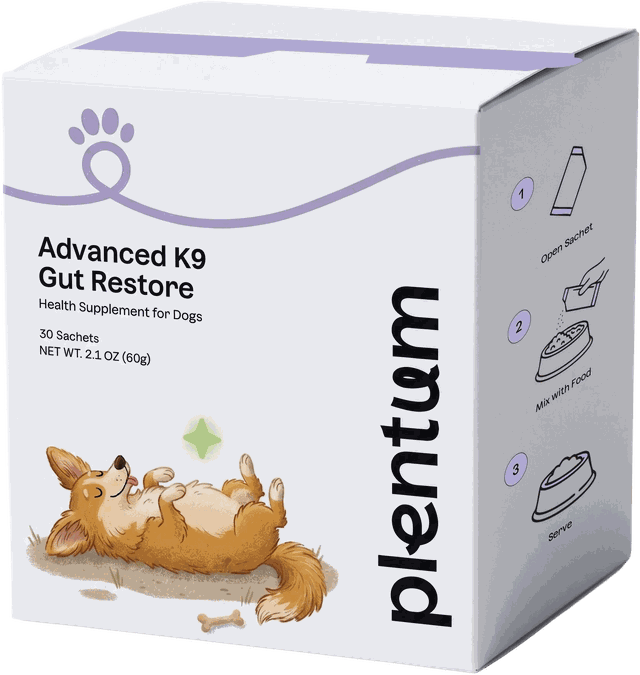
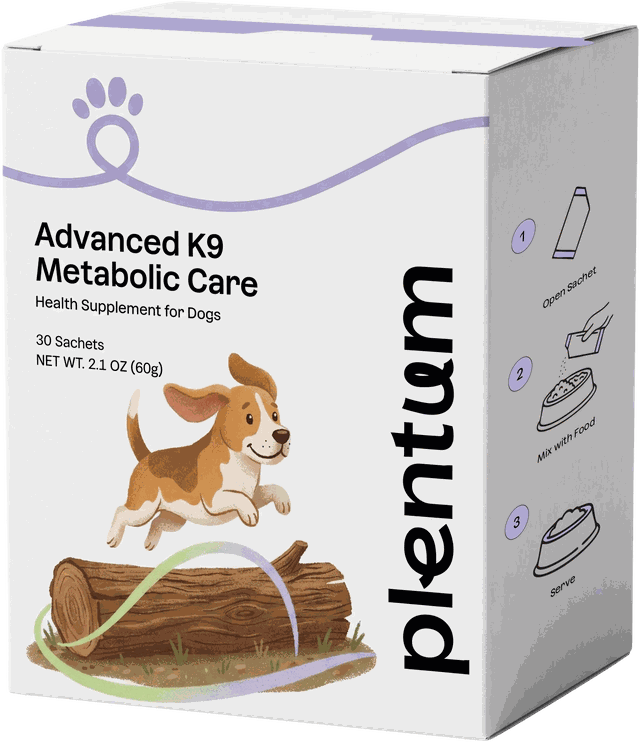
After a vet has found the cause, a daily supplement such as Plentum Advanced K9 Gut Restore may be a useful part of the routine.
For the wider picture, read our dog digestive health and stool guide.
If the stool is soft and you see no blood, our bland diet for dogs with diarrhea guide explains a short feeding plan.
If you see blood, read what red blood in dog stool can mean.
When should you call the vet?
- Blood in the stool, or stool that looks black and tarry
- Diarrhea that continues beyond 24 to 48 hours
- Repeated vomiting, or weakness and lethargy
- Refusal to eat or drink
- Pain in the belly, or straining with little or no stool
- A puppy, a senior dog, or a dog with other health conditions
Call your vet the same day if you see blood or your dog seems unwell.
Sources
- AKC: Colitis in Dogs: Signs, Symptoms, and How to Treat
- Merck Veterinary Manual: Colitis in Small Animals
- Merck Veterinary Manual: Gastrointestinal Parasites of Dogs
- Cornell University College of Veterinary Medicine: Diarrhea
Frequently asked questions
Can stress cause colitis in dogs?
Yes, stress is a common trigger for large bowel irritation in dogs.
It is one of several possible causes, so a vet should still check for parasites and other problems.
How long does colitis last in dogs?
Mild cases may settle once the trigger is removed.
Signs that continue beyond 24 to 48 hours need a vet exam.
Can I give my dog human anti-diarrheal medicine?
No.
Human anti-diarrheal medicines can be unsafe for dogs and can hide signs a vet needs to see.
Wait for a vet to recommend any medication.