





Dog digestive health depends on regular meals, steady stool, and a diet your dog handles well.
Many stool changes come from a food switch, extra snacks, stress, or a short bout of stomach upset.
They often settle within a few days.
Blood, black stool, repeated vomiting, or diarrhea in a puppy needs a vet visit rather than a wait.
Which stool or gut sign are you seeing?
Find the sign closest to what you see, then open that guide.
Each one covers likely causes, safe first steps, and when to see a vet.
| Symptom or question | Read this guide |
|---|---|
| Diarrhea that needs a simple meal plan | Bland diet for dogs with diarrhea |
| Red blood or dark, tarry stool | Blood in dog stool |
| Stool that is soft but still formed | Soft stool in dogs |
| Mild stomach upset with nausea | Dog upset stomach remedies |
| Vomiting and diarrhea together | Dog vomiting and diarrhea together |
| Diarrhea and how long it should last | How long does diarrhea last in dogs? |
| Loose stool after a food switch | Dog diarrhea after changing food |
| Plain canned pumpkin for loose stool | Pumpkin for dogs with diarrhea |
| Straining and small, dry stools | Dog constipation: signs and causes |
| Black or very dark stool | Black stool in dogs |
| Jelly-like coating on stool | Mucus in dog stool |
| Yellow or orange stool | Yellow stool in dogs |
| Yellow foam when vomiting | Dog throwing up yellow foam |
| Grass eating followed by vomiting | Why does my dog eat grass and throw up? |
| Diarrhea in a young puppy | Puppy diarrhea |
| Frequent small stools with mucus or blood | Colitis in dogs |
What counts as normal stool?
Healthy stool usually holds its shape, is brown, and contains no blood.
Many dogs pass stool once or twice a day, and the amount changes with meal size and exercise.
A single loose stool is rarely a concern on its own.
Why does stool change?
The gut often reacts to something new, such as a food switch, a rich snack, or a stressful day.
Intestinal parasites can also loosen stool, and the Merck Veterinary Manual describes the common types in dogs.
Puppies, senior dogs, and dogs with other health conditions need faster attention.
Start a stool log
Write these details each day so your vet has a clear record:
- Date, time, and stool shape
- Color, including any red, black, or yellow
- Vomiting, appetite, and energy
- Food, snacks, and any new items
- Water intake and recent changes at home
When should you call the vet?
Ask your vet for a same-day visit if you see any of these signs:
- Blood in the stool, or black, tarry stool
- Vomiting more than once, or vomiting that keeps coming back
- Lethargy, weakness, or hiding
- Refusal to eat or drink
- Pain, a swollen belly, or straining with no stool
- Diarrhea in a puppy or a senior dog
- Diarrhea or soft stool that lasts beyond 24 to 48 hours
Bring your stool log and a fresh sample if your vet asks for one.
How Plentum fits
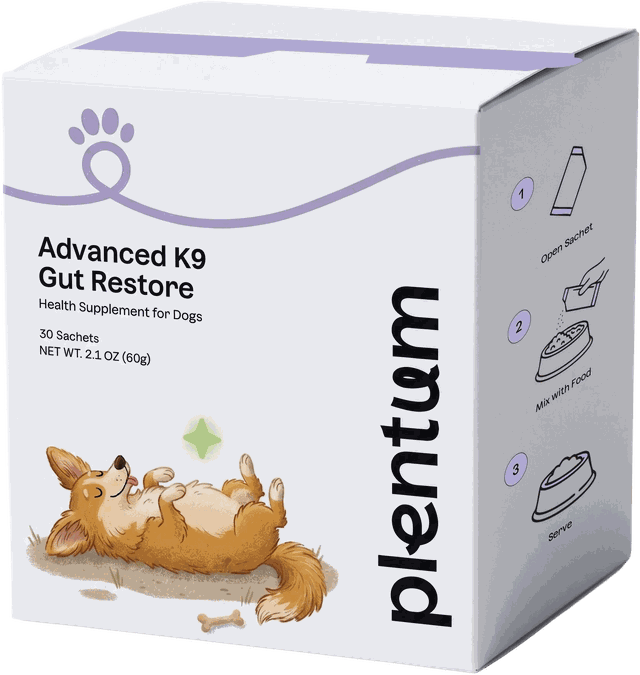
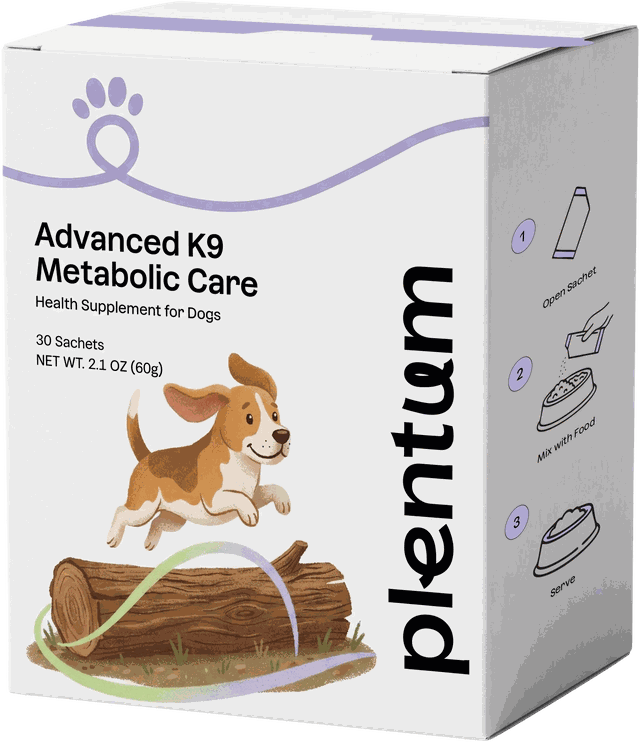
After your vet finds the cause, Plentum Advanced K9 Gut Restore can provide daily support.
It supports normal bowel function and healthy stool consistency.
Related guides
For probiotic strains and label checks, read the dog probiotics and supplements guide.
For skin and ear signs, read the dog itch, paws, skin, and ears guide.
Sources
- AKC: Dog Diarrhea: Signs, Symptoms, and Treatments
- AKC: Blood in Dog Poop: Signs, Symptoms and Treatment
- Merck Veterinary Manual: Disorders of the Stomach and Intestines in Dogs
- Merck Veterinary Manual: Vomiting in Dogs
- Merck Veterinary Manual: Gastrointestinal Parasites of Dogs
- Cornell University College of Veterinary Medicine: Diarrhea
- AKC: How to Tell If Your Dog’s Poop Is Healthy
Frequently asked questions
How do I know if my dog's stool is normal?
Normal stool usually holds its shape, is brown, and has no blood.
Changes that last more than a day or two are worth a closer look.
Can I give my dog human anti-diarrhea medicine?
No.
Do not give human medicines without your vet's direction, because the right amount depends on weight and cause.
Can a supplement replace a vet visit?
No.
Supplements are daily support, not a diagnosis.
They do not replace a vet visit for blood, black stool, or repeated vomiting.
When is diarrhea an emergency?
Blood, repeated vomiting, weakness, or diarrhea in a puppy or senior dog needs same-day vet care.
Seek emergency care if your dog cannot keep water down.