





Dog itchy skin can come from fleas or mites, an infection, allergies, or dry skin.
The pattern of itching, licking, or head shaking points toward the cause, so note where and when it happens.
Check for fleas, look closely at the skin, and book a vet visit if you see redness, sores, odor, or hair loss.
Which skin sign are you seeing?
Match the sign to the guide, then follow the steps in that guide.

| Skin or ear sign | Read this guide |
|---|---|
| Paw licking, especially between the toes | Why is my dog licking his paws? |
| Scratching most of the day | Dog constantly scratching |
| Scratching ears and shaking the head | Dog scratching ears and shaking head |
| Raw, moist, or oozing patches | Dog hot spots |
| White or gray flakes in the coat | Dog dandruff |
| Dull, dry coat that needs support | Skin and coat supplement for dogs |
What usually causes itching?
Fleas and mites come first on most checklists because they are common and easy to miss.
Bacterial or yeast infections often follow repeated scratching or licking.
Allergies, seasonal or year-round, come after those checks.
The Merck Veterinary Manual covers itching in dogs in more depth, including how vets narrow the cause.
Seasonal or year-round itching?
Itching that returns with pollen, grass, or insect seasons often points toward seasonal allergies.
Itching that stays all year can point toward food, household triggers, or parasites that persist indoors.
The Merck Veterinary Manual explains allergies in dogs in more depth.
Food reactions can also cause itching, so note any new food or chew and when it started.
Bring these notes and your photos to the visit.
Run a two-minute check at home
- Part the coat along the back and belly, and look for fleas or flea dirt
- Check between the toes and the pads for redness, swelling, or debris
- Look inside each ear for odor, wax, or redness
- Note the season, the setting, and any new food, bedding, or cleaner
Write down what you find, so your vet sees the pattern.
Take photos of the skin and ears every few days, because photos show change that is easy to miss.
Why do paws, ears, and skin often go together?
Itching feeds itself.
Scratching or licking damages the skin, and the damage itches more.
The AKC describes this cycle in its guide to hot spots.
Breaking that cycle early is easier than managing a flare.
Dry air and frequent bathing can leave skin flaky, and flaky skin often itches more.
Hot spots can grow quickly, so a patch that looks wet and raw needs prompt attention.
When should you call the vet?
Ask your vet for a visit soon if you see any of these signs:
- Open sores, bleeding, or pus
- Odor from the ears, or a head tilt
- Hair loss in patches, or a spreading rash
- Itching that wakes your dog at night or comes with a poor appetite
- Limping or paw swelling
- Itching that continues after home checks
How Plentum fits
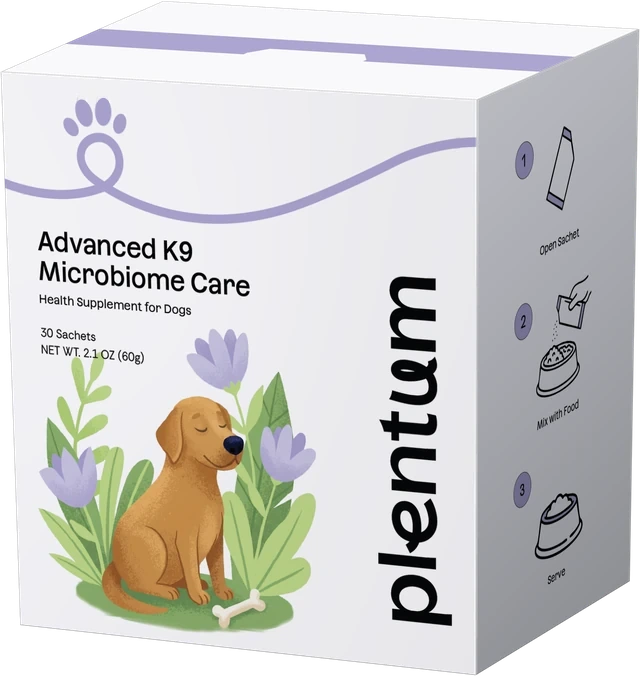
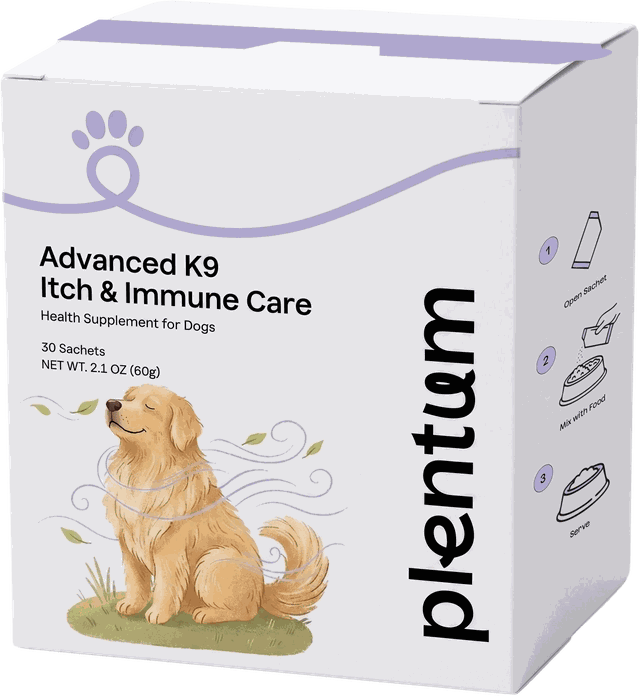
Plentum Advanced K9 Itch & Immune Care is vet formulated.
It supports a normal immune response to seasonal triggers and healthy skin and coat.
It does not replace a diagnosis, and it contains milk-derived colostrum.
Use it alongside the checks above, not in place of them.
Related guides
For stool and gut signs, read the dog digestive health and stool guide.
For supplement label checks, read the dog probiotics and supplements guide.
Sources
- AKC: Dry skin on dogs
- AKC: Pododermatitis in dogs
- AKC: Hot spots
- Merck Veterinary Manual: Itching (pruritus) in dogs
- Merck Veterinary Manual: Allergies in dogs
- Merck Veterinary Manual: Ear infections and otitis externa in dogs
Frequently asked questions
What should I check first when my dog itches?
Check for fleas and mites, then look at the skin and ears for redness or odor.
Note the season and any new food, cleaner, or bedding.
Can I use a human anti-itch cream on my dog?
Do not use human creams or sprays without your vet's direction.
Some ingredients that suit people can harm dogs.
Is a skin and coat supplement enough for itching?
No.
Supplements support skin and coat, but they do not replace finding the cause of itching.
How do I know if my dog has a hot spot?
A hot spot is a moist, red, raw patch that can grow fast.
See a vet quickly, because it needs an exam and care.