





Ear scratching and head shaking usually mean something is irritating the ear canal.
Common causes include infection, ear mites, or an allergy.
Look inside the ear for redness, odor, or dark debris, since those signs point toward the cause.
See a vet if you notice discharge, pain, or swelling, or if the signs persist.
What signs show ear trouble?
Ear trouble usually shows up as scratching at the ear, head shaking, or a tilted head.
You may also notice a bad smell, redness inside the flap, or a dark or waxy discharge.
Some dogs flinch when you touch the base of the ear.
| Sign | What it can point to |
|---|---|
| Dark, crumbly debris | Parasites, yeast, or bacterial infection |
| Sour or musty smell | Yeast or bacterial infection |
| Redness and swelling inside | Ear canal inflammation |
| Pain when the ear is touched | Infection or deeper irritation |
| Head tilt or loss of balance | Urgent vet visit |
What causes ear problems in dogs?
Ear problems often start with another issue, such as an allergy, that makes the ear canal warm and moist.
Yeast and bacteria then grow on the damp skin.
The AKC guide to dog ear infections covers these causes in more detail.
- Allergies that inflame the ear canal
- Yeast or bacteria in damp ear canals
- Ear mites, which leave dark debris
- Grass seeds or other foreign objects
- Water trapped after baths or swims
Why not use vinegar or home mixtures?
Do not pour vinegar, peroxide, or homemade mixtures into the ear without a vet's direction.
These can irritate the canal, and a torn eardrum makes some liquids risky.
A vet can check whether the eardrum is intact before any cleaning starts.
What can you do right now?
- Look at the ear flap and opening with a bright light
- Note the smell, the discharge color, and which ears are affected
- Keep water out of the ears after baths and swims
- Stop home cleaning until a vet has examined the ear
How urgent is it?
| Sign | Urgency |
|---|---|
| Mild odor and occasional scratching | Prompt vet visit |
| Discharge, redness, or swelling | Prompt vet visit |
| Pain, bleeding, or head tilt | Same-day vet visit |
How Plentum fits
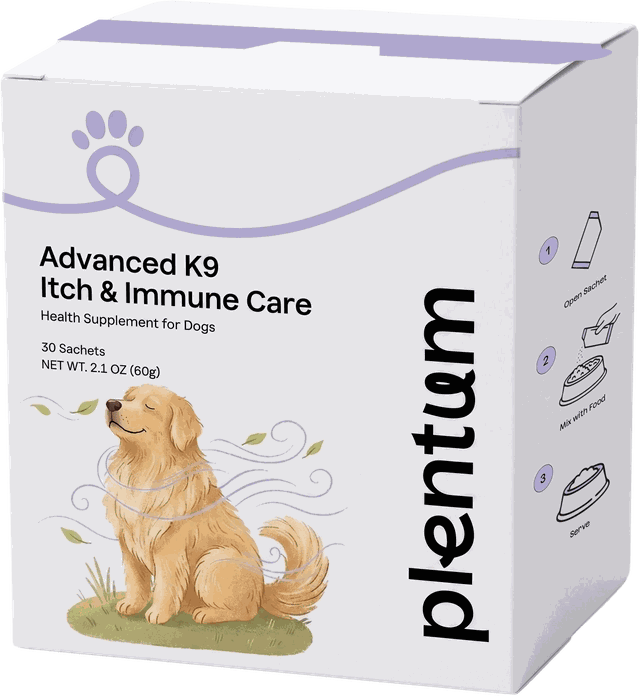
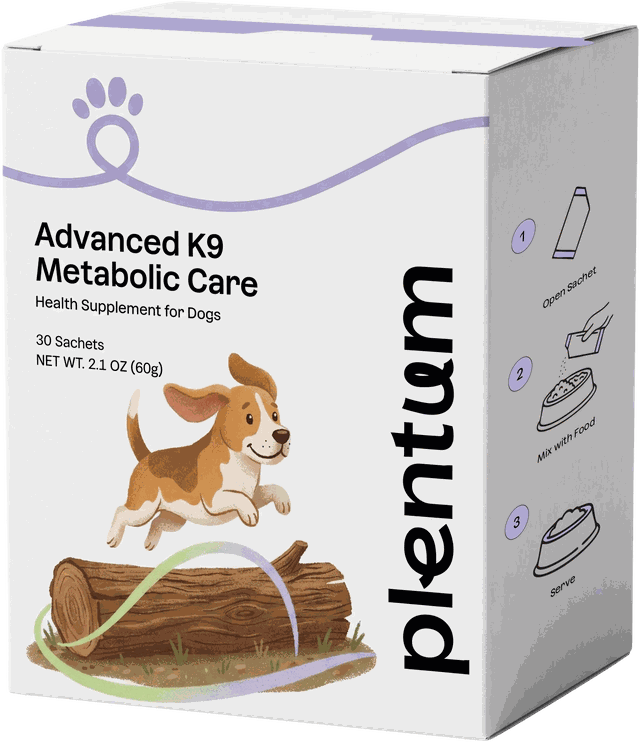
Plentum Advanced K9 Itch & Immune Care supports healthy skin and coat and a normal immune response to seasonal triggers.
It is a daily supplement, and it is not meant for an active ear infection.
Itch & Immune Care is vet formulated, and every lot is lab-tested.
Dosing is by weight, from 1 to 4 sachets a day.
When should you call the vet?
- Odor, pus, or thick discharge from the ear
- Bleeding from the ear, or a sudden painful ear
- Pain when you touch the ear or open the jaw
- Head tilt, circling, or loss of balance
- Swelling of the ear flap
- A puppy, a senior dog, or a dog with other health issues
Call your vet the same day if your dog has a head tilt or seems off balance.
The dog itch, paws, skin, and ears guide explains the wider picture.
If the scratching spreads to the neck or body, read our guide to dog hot spots.
Dry, flaky skin is covered in dog dandruff.
What is different for senior dogs?
Bring the history of previous ear episodes and treatments. Chronic or one-sided changes can alter the workup.
| Fact | How it changes what you do | Source |
|---|---|---|
| Recurring ear infections can be the first sign of allergies | Allergy testing or a diet trial may follow | AKC dog ear infections |
| Growths in the canal can trap debris and cause infection | A vet should look at any lump inside the canal | AKC ear mites |
| Long-term inflammation in one ear can hide a tumor | A biopsy may be needed to check | AKC dog ear infections |
| Skin and ear infections are a listed sign of hypothyroidism | Thyroid tests may be part of the workup | AKC hypothyroidism |
Can a thyroid problem play a role?
Hypothyroidism is most common in dogs 4 to 10 years old, and its signs can be subtle.
Weight gain without a change in appetite, a thinning coat, and low energy can appear alongside ear trouble.
Blood tests are needed to confirm the diagnosis, because other diseases can look similar.
Sources:
Sources
Frequently asked questions
Can I clean my dog's ears at home?
Gentle cleaning with a cleaner your vet recommends is common, but a dog with pain, odor, or discharge needs an exam first.
Do not insert anything into the ear canal.
Do ear mites spread to other pets?
Yes, ear mites can pass between dogs and cats that share bedding or close contact.
Your vet can advise on care for every pet in the home.
Why does my dog shake its head so much?
Head shaking is a reflex that tries to clear irritation, moisture, or debris from the ear canal.
Frequent shaking with pain, odor, or a head tilt needs a vet exam.