





A hot spot is a red, moist, painful patch of skin that a dog keeps licking, chewing, or scratching.
It can appear quickly and grow if the dog keeps working at it.
Stop the licking and book a vet exam, because a hot spot often needs cleaning and prescribed medication.
What can hot spots look like?
Hot spots can change quickly.
| Appearance | What you may see |
|---|---|
| Small | Small red patch and light licking |
| Moist | Moist, raw patch with hair loss |
| Spreading | Crusting, odor, and a spreading area |
What causes hot spots?
A hot spot starts with an itch or irritation.
The dog licks or chews the spot, the skin stays wet and warm, and bacteria move in.
Common starting points include fleas, allergies, ear problems, and boredom that turns into chewing.
The AKC guide to hot spots describes this itch-lick-scratch cycle, and flea allergy dermatitis is a frequent trigger.
What can you do right now?
- Stop your dog from licking with a cone or soft collar
- Clip the hair around the spot, if your vet agrees
- Keep the area clean and dry
- Do not apply human creams or sprays
- Check the coat for fleas and flea dirt
What does a vet usually do?
A vet clips and cleans the area, checks for infection, and may prescribe medication.
Some dogs need a cone for several days so the spot can dry.
Your vet will also look for the trigger, since a hot spot that returns points to an underlying cause.
Before the visit, write down when the spot appeared and what your dog was doing beforehand.
List any products you have already applied.
That short note helps the vet.
How do you lower the risk of repeat hot spots?
Keep parasite control current, groom regularly, and dry your dog well after swims and baths.
Check the skin during brushing, because small spots are easier to manage early.
If the skin is dry and flaky between episodes, our dog dandruff guide covers the common causes.
How Plentum fits
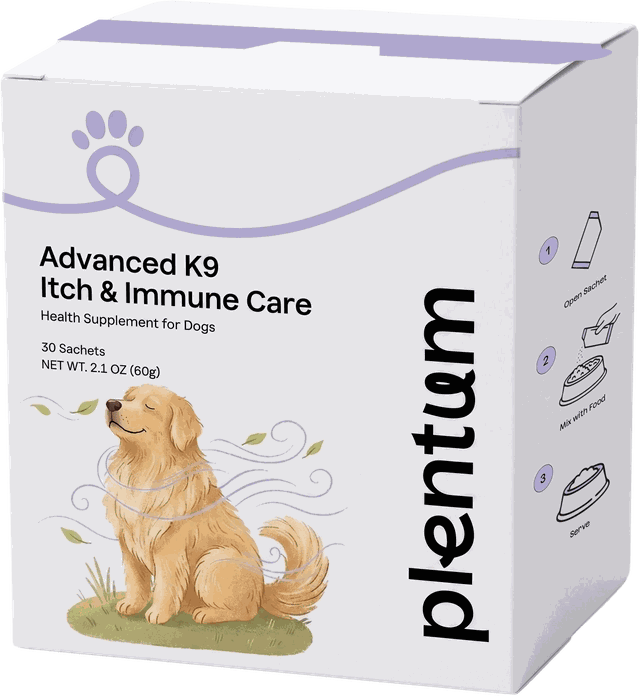
Plentum Advanced K9 Itch & Immune Care supports healthy skin and coat and a normal immune response to seasonal triggers.
It is a daily supplement, and it is not a substitute for a vet exam or for care of an open hot spot.
Itch & Immune Care is vet formulated, and every lot is lab-tested.
Dosing is by weight, from 1 to 4 sachets a day.
Our dog itch, paws, skin, and ears guide covers the wider picture.
Our skin and coat supplement guide explains what to look for on a label.
When should you call the vet?
- Redness that spreads, or a spot that grows within a day
- Pus, a strong odor, or crusting over the spot
- Pain when the area is touched, or a dog that guards it
- Fever, lethargy, or loss of appetite
- A hot spot that returns in the same place
- A puppy, a senior dog, or a dog with other health issues
Call your vet the same day if the spot is open and bleeding.
Sources
Frequently asked questions
Are hot spots contagious?
The hot spot itself does not spread, but the cause, such as fleas, can pass between pets.
Check every pet in the home.
Can I put a human cream on a hot spot?
No.
Human creams are not a safe default for a dog, and a vet can choose a product that suits the spot.
Let your vet choose any medication.
Will a hot spot go away on its own?
Spots that grow, smell, or bleed need a vet exam.