



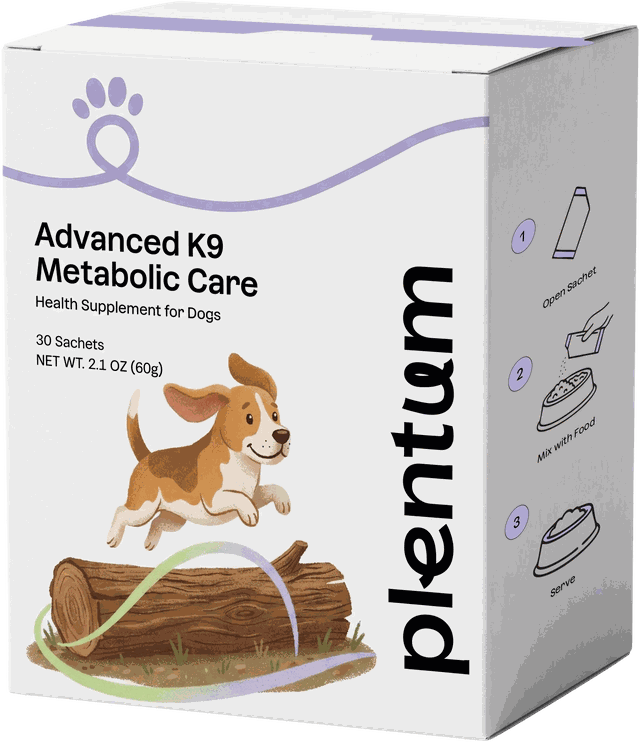


A skin and coat supplement combines nutrients for daily use.
These may include omega-3 fatty acids, postbiotics, and antioxidants.
The goal is to support healthy skin and coat.
Look for a label that names each ingredient, shows the amount per serving, and gives a dose by your dog's weight.
A supplement works best beside a complete diet, parasite control, and a vet exam when skin problems persist.
What should a skin and coat label show?
A label tells you more than the front panel does.

Check the items in this table before you buy, and compare two or three products side by side.
| Label item | What it tells you |
|---|---|
| Named ingredients | Named active ingredients |
| Amount per serving | Amounts per serving |
| Dosing by weight | Matches your dog's size and needs |
| Lab testing | Shows the product matches its label |
| Certificate of analysis | Lab results for the batch you buy |
Which ingredients may be included?
Some skin and coat products combine a few familiar groups.
Omega-3 fatty acids, including DHA from algae, are often included for the coat.
Postbiotics and probiotics are added for gut support.
Some blends include quercetin and colostrum as immune-focused additions.
Each group has a different job, so read the label to see which ones a product actually includes.
Is there science behind the ingredients?
Start by checking who the study was done on, whether dogs or lab cells, and how many animals took part.
Ask whether there was a control group that got nothing or a placebo.
Why diet and the vet come first
A supplement adds to a routine rather than replacing one.
Diet, parasite control, and a vet exam come first.
A supplement cannot address every cause of a skin problem.
Coat changes that come on suddenly also deserve a vet look before you add anything new.
How does Plentum fit?
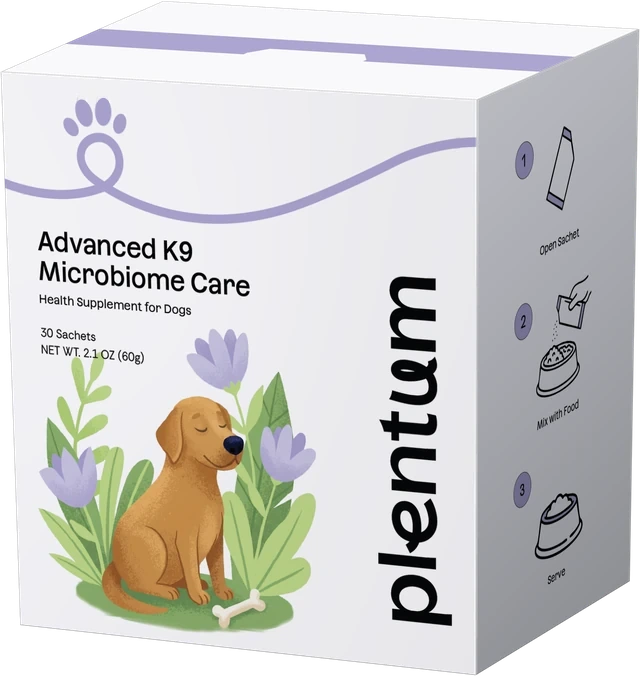
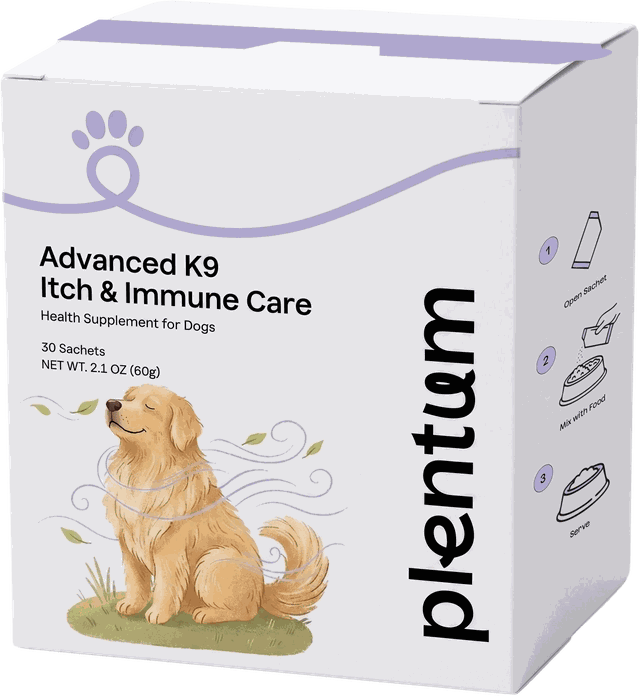
Plentum Advanced K9 Itch & Immune Care supports healthy skin and coat and a normal immune response to seasonal triggers.
It contains milk-derived colostrum and works as a daily supplement, so it fits a routine rather than a one-time fix.
Dosing is by weight, from 1 to 4 sachets a day, and every lot is lab-tested.
You can read how each lot is checked on the Plentum quality testing page.
If you are still comparing options, our itch, paws, skin, and ears guide explains how the cause shapes the choice.
Our guide to paw licking covers one of the most common skin signs, and our guide to constant scratching covers the itch side.
When should you call the vet?
Skin signs that do not improve with grooming or diet changes need an exam.
- Bald patches or thinning hair
- Red skin that spreads
- Scabs, oozing, or an open sore
- A strong odor from the skin or ears
- Itching that continues
- New signs in a puppy or a senior dog
Call your vet early, since a skin exam can find a cause that no supplement will reach.
Sources
- Merck Veterinary Manual: Dermatitis and dermatologic problems in dogs
- Merck Veterinary Manual: Allergies in dogs
- AKC: Probiotics for dogs
Frequently asked questions
What should I look for on a skin and coat supplement label?
Look for named ingredients, the amount per serving, and dosing by your dog's weight.
Lab testing and a certificate of analysis add confidence that the product matches its label.
Do skin and coat supplements work for every dog?
Results vary by dog, and no product works for every skin problem.
A supplement is one part of a plan that also includes diet, grooming, and parasite control.
Should I start a supplement before seeing a vet?
If skin signs are new, see a vet first so the cause is clear.
A supplement is easier to judge once the vet has ruled out other problems.